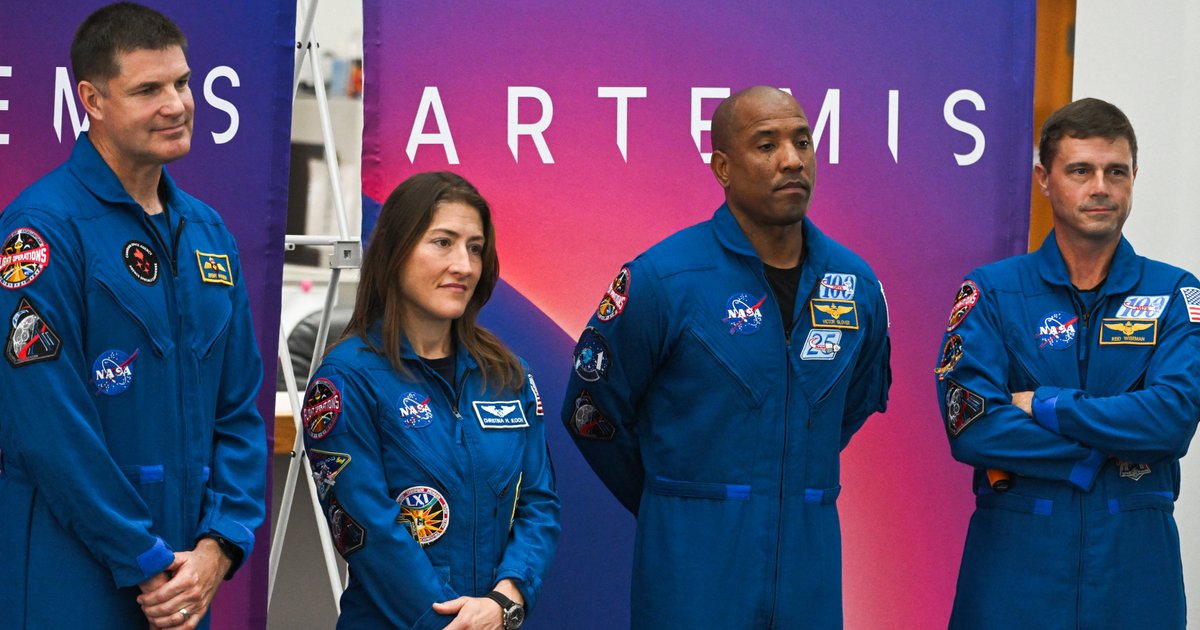
Four astronauts are preparing to embark on a historic mission around the Moon, becoming the first human crew to orbit the Moon in over 50 years. The crew consists of three astronauts from NASA: Commander Reid Wiseman, Victor Glover, and Christina Koch, along with Jeremy Hansen from the Canadian Space Agency. This mission, known as Artemis II, aims to test the trajectory for the next generation of space travel.
These astronauts are among the most experienced in their field, combining skills in aviation, engineering, and science. However, they are also spouses and parents, adding a human dimension to their space experience as each balances a heroic adventure with the risks faced by them and their families.
Event Details
Commander Reid Wiseman, a former U.S. Navy pilot, spent six months aboard the International Space Station in 2014. Despite his love for flying, he suffers from a fear of heights on Earth. Wiseman lost his wife to cancer in 2020 and is now raising his two teenage daughters alone, viewing fatherhood as the greatest and most rewarding challenge of his life.
Christina Koch, an engineer and physicist, holds the record for the longest single spaceflight by a woman, spending 328 days aboard the International Space Station. Koch, who will become the first woman to travel to the Moon, has dreamed of becoming an astronaut since childhood, when she kept a famous picture of Earth rising above the Moon's surface.
Background & Context
This mission is part of the Artemis program, which aims to return humans to the Moon and explore it more deeply, including plans for establishing human settlements. After more than half a century since the Apollo mission, the Artemis program seeks to enhance international cooperation in space, involving astronauts from several countries.
The history of human space travel to the Moon dates back to 1969 when Neil Armstrong and Buzz Aldrin landed on the lunar surface during the Apollo 11 mission. Since then, there have been multiple attempts to explore the Moon, but Artemis II represents a new step towards achieving broader goals in space exploration.
Impact & Consequences
This mission is a milestone in the history of space exploration, reflecting technological advancement and international collaboration in the field. The success of Artemis II could pave the way for more ambitious future missions, including sending humans to Mars.
The mission requires meticulous preparations, as astronauts must deal with potential risks in space, including harsh conditions and radiation. They hope their experience will inspire future generations of astronauts.
Regional Significance
The importance of space exploration is growing in the Arab world, with many Arab countries seeking to enhance their space programs. For instance, the United Arab Emirates launched the Hope Probe to Mars, reflecting an increasing interest in science and technology. The Artemis II mission could inspire Arab nations to invest in space programs and enhance international cooperation in this field.
In conclusion, the Artemis II mission represents a historic step towards space exploration, as astronauts from diverse backgrounds come together to achieve humanity's dream of exploring the Moon. They are not just astronauts but also parents and spouses, adding a human dimension to their adventure.