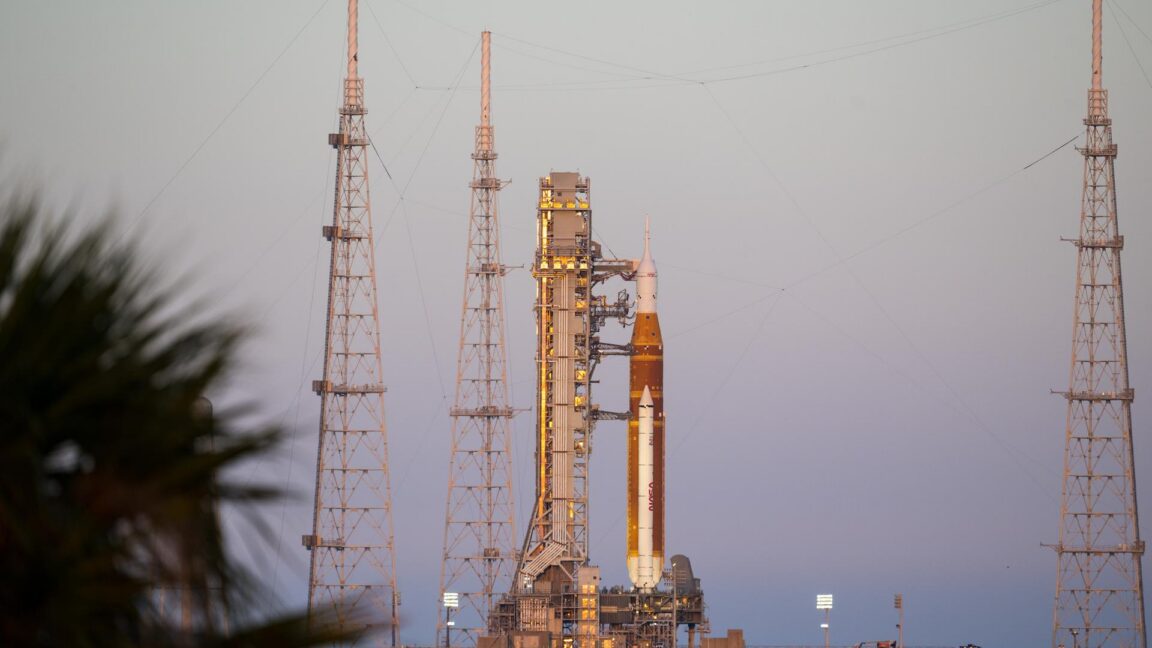
NASA is preparing to launch a historic mission aimed at returning humans to the Moon, more than 53 years after the last human landing on its surface. The launch is expected to take place from the Kennedy Space Center in Florida, where the teams working there are feeling increasing excitement and seriousness as the launch date approaches.
The mission, named Artemis 1, aims to test new technologies developed to support future crewed missions to the Moon. This includes the use of the Space Launch System rocket, which is considered the most powerful in the world, along with the Orion spacecraft that will transport astronauts to the Moon.
Details of the Event
The launch is scheduled to occur in the coming days, marking a milestone in the history of space exploration. After decades of absence, humanity is returning to the Moon, which is considered a significant scientific and technical achievement. This mission represents a new beginning for lunar exploration, as NASA aims to establish a permanent base on its surface.
The mission also includes plans to send astronauts to the Moon by 2025, which is part of a larger vision for future Mars exploration. Experts expect this mission to enhance scientific understanding of the Moon and develop new technologies that can be used in broader space exploration.
Background & Context
Historically, the last human landing on the Moon occurred in 1972, when the Apollo 17 mission landed. Since then, no human missions have been sent to the Moon, but technological advancements and growing interest in space exploration have refocused attention on the Moon as a primary destination. In recent years, several countries, including China and Russia, have launched uncrewed missions to the Moon, increasing competition in this field.
The Artemis 1 mission is part of the Artemis program, which aims to return humans to the Moon and also includes plans to send the first woman and a person of color to its surface. This program is considered an important step towards achieving diversity and inclusion in space exploration.
Impact & Consequences
This mission is seen as a turning point in space exploration, demonstrating the United States' commitment to enhancing its presence in space. It is expected that this mission will contribute to the development of new technologies that can be utilized in the future, whether in Mars exploration or other applications on Earth.
Moreover, the success of this mission could encourage other countries to invest in their space programs, leading to increased international cooperation in space exploration. Space is a vital area for collaboration among nations, where joint efforts can contribute to greater scientific and technological advancements.
Regional Significance
For Arab countries, space exploration represents an opportunity to enhance scientific and technological cooperation. Although some Arab nations have begun developing their own space programs, collaboration with leading countries in this field, such as the United States, can help strengthen local capabilities.
These developments could motivate Arab youth to engage in science and technology fields, enhancing opportunities for innovation and development in the region. Additionally, the growing interest in space could contribute to strengthening Arab identity in the fields of science and technology.