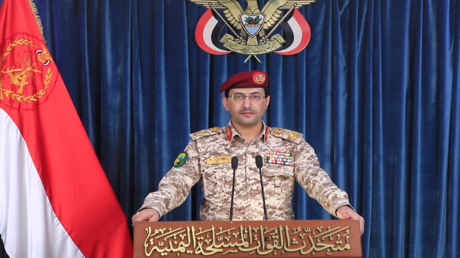
The military spokesperson for the Yemeni Houthi movement, Yahya Saree, has threatened to enter the battle in support of Iran and the resistance axis. This statement was made on Friday evening, where he confirmed that "their hands are on the trigger for direct military intervention" in several scenarios, reflecting an escalation in the Houthi stance regarding regional events.
Saree's statements come at a sensitive time when the region is experiencing increasing tensions, especially with the rise of threats from certain regional and international powers. The Houthis, who consider themselves part of the resistance axis, appear ready to respond to any movements that may be perceived as a threat to Iran or their interests in the region.
Details of the Threat
In his statement, Saree did not specify the circumstances that might necessitate their intervention, but he indicated that any use of the Red Sea against Iran or any other alliances could lead to military escalation. This threat reflects the growing tensions in the region, where fears of a comprehensive military escalation that could affect regional security are increasing.
The Houthi warnings come at a time when pressures on Iran from the United States and its allies are rising, increasing the likelihood of conflict escalation in the region. The Houthis, who enjoy Iranian support, seek to strengthen their position as a major force in the Yemeni and regional conflict.
Background & Context
The Houthi movement, which controls large parts of Yemen, is considered part of the ongoing conflict in the country that has lasted for years. Since the outbreak of the civil war in 2015, several regional and international powers have intervened in the conflict, exacerbating the humanitarian situation in Yemen.
Iran, which supports the Houthis, views them as part of its regional strategy to counter American and Saudi influence in the area. This support bolsters the Houthis' position and makes them a key player in the regional equation, complicating peace efforts in Yemen.
Impact & Consequences
The recent statements from the Houthis could lead to military escalation in the region, threatening regional security and complicating peace efforts. Should any escalation occur, maritime navigation in the Red Sea, a vital corridor for global trade, could be affected.
Any military intervention by the Houthis could drag the region into a wider conflict, where other regional powers might intervene, increasing the likelihood of a comprehensive war. This situation could significantly impact stability in the Gulf Arab states and heighten tensions between Iran and the United States.
Regional Significance
Concerns are growing that any escalation in the Yemeni conflict could have negative repercussions on neighboring countries, especially amid the economic and political crises many Arab nations are facing. Any escalation could lead to an influx of refugees and increase the burdens on host countries.
Moreover, military escalation in Yemen could affect relations among Arab countries, as some nations may take differing stances towards the Houthis and Iran, further increasing divisions in the region.
In conclusion, the situation in Yemen and the region at large remains complex, with regional and international interests intertwining, making it difficult to predict the course of events in the near future.