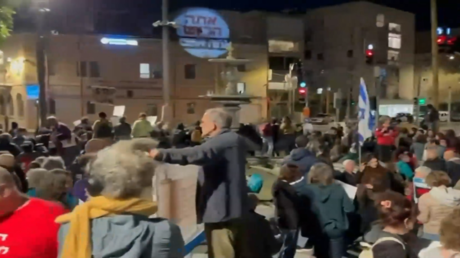
Hundreds of Israelis gathered in Tel Aviv and various other Israeli towns on Saturday, demanding an end to the ongoing war on Iran. This war, which began on February 28, has now entered its second month, raising increasing concerns among citizens about its repercussions.
The protesters, who assembled at the famous Rabin Square, held signs expressing their rejection of the continuation of military operations, urging the Israeli government to end the conflict and seek peaceful solutions. The demonstration was characterized by the presence of families and individuals from various age groups, reflecting a growing public discontent with the current situation.
Details of the Event
These protests come at a sensitive time, as Israeli forces continue their military operations against targets in Iran, leading to heightened tensions in the region. The demonstrations saw wide participation from human rights activists, who called for the necessity of respecting civilian rights in armed conflicts.
Protesters also pointed to the negative impact of this war on the Israeli economy, as many citizens suffer from its economic and social consequences. The demonstrations were organized peacefully, with increased police security to ensure that no riots occurred.
Background & Context
Historically, relations between Israel and Iran have been marked by increasing tensions, with Iran considered one of Israel's main adversaries in the region. These tensions have notably escalated since the United States withdrew from the nuclear agreement with Iran in 2018, leading to an escalation of military actions between the two sides.
In recent years, Israel has intensified its military operations against what it perceives as Iranian threats, prompting strong reactions from the Iranian government, which has asserted its right to defend itself. This complex dynamic contributes to worsening conditions in the region, making it difficult to achieve peace and stability.
Impact & Consequences
The repercussions of the war on Iran extend beyond Israeli borders, affecting regional security in general. The escalation of military tensions could lead to heightened conflicts in neighboring countries, threatening the stability of the entire region.
Moreover, the continuation of the war may result in an influx of more refugees into neighboring countries, increasing pressure on local governments. At the same time, these conditions could impact international relations, as major powers seek to maintain a balance in the region.
Regional Significance
For Arab countries, the ongoing conflict between Israel and Iran poses a significant challenge. Many Arab nations are closely monitoring the situation, as any escalation could have negative effects on Arab national security.
These conditions may also reshape alliances in the region, as some Arab countries seek to strengthen their relations with Iran amid tensions with Israel. This complex situation requires Arab nations to adopt strategic positions to safeguard their national interests.
In conclusion, the protests in Tel Aviv reflect a general sense of discontent regarding the war on Iran, indicating the necessity of seeking peaceful solutions to the conflict. The continuation of this war could lead to serious repercussions for security and stability in the region, necessitating effective intervention from the international community.