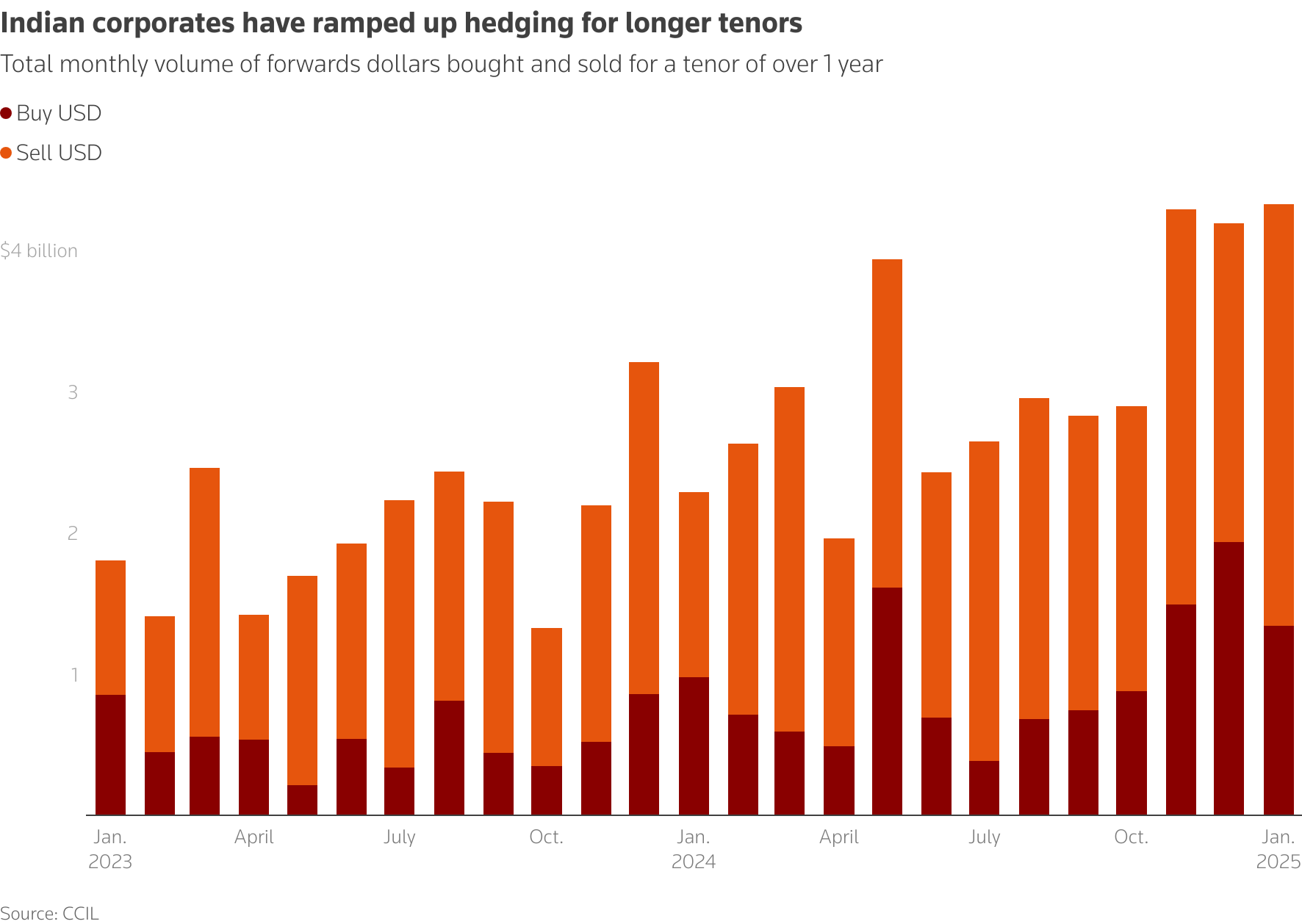
Indian banks have experienced a notable increase in hedging costs against market index fluctuations as traders brace for central bank decisions regarding interest rates amidst rising tensions in the Middle East. This increase reflects growing anxiety in financial markets, where investors are seeking to protect their investments from potential risks.
India is considered one of the largest economies in Asia, and any change in the central bank's monetary policies significantly impacts financial markets. Given the current circumstances, many anticipate that the central bank will make decisive moves that could affect interest rates, thereby heightening the importance of hedging in this context.
Details of the Situation
Data indicates that hedging costs have risen sharply, reflecting concerns over market volatility. This increase is a direct result of the escalating geopolitical tensions in the Middle East, where fears of conflict escalation are growing, potentially impacting global economic stability.
Financial markets in India are under increasing pressure as investors await any signals from the central bank regarding the future direction of interest rates. In this context, hedging is seen as a crucial tool for protecting investments from potential risks.
Background & Context
Historically, India has faced multiple economic challenges, ranging from financial crises to geopolitical tensions. Despite efforts to enhance economic stability in recent years, global events such as conflicts in the Middle East can adversely affect these efforts.
Impact & Consequences
The rise in hedging costs could have negative implications for investments in India. If these trends continue, investors may shy away from injecting more capital into the Indian market, potentially leading to a slowdown in economic growth. Furthermore, higher hedging costs may impact banks' ability to extend loans, which could negatively affect various economic sectors.
Regional Significance
The developments in hedging costs are indicative of the potential risks facing the Indian economy, warranting the attention of investors. As geopolitical tensions continue to unfold, the implications for the Indian financial landscape could be significant, influencing both domestic and foreign investment strategies.
In conclusion, the rising costs of hedging in Indian banks serve as a critical barometer for the overall health of the economy, reflecting broader global uncertainties and the need for strategic financial planning.