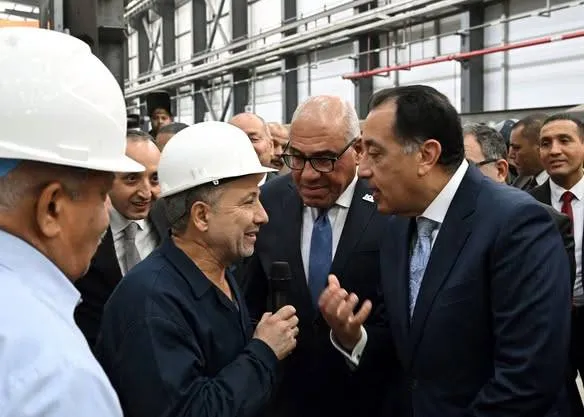
The Egyptian government has announced an increase in the minimum wage for public sector employees to 8,000 Egyptian pounds per month, starting from July. This decision has raised numerous questions regarding the stance of the private sector, as it is expected that the National Wages Council will hold a meeting soon to consider the possibility of implementing similar increases for workers in this sector.
Egyptian Prime Minister Mostafa Madbouly confirmed that this increase is part of efforts to improve the living conditions of state employees, especially in light of the increasing economic burdens. However, opinions among labor representatives and business owners varied regarding the feasibility of implementing a similar increase in the private sector.
Details of the Announcement
While some labor representatives welcomed the wage increase, business representative Alaa El-Saqati expressed reservations, indicating that the current economic conditions may make it difficult to apply a similar increase in the private sector. He explained that there are significant challenges facing companies in the production process, including a shortage of raw materials, which could negatively impact their ability to raise wages.
The National Wages Council, chaired by the Minister of Planning and comprising representatives from several ministries, is responsible for determining the minimum wage and periodic allowances. The minimum wage was first implemented in Egypt in July 2011, set at 700 pounds, and has since been raised several times, reaching 7,000 pounds in 2025.
Background & Context
This wage increase comes after the government's promise of an exceptional salary increase, as the Prime Minister announced increases targeting teachers and health sector workers. These steps aim to improve the work environment and ensure the continuity of quality services provided in the education and health sectors.
While labor union representatives demand wage increases in the private sector, some business owners point out that the current economic conditions, including the Iranian war, may affect their ability to raise wages. Complaints have circulated on social media indicating that some business owners threaten to lay off workers due to production pressures.
Impact & Consequences
If wage increases are approved in the private sector, it could contribute to improving the living conditions of workers, but it may also increase the burdens on business owners, potentially affecting production stability. Some experts suggest that maintaining production stability and regular wages is the most important issue at present.
In this context, the Deputy Head of the Egyptian Workers' Union, Adele Abdel Fadil, confirmed that the exceptional measures taken by the government do not affect the work and production environment, indicating that there is a need to implement an increase in the minimum wage in the private sector in line with what has been applied in the public sector.
Regional Significance
The wage increase in Egypt is considered an important step in the context of the volatile economic conditions in the region, where many Arab countries are striving to improve labor conditions. This increase could serve as a model for other countries facing similar economic challenges.
In conclusion, the question remains as to how the private sector will respond to this increase and whether the government will be able to achieve a balance between improving workers' conditions and ensuring production stability amidst current economic challenges.