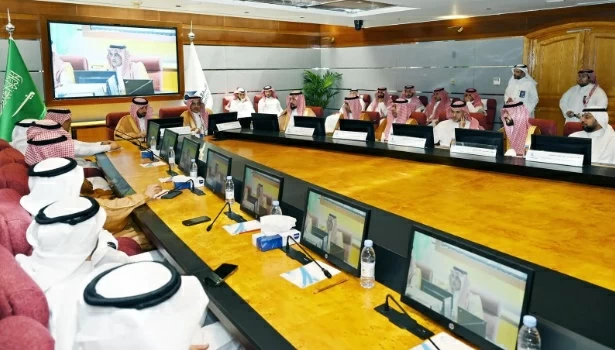
The Deputy Minister of Industry and Mineral Resources for Industry, Engineer Khalil bin Ibrahim bin Salama, announced an increase in the capacity of Saudi Arabia's ports on the Red Sea to 18.6 million containers. This step is part of the government's efforts to bolster the national economy and facilitate customs procedures, prioritizing shipments in the food and pharmaceutical sectors.
During a meeting with several industrialists and business leaders at the Eastern Chamber of Commerce and Industry, bin Salama reviewed the Kingdom's efforts to strengthen the resilience of the national economy and support economic sectors amid current challenges. He emphasized the importance of collaboration among all relevant entities to achieve the desired goals.
Event Details
Bin Salama pointed out the provision of three additional mobile X-ray machines at the Islamic Port of Jeddah, along with the addition of eight new entry and exit lanes for the port, which will enhance the speed of import flows. The meeting also addressed the efforts of relevant authorities to improve the efficiency of the transport sector by optimizing truck usage and implementing flexible regulations for their movement within cities.
Extending the operational lifespan of trucks to 22 years is an exceptional step aimed at supporting the continuity of supply chains, reflecting the leadership's commitment to sustaining economic activities.
Background & Context
This announcement comes at a time when the Kingdom is striving to achieve the goals of Vision 2030, which aims to diversify sources of the national economy and enhance local industry. The industrial sector in the Kingdom has seen significant development, with the number of industrial establishments increasing to 12,946 establishments by the end of 2025.
The Eastern Province ranks second in terms of the number of factories, housing 2,939 factories, reflecting its vital role in the Kingdom's industrial landscape. These developments illustrate the strategic direction of the Kingdom towards enhancing its position as a leading industrial destination in the region.
Impact & Consequences
Increasing the capacity of Saudi ports will significantly improve the efficiency of supply chains, enhancing the Kingdom's ability to meet the needs of both the local and international markets. Additionally, providing financial incentives and quality services will help companies affected by rising costs adapt to economic challenges.
Effective communication with relevant entities, such as the Industrial Center and the Food Security Authority, reflects the government's commitment to addressing challenges related to supply chains, whether in inventory or transport operations, thereby enhancing market stability.
Regional Significance
Enhancing the capacity of Saudi ports may positively impact regional trade, as improving transport and shipping efficiency will expedite the movement of goods between Arab countries. These steps may also encourage increased foreign investment in the industrial sector within the Kingdom.
In conclusion, these initiatives reflect the Kingdom's commitment to strengthening the national economy and providing a conducive environment for investment, contributing to sustainable development.