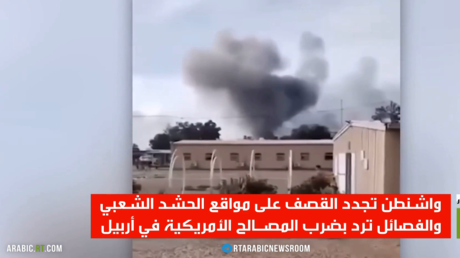
Security and political pressures are escalating in Iraq as US attacks on Popular Mobilization sites resume. These developments come at a time when Iraq is experiencing a noticeable increase in security tensions, raising concerns about the stability of the country and its political future.
The recent attacks targeting Popular Mobilization sites, which are considered part of the Iraqi armed forces, reflect an escalation in US military operations in the region. These strikes have elicited mixed reactions from the Iraqi government, which has emphasized the need to respect its sovereignty and reject any foreign interference in its internal affairs.
Details of the Incident
According to local sources, the US strikes targeted several Popular Mobilization sites in various regions of Iraq, resulting in a number of casualties and injuries. Military sources confirmed that these attacks are part of the United States' efforts to combat threats posed by armed groups in Iraq, which Washington views as part of a larger network of threats in the region.
These strikes come at a sensitive time, as Iraq is grappling with a severe political crisis, with ongoing disputes among political blocs over the formation of a new government. This pressure has complicated the political landscape, as calls for national unity to face security challenges are increasing.
Context and Background
Historically, Iraq has witnessed US military interventions since the invasion in 2003, which led to a change in the political system of the country. Since then, US forces have been present in Iraq under the umbrella of the international coalition against ISIS. However, the presence of these forces has always been a subject of political and public controversy, as some view it as a violation of Iraqi sovereignty.
The Popular Mobilization Forces, established in 2014 to counter the ISIS threat, have become an official part of the Iraqi armed forces. However, some factions within the Popular Mobilization receive support from Iran, complicating the relations between Iraq and the United States.
Consequences and Impact
The recent US strikes on the Popular Mobilization Forces underscore the ongoing tensions between Iraq and the United States and may lead to further escalation in military operations. Additionally, these events could impact relations between Iraq and Iran, as Tehran is expected to respond strongly to any attacks targeting its allies in Iraq.
Moreover, this pressure could exacerbate political crises in Iraq, as some politicians may exploit these events to bolster their positions or to inflame national sentiments against foreign interventions. At the same time, this pressure may enhance calls for national unity among various political factions to confront security challenges.
Impact on the Arab Region
The events in Iraq are indicative of increasing tensions in the region, where regional and international interests intersect in complex ways. The continuation of military and political pressures in Iraq may affect the stability of neighboring countries, especially amid ongoing crises in Syria, Lebanon, and Yemen.
These events may also bring renewed attention to the role of the United States in the region and raise questions about its future strategy in addressing security threats. Concurrently, these developments could strengthen Iran's role in Iraq, further complicating the regional landscape.
In conclusion, the events in Iraq remain a significant focus of attention, as security and political factors intertwine in complex ways. The continuation of military and political pressures may lead to widespread repercussions, not only for Iraq but for the entire region.