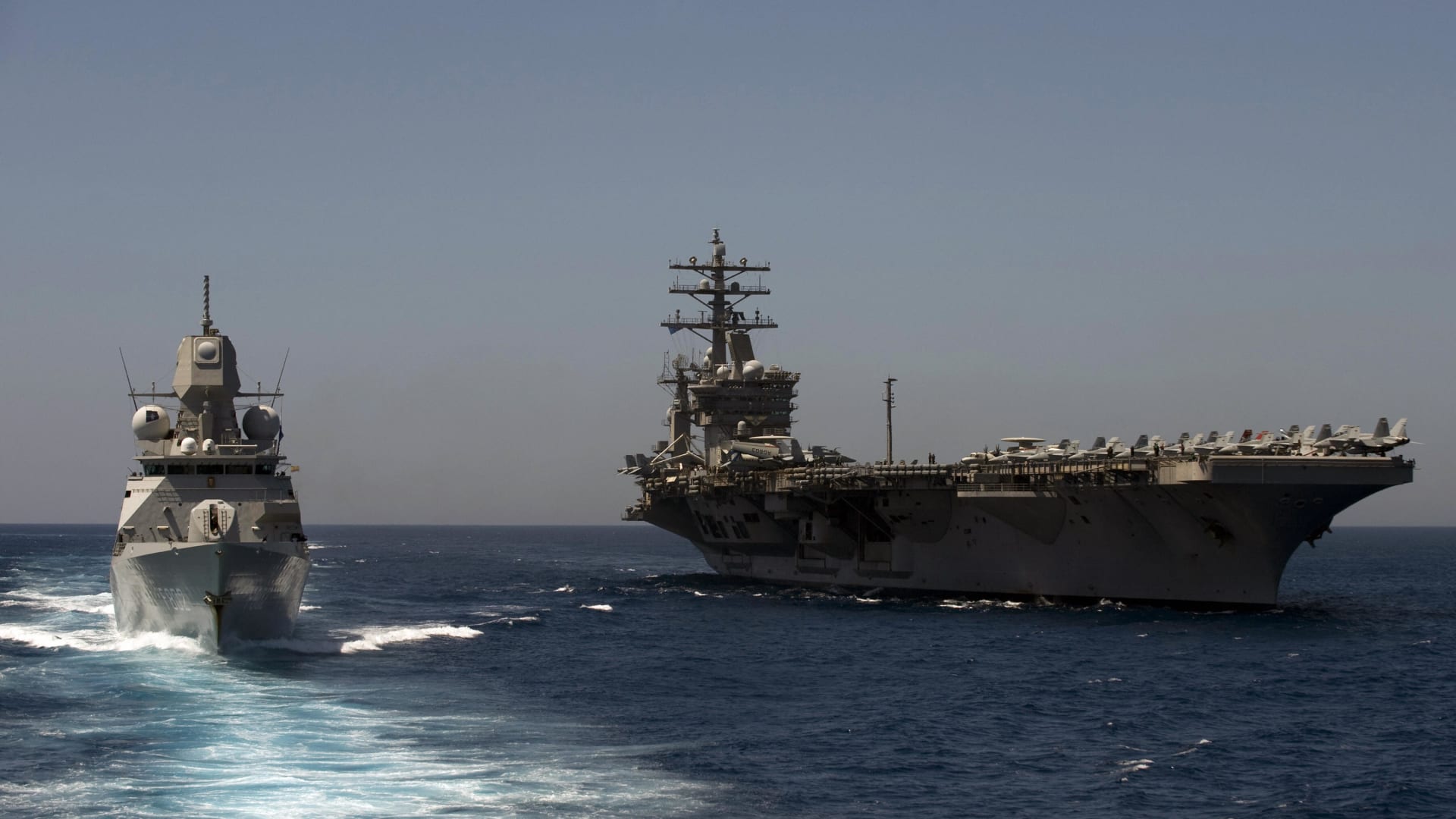
The US administration is preparing to request a defense budget of $1.5 trillion for 2027, raising questions about the impact of the military-industrial complex on military spending. The warnings issued by President Dwight Eisenhower over six decades ago remain relevant, as he cautioned against the alliance between military industries and defense institutions.
In his famous speech on January 17, 1961, Eisenhower referred to what he called the military-industrial complex, which combines major defense companies, the defense establishment, and Congress, leading to an unjustified increase in military spending. Eisenhower warned that this alliance could have dire consequences for national security.
Details of the Event
Despite these warnings, military spending in the United States has continued to rise. The proposed budget for 2027 represents an increase of $575 billion over the previous year's budget, prompting a closer look at the reasons behind this substantial increase. One possible explanation is the emergence of what can be termed the military-technological complex, which focuses on developing advanced technological programs rather than conventional military hardware.
Companies that belong to this giant complex include Google and Microsoft, which are developing information systems used in military operations. These companies have invested hundreds of billions of dollars in research and development, reflecting their desire to achieve significant returns from defense contracts.
Background & Context
This trend of utilizing modern technology in the military sphere began during President Joe Biden's administration and expanded further under Donald Trump, who ordered the Pentagon to accelerate the development of military systems. This led to contracts with major technology companies to use their information systems in military operations.
The ongoing war with Iran provides clear examples of the use of this technology, where artificial intelligence is employed to analyze data and identify targets in real-time. An example of this is the Maven program initiated by Google, which was used in military operations before being halted due to employee protests.
Impact & Consequences
Statements from Pentagon officials indicate their satisfaction with the results of using modern technological systems in the current war, making it one of the first wars managed through technology. This trend may lead to increased demand for these systems, which means more profits for companies operating in this field.
However, there are voices warning of the risks associated with over-reliance on technology in wars, as this may lead to a lack of adequate human oversight. Additionally, the use of these systems could create a significant dependency on a few companies, raising concerns about national security.
Regional Significance
For the Arab region, these developments reflect a shift in the nature of wars, where technology may become the decisive factor in future conflicts. This necessitates Arab countries to consider how to enhance their defense and technological capabilities to face potential challenges.
In conclusion, the warnings issued by Eisenhower decades ago remain relevant today, as the United States continues to increase its military spending amid rapid technological transformations. Understanding these dynamics is vital for Arab countries in light of ongoing geopolitical changes.