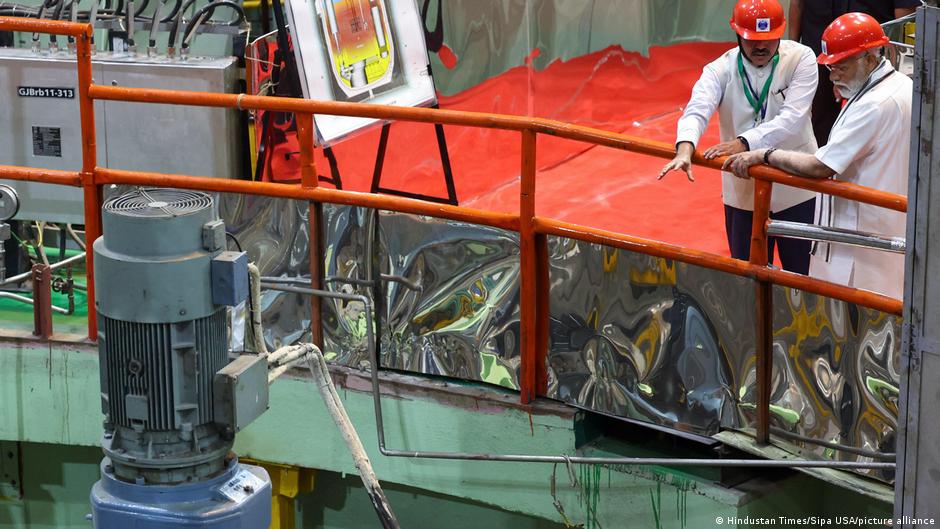
India has announced a significant milestone in its civilian nuclear program, as its fastest reactor, the Prototype Fast Breeder Reactor (PFBR), has reached criticality, the point at which the reactor begins to achieve a sustainable nuclear chain reaction. This announcement was made by Indian Prime Minister Narendra Modi on Monday night, marking a crucial step towards the reactor's operation and energy production.
The reactor is located in Kalpakkam, near the city of Chennai in the state of Tamil Nadu, and is considered one of the latest nuclear reactors designed and built locally. This achievement signifies substantial progress in the second phase of India's three-stage nuclear program, which aims to utilize India's vast reserves of thorium in the third phase.
Details of the Achievement
Modi described this achievement as a moment of pride for India, noting that the reactor is capable of producing more fuel than it consumes, reflecting the depth of scientific and engineering capabilities in the country. He added that this milestone is a critical step towards harnessing India's vast thorium reserves.
India, which is the third-largest emitter of greenhouse gases, aims to increase its nuclear power capacity from 8 gigawatts currently to 100 gigawatts by 2047. The PFBR is one of the important fast reactors, as it can produce more fissile material than it uses, making it highly valuable for countries seeking long-term nuclear sustainability.
Background & Context
Historically, India began its nuclear program in the 1950s, aiming to develop its nuclear capabilities for peaceful purposes. Over time, the program evolved to include research and development in nuclear energy, making India one of the leading countries in this field. India has witnessed several phases of development in this program, including the development of new reactors and expanding their use.
In 2024, Modi toured the facility to witness the start of the reactor core loading, reflecting the Indian government's commitment to enhancing nuclear energy capabilities. This achievement is part of India's vision to become a leading nuclear power in the future.
Impact & Consequences
This achievement is a strategic step for India, enhancing its ability to produce energy sustainably and reducing reliance on traditional energy sources. It also showcases the technological advancements India has made in nuclear energy, potentially boosting its standing on the international stage.
Moreover, this achievement strengthens India's ability to meet its environmental goals and reduce greenhouse gas emissions, contributing to its efforts to combat climate change. This development serves as evidence of India's capability to develop new technologies that promote energy sustainability.
Regional Significance
For Arab countries, this Indian achievement underscores the importance of investing in nuclear energy as a sustainable option. Many Arab nations, such as the UAE and Saudi Arabia, are seeking to enhance their nuclear energy capabilities, indicating a potential shift in energy strategies in the region.
Arab nations could benefit from India's experience in developing nuclear energy, which would bolster their efforts to achieve energy security and sustainable development.
In conclusion, India's achievement in nuclear energy represents a significant step towards energy sustainability, demonstrating its commitment to developing new technologies that enhance its capabilities in this field. It also strengthens India's position on the international stage and sets an example for other countries.