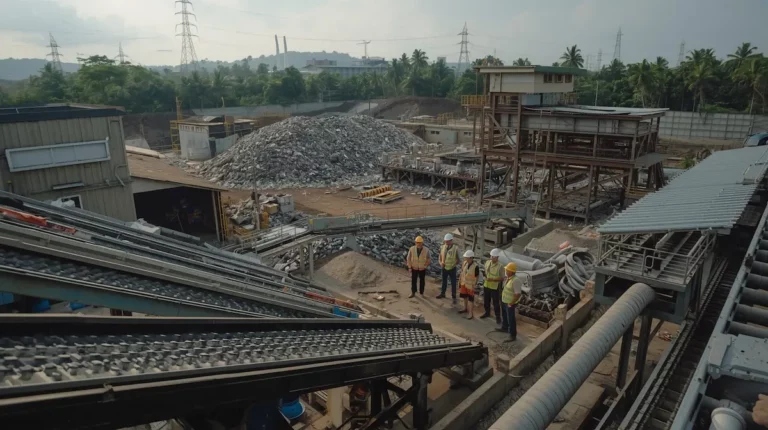
Indonesian State Secretary Prasetyo Hadi has revealed that the Indonesian government is preparing to lay the foundation for several national strategic projects, including a waste-to-energy conversion initiative, in April 2026. Hadi explained that the government initially targets 33 locations, but this number may be reduced to 29 locations after field adjustments.
This announcement comes as part of the government's efforts to promote sustainable development and achieve the national goals outlined in long-term and medium-term development plans. Hadi emphasized that the government is committed to implementing the programs specified in official documents, such as the long-term development plan and the medium-term development plan.
Details of the Initiative
Hadi noted that the government is currently focusing on executing a set of priority national programs identified in the development plans. He confirmed that these programs include multiple projects aimed at improving the quality of life and boosting the national economy. Additionally, he mentioned that the government is adapting to the global geopolitical dynamics that affect the implementation of these projects.
The waste-to-energy project is considered a pioneering initiative aimed at addressing the waste management issue in Indonesia, which faces significant challenges in this area. This project is expected to contribute to reducing environmental pollution and providing new energy sources.
Background & Context
Historically, Indonesia has faced major challenges in waste management, with increasing waste generation due to population growth and urban expansion. These challenges have led to an urgent need for adopting innovative and sustainable solutions. In recent years, the Indonesian government has begun implementing new strategies to tackle these issues, including waste-to-energy projects.
These projects are part of the government's vision to achieve sustainable development, as Indonesia seeks to balance economic growth with environmental protection. Furthermore, these strategies align with global sustainable development goals.
Impact & Consequences
The waste-to-energy projects are expected to have a significant impact on the Indonesian economy, as they will create new job opportunities and foster innovation in the energy sector. These initiatives will also help reduce reliance on traditional energy sources, thereby enhancing the country's energy security. Moreover, these projects will contribute to improving environmental quality by reducing pollution caused by waste. The success of these projects could encourage other countries in the region to adopt similar strategies, thereby enhancing regional cooperation in sustainable development.
In conclusion, the Indonesian government's commitment to these strategic projects reflects its dedication to addressing waste issues while promoting economic growth and environmental sustainability.
Regional Significance
These initiatives are not only crucial for Indonesia but also hold significance for the broader Southeast Asian region. As countries face similar waste management challenges, Indonesia's approach could serve as a model for neighboring nations. The collaboration and knowledge sharing that may arise from these projects could lead to more effective regional strategies for sustainable development.
Ultimately, Indonesia's efforts in waste-to-energy conversion could pave the way for a greener future, inspiring other nations to follow suit in their quest for sustainability.