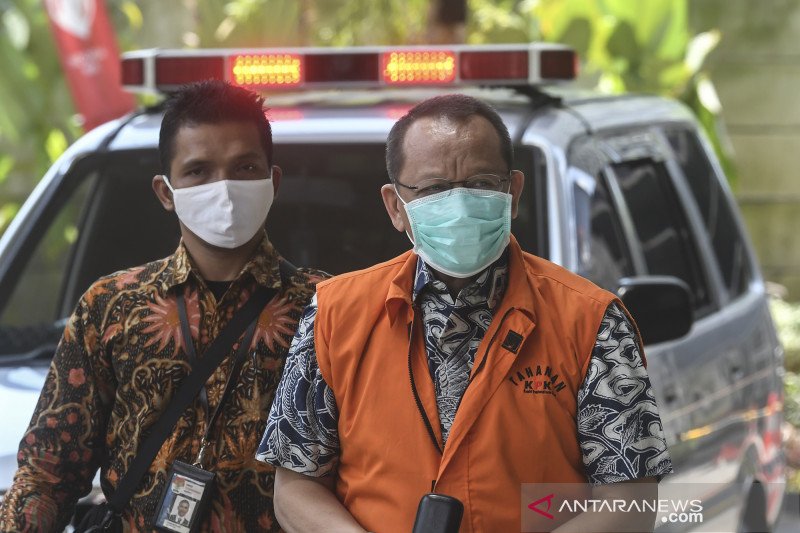
The Indonesian Corruption Court is preparing to issue its ruling in the case of Nurhadi, who served as the Secretary General of the Supreme Court from 2011 to 2016. This ruling follows a hearing where the defense presented evidence of their client's innocence, as Nurhadi faces allegations related to corruption and money laundering.
During the court session held on Friday, lawyer Mohammad Ikhsan expressed hope that the decisions made by the court would be just, noting that his client is undergoing a process of "criminalization." The final ruling is scheduled to be announced next Wednesday, heightening public tension and interest in the case.
Details of the Case
Nurhadi, who has been accused of receiving bribes amounting to 137.16 billion rupiah, has provided evidence demonstrating his income sources through his salary and bonuses, which totaled approximately 25.8 billion rupiah, in addition to revenues from his quail farming project that he started in 1981, which generated an estimated 41.14 billion rupiah.
On the other hand, the lawyer pointed out that the assets that Nurhadi is accused of having obtained through money laundering, such as villas, apartments, and cars, do not exceed 28 billion rupiah, making them significantly lower than his declared total income.
Background & Context
This case comes as part of the Indonesian government's efforts to combat corruption, with Nurhadi's trial representing a broader campaign to hold government officials accountable for corruption. Indonesia has seen a rise in corruption cases in recent years, leading to increased pressure on the government to enforce laws strictly.
Historically, Indonesia has struggled with high levels of corruption in the public sector, negatively impacting economic development and public trust in government institutions. The government established the Corruption Eradication Commission in 2002 as part of its efforts to combat this phenomenon.
Impact & Consequences
If Nurhadi is convicted, it could have significant implications for the judicial system in Indonesia, affecting public trust in the judiciary and strengthening the government's position in fighting corruption. It may also lead to increased calls for legal reforms and enhanced transparency in government institutions.
Conversely, if Nurhadi is acquitted, it could be seen as a setback for the government's anti-corruption efforts, potentially leading to a decline in public trust in state institutions and raising doubts about the integrity of the judicial system.
Regional Significance
The Nurhadi case exemplifies the challenges faced by countries in combating corruption, a topic of concern for many Arab nations grappling with similar issues. As calls for reform increase in the Arab world, corruption remains a top issue that requires serious attention.
In this context, Arab countries could benefit from Indonesia's experiences in fighting corruption by enhancing transparency and accountability in their government institutions, contributing to an improved business environment and increased public trust in government.