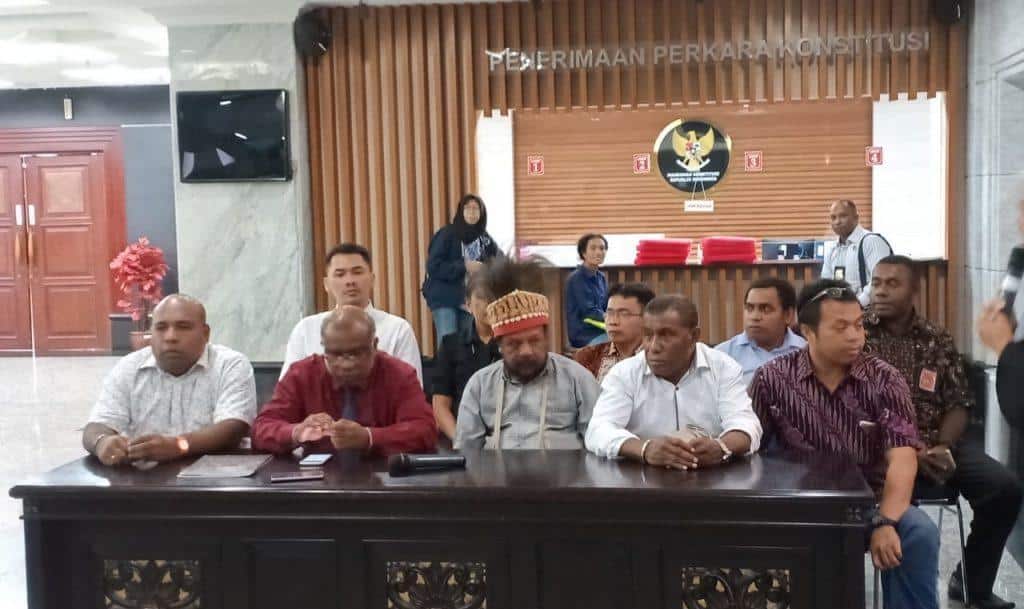
In a compelling session held at the Indonesian Constitutional Court, Vice President Saldi Isra called for the collaboration of students Adam Imam Hamdana and Wiyanda Julita Maharani from UIN Sidi Ali Rahmatullah, who are challenging the constitutionality of the court law. Isra expressed hope that the duo would continue their efforts together until the end.
The students, who are enrolled in a graduate program in constitutional law, filed a legal challenge against Constitutional Court Law No. 8 of 2011, which amends Court Law No. 24 of 2003. They pointed out that the lack of clear time limits for handling legal cases creates a state of legal uncertainty.
Details of the Case
During the session, student Adam emphasized that the absence of clear time constraints leaves petitioners in a state of ongoing anticipation. He stated, "Without clear time limits, the relevant legal texts create legal uncertainty, making petitioners feel as if they are stuck in a state of ambiguity regarding their requests."
The two students also noted that laws in other countries provide clear timelines for trials, which enhances transparency and reduces uncertainty. They requested the Constitutional Court to provide a constitutional interpretation regarding the necessity of establishing time limits for trials.
Background & Context
The Indonesian Constitutional Court was established in 2003 as part of the country's efforts to strengthen democracy and protect citizens' rights. However, the laws governing court procedures have faced criticism for their lack of clarity, leading to calls for legal reforms.
Many legal experts argue that the current system's ambiguity undermines public trust in the judiciary. The students' challenge reflects a growing demand for more transparent legal processes that can better serve the interests of justice.
Impact & Consequences
If the students succeed in their objectives, it could lead to significant changes in how legal cases are handled in Indonesia. This may contribute to enhancing trust in the legal system and reducing complaints related to a lack of transparency.
Such changes could inspire similar movements in other countries, particularly in the Arab world, where calls for justice and transparency are increasingly prominent.
Regional Significance
This case is an important step towards enhancing transparency and justice within the Indonesian legal system, which could influence how legal issues are addressed in the future. The outcome may set a precedent for other nations grappling with similar challenges.
As the world watches, the implications of this case extend beyond Indonesia, potentially inspiring reforms in legal systems across the region.