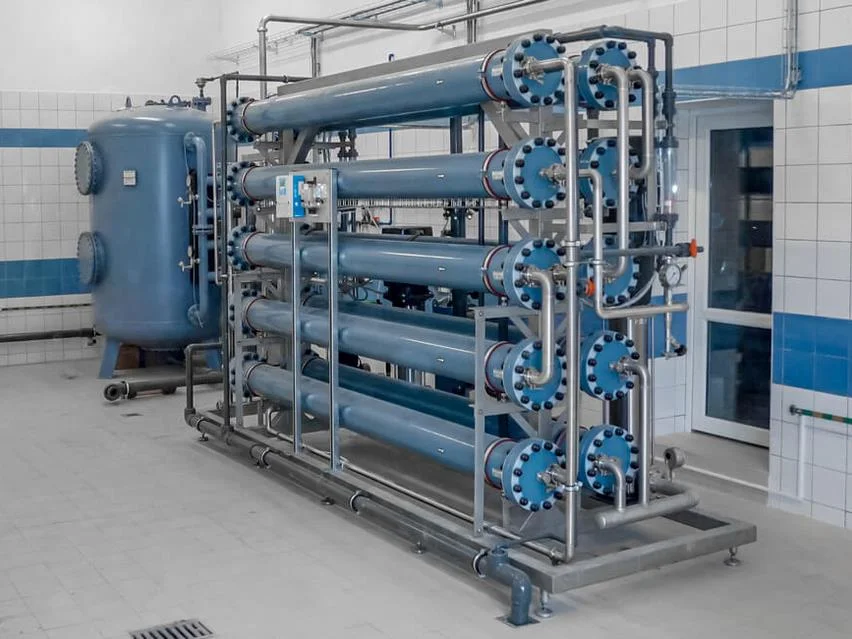
Amid increasing environmental challenges, a research team from Flinders University in Australia has introduced a scientific innovation aimed at tackling the issue of "forever chemicals" found in water sources. These industrial compounds, which do not easily decompose, pose an escalating health threat as they accumulate in groundwater, rivers, and drinking water networks.
For decades, these substances have infiltrated the environment, leading to health risks ranging from immune disorders to chronic diseases. This challenge has remained unsolved until now, prompting scientists to seek new technologies to eliminate these compounds.
Details of the Innovation
The new study, published in the journal "Angewandte Chemie," presents an innovative technique based on the design of a nanomaterial that functions as a molecular cage. This material is not just a traditional filter; it features a three-dimensional structure capable of containing pollutant molecules, allowing it to effectively capture forever chemicals.
Perfluoroalkyl and polyfluoroalkyl substances, particularly short-chain variants, are among the most problematic types, as they have evaded traditional filtration systems due to their small size and weak interaction with surfaces. However, laboratory results have shown that the new material can remove up to 98% of these compounds from water samples, marking a significant advancement in this field.
Background & Context
Forever chemicals are one of the major environmental challenges of the 21st century. These compounds, used across various industries, do not decompose in the environment, leading to ongoing contamination of water sources. Studies have demonstrated that these substances can cause serious health effects, underscoring the urgent need for effective solutions.
Historically, traditional filtration techniques relied on surface adsorption, rendering them ineffective against these compounds. However, the new innovation represents a radical shift in how this problem is addressed, opening new avenues for research and development in this area.
Impact & Consequences
The significance of this innovation lies not only in its high efficiency in removing chemicals but also in its reusability. The new material has shown the ability to maintain its performance over several purification cycles without significant degradation, making it an economically viable and environmentally sustainable option.
This technology represents a step toward improving drinking water quality, especially in what is known as the "final purification" stage, where fine impurities that escape primary treatments are removed. If field tests succeed and costs are reduced, this material could provide a practical solution to the problem of water pollution.
Regional Significance
In the Arab region, where many countries suffer from a lack of clean water, this innovation could have a substantial impact. Enhancing water purification technologies could contribute to providing safe drinking water, thereby improving public health and reducing health risks associated with water pollution.
In conclusion, this scientific innovation represents a beacon of hope in addressing one of the greatest environmental challenges of our time, reflecting the importance of ongoing research in developing new technologies that contribute to environmental protection and human health.