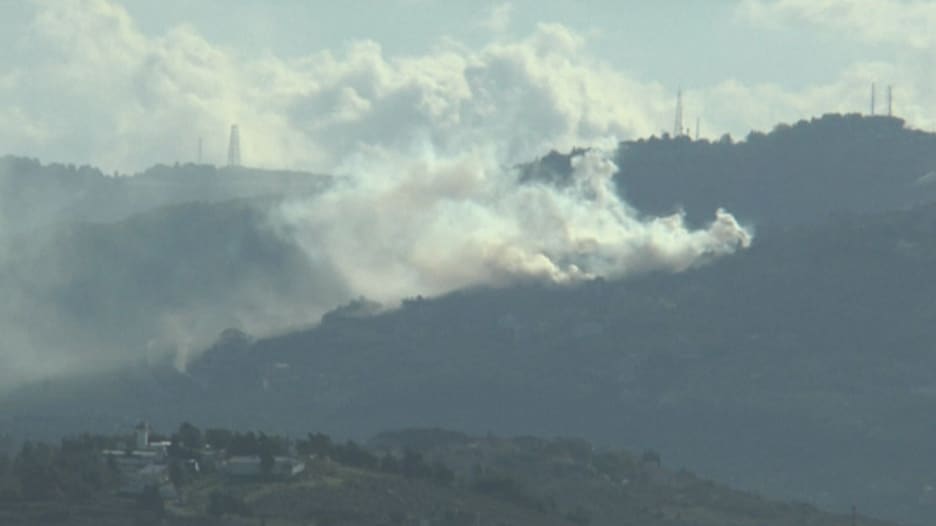
Intense clashes continue between the Israeli army and Hezbollah in southern Lebanon, where the intensity of Israeli shelling on various regions in Lebanon is increasing. This escalation comes at a sensitive time, as the region awaits developments in the security situation amid ongoing tensions.
Reports indicate that the clashes have resulted in injuries on both sides, complicating the security situation in the area. Additionally, the Israeli bombardment targets residential areas, raising fears of civilian casualties.
Details of the Incident
The clashes between the two sides have been ongoing for several days, with the Israeli army announcing its targeting of sites belonging to Hezbollah in southern Lebanon, claiming they pose a threat to its security. In response, Hezbollah retaliated by launching rockets at Israeli positions, leading to an escalation in fighting.
It is noteworthy that these clashes occur within the context of ongoing tensions between the two sides, as the Lebanese-Israeli border has witnessed several rounds of violence in recent years. However, the current situation appears more dangerous due to the mutual military escalation.
Background & Context
Historically, the Lebanese-Israeli border has seen numerous armed conflicts, with Hezbollah being one of the key players in this equation. The party was established in the 1980s in response to the Israeli occupation of Lebanon, and since then, it has become a major player in Lebanese and regional politics.
In recent years, tensions between Hezbollah and Israel have increased, especially following the Israeli war on Lebanon in 2006. Moreover, events in Syria and their impact on the situation in Lebanon have contributed to heightened tensions, as Hezbollah is involved in the Syrian conflict alongside the regime.
Impact & Consequences
These clashes are expected to lead to greater escalation in the region, with regional and international powers potentially intervening to calm the situation. Furthermore, the continued bombardment and clashes may exacerbate the humanitarian situation in Lebanon, which is already suffering from severe economic and social crises.
Additionally, these events could affect relations between Lebanon and neighboring countries, especially amid fears of an outbreak of a comprehensive war that could involve other countries in the region. The military escalation may also negatively impact peace and stability efforts in the Middle East.
Regional Significance
These clashes are part of a broader conflict in the Middle East, where regional and international interests intersect in complex ways. Developments in southern Lebanon could have repercussions on the situation in countries like Syria and Palestine, all of which are affected by the tensions between Israel and Hezbollah.
Moreover, these events may evoke memories of previous wars in the region, increasing the anxiety of Arab populations about a potential flare-up of tensions once again. Under these circumstances, hope remains pinned on diplomacy and peaceful efforts to avoid further escalation.