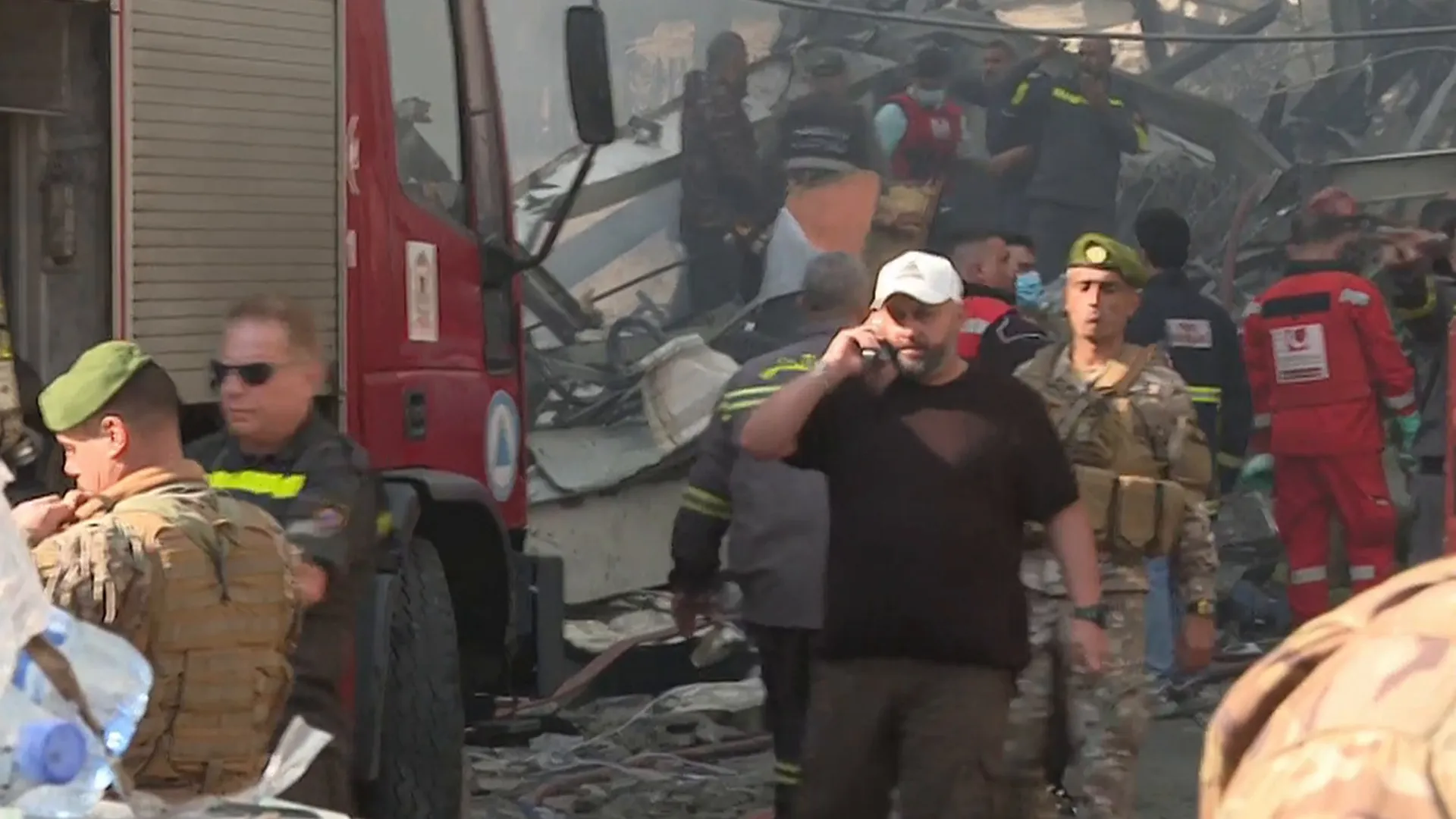
The intensity of Israeli bombardment on Lebanon has escalated to unprecedented levels, with more than 100 airstrikes executed in a short timeframe, targeting various regions across the country, including the capital Beirut, southern Lebanon, and the Bekaa Valley. This violent escalation has led to a catastrophic humanitarian scene, as rescue teams and hospitals are under immense pressure due to the increasing number of victims.
Al Jazeera correspondent Catherine Hanna reported that one of the airstrikes targeted the Shmistar cemetery in the Baalbek district, resulting in the deaths of many civilians who were attending the funeral of a deceased individual. This strike has been described as a massacre, with 9 fatalities and a significant number of injuries.
Details of the Incident
This massacre coincided with other airstrikes targeting nearby towns such as Al-Aqidiya and Hermel, leading to more casualties, including some paramedics. Reporters noted that these areas were not among those that Israel had requested to be evacuated, raising questions about the targeting of civilians.
In Beirut, the capital has turned into a scene of chaos, with streets filled with ambulances, paralyzing traffic in many areas. In the Corniche Mazraa neighborhood, an entire building was destroyed, causing severe damage to neighboring structures and igniting fires.
Background & Context
This escalation comes at a sensitive time, coinciding with the Israeli army's announcement of a major strike on Lebanon, just hours after the announcement of a ceasefire agreement between the United States and Iran. Mazen Ibrahim, the director of Al Jazeera's office in Lebanon, stated that what is happening is the most intense since the invasion of 1982, as Beirut has not witnessed such heavy targeting.
Concerns are growing that these airstrikes may represent a shift in Israeli military strategy towards Lebanon, especially following recent agreements that could affect the balance of power in the region.
Impact & Consequences
Initial estimates suggest that the number of casualties could rise significantly, particularly as the airstrikes targeted densely populated residential areas during peak hours. The Red Cross teams have called on citizens to donate blood, as hospitals are overwhelmed with the injured and wounded.
As the bombardment continues, panic is increasing among the population, as there were no prior warnings before the strikes, exacerbating chaos and confusion in the targeted areas.
Regional Significance
This escalation in Lebanon poses a threat to security and stability in the region, reflecting rising tensions between Israel and its allies on one side, and the resistance axis on the other. This situation may also affect relations between Arab countries and Israel, especially in light of recent political developments.
In conclusion, the situation in Lebanon remains tense, with ongoing Israeli airstrikes leaving devastating humanitarian impacts, necessitating urgent international action to halt the escalation and protect civilians.