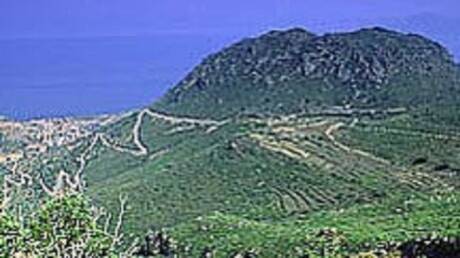
In an exciting scientific development, researchers have discovered a significant accumulation of magma in the Methana volcano, raising new concerns about the potential risks posed by these so-called "dormant" volcanoes. This finding comes at a sensitive time as scientists strive to gain a better understanding of volcanic activities and their effects on the surrounding environment.
The analysis of zircon crystals, which are important indicators in the study of volcanic activity, has contributed to the reassessment of the risks associated with the Methana volcano. These crystals carry historical information about volcanic activity, enabling scientists to infer previous activities that may have occurred in the region.
Details of the Discovery
The Methana volcano is considered one of the volcanoes that has not shown significant activity in recent years, leading scientists to believe it was in a state of dormancy. However, the accumulation of magma suggests the possibility of volcanic activity in the near future, necessitating close monitoring by relevant authorities, especially since any volcanic eruption could have significant impacts on local populations and the environment.
Reports indicate that scientists have collected samples of rocks and crystals from the area surrounding the volcano, which were analyzed using advanced techniques. The results showed a noticeable increase in the amount of magma stored beneath the Earth's surface, reflecting geophysical changes that may be linked to volcanic activity.
Background & Context
Historically, the Methana area has experienced notable volcanic activity, as the volcano is part of a chain of volcanoes in the Mediterranean region. This area is known for its geological activity, making it an important subject for scientific studies. Over the decades, several volcanic eruptions have been recorded in the region, highlighting the need for a better understanding of the causes and factors leading to these phenomena.
In recent years, there has been a focus on studying dormant volcanoes, as these volcanoes can be more dangerous than those exhibiting clear activity. Many scientists emphasize that volcanoes showing no signs of activity may be capable of erupting suddenly, making continuous monitoring essential.
Impact & Consequences
The accumulation of magma in the Methana volcano could pose serious consequences for local residents, as any sudden volcanic activity could lead to evacuations and property destruction. Additionally, volcanic eruptions can affect both local and global climates by releasing gases and ash into the atmosphere.
This discovery also highlights the importance of scientific research in understanding volcanic activities. Governments and scientific bodies must enhance cooperation to monitor these phenomena and develop strategies to address potential risks.
Regional Significance
The implications of this discovery extend beyond immediate safety concerns, as they emphasize the need for preparedness in the face of geological hazards. The Methana volcano's history of activity necessitates a proactive approach to risk management in the region.
In conclusion, the findings regarding magma accumulation in the Methana volcano serve as a critical reminder of the unpredictable nature of volcanic systems and the importance of ongoing research and monitoring to safeguard communities and the environment.