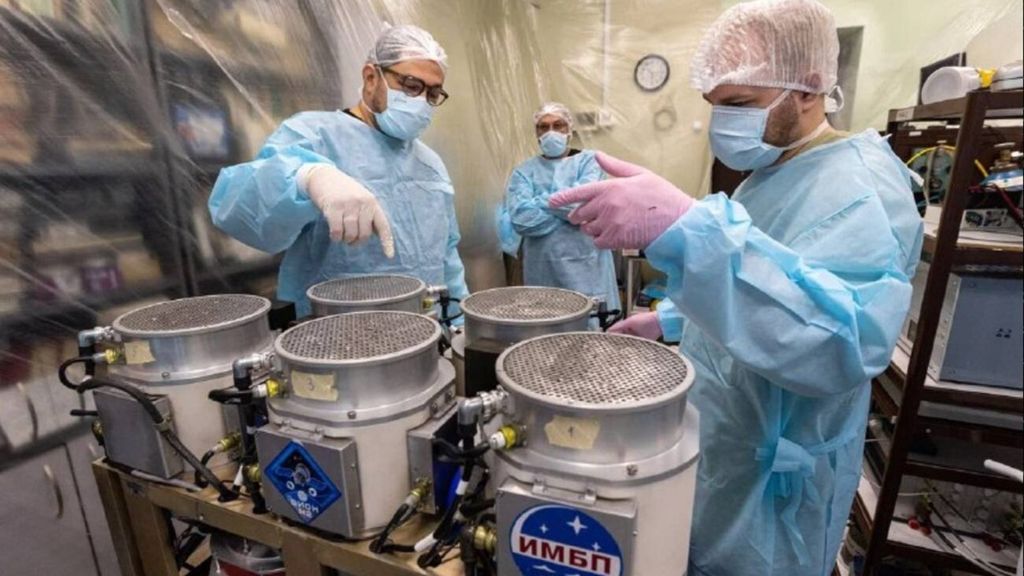
Russia has revealed its intention to launch a biosatelit in the mid-2030s to investigate the effects of space conditions on living organisms. The project, named Vozvrat-MKA, will involve sending living organisms to an altitude of 200,000 kilometers to simulate the conditions of interplanetary travel.
In statements made by Vladimir Sitchev, a leading researcher in space biology from the Institute of Biomedical Problems, he noted that the current data on how living organisms respond to conditions near the Moon is still limited. He emphasized that this mission will study the effects of weak magnetic environments, as well as cosmic radiation and high-energy neutrons.
Mission Details
This mission is part of Russia's ongoing efforts to explore space and understand its impact on life. The biosatelit Vozvrat-MKA will collect vital data on how radiation and environmental conditions affect living organisms, which will aid in developing new strategies to support life in space.
This mission is expected to be a significant step towards achieving deeper space exploration goals, including missions to the Moon and Mars. The data collected will also contribute to a better understanding of how to protect astronauts from potential health risks during their long journeys.
Background & Context
Historically, Russia has been a pioneer in space exploration, launching the world's first satellite, Sputnik, in 1957. Since then, it has continued to develop its space programs, including sending astronauts into outer space. With the growing global interest in space exploration, Russia is striving to reaffirm its position as a leading force in this field.
The Vozvrat-MKA project aligns with Russia's strategic goals to expand its knowledge of space and its effects on life. Understanding how space conditions impact living organisms can have significant implications for the future of space exploration, including the development of new technologies to protect astronauts.
Impact & Consequences
This mission represents a strategic step in Russia's efforts to enhance its understanding of space and its effects on life. Grasping how space conditions affect living organisms could greatly influence the future of space exploration, including the development of new technologies to safeguard astronauts.
The findings from this project may lead to advancements in life support systems for long-duration space missions, ultimately contributing to humanity's ability to explore further into the cosmos.
Regional Significance
The implications of the Vozvrat-MKA project extend beyond Russia, as it opens new avenues for international collaboration in space research. By sharing data and findings with other countries, Russia can foster partnerships that enhance global understanding of space biology.
As nations increasingly recognize the importance of space exploration, Russia's commitment to this mission underscores its ambition to play a leading role in future space endeavors.