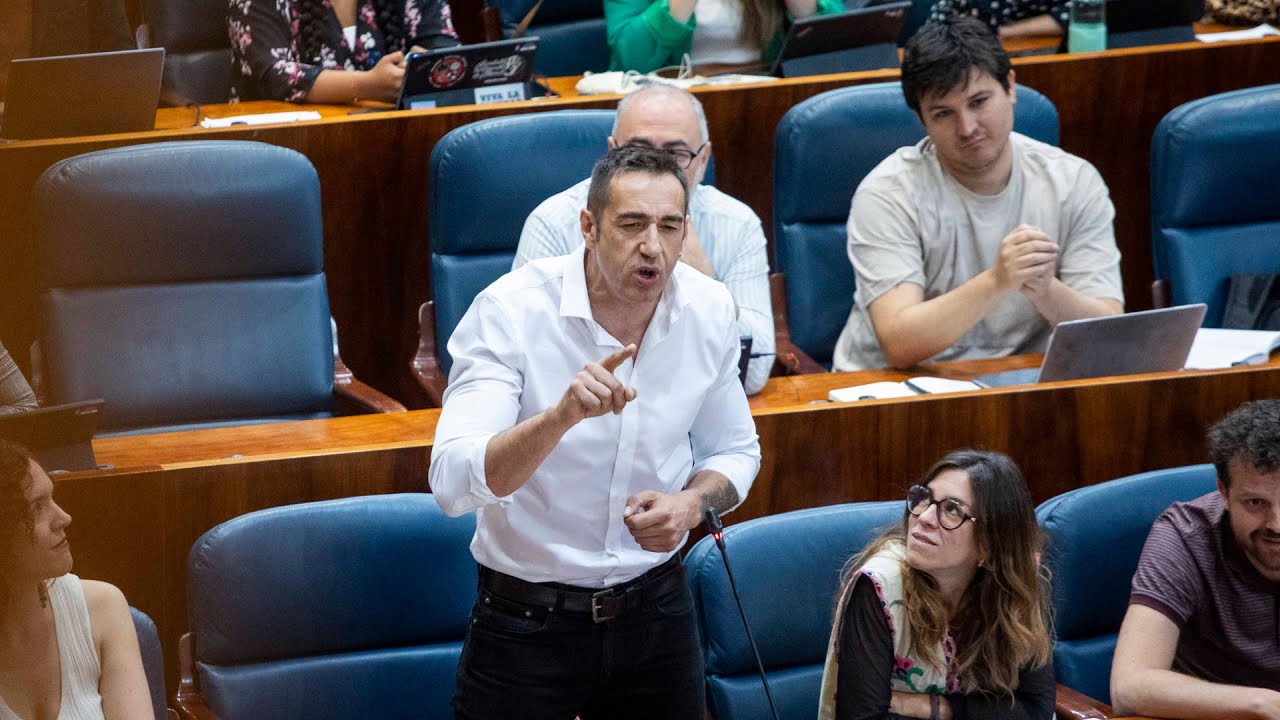
Events have accelerated within the 'Más Madrid' party after a phone call between Monica Garcia and Emilio Delgado, where this conversation sparked sharp disagreements regarding the primaries and party leadership. This call is seen as a turning point in the relationships between the party's key leaders, with Garcia expressing her dissatisfaction with Delgado's actions, particularly regarding his dealings with Rafael Rafian.
As attention turns towards the upcoming primaries, it appears that internal disagreements could significantly impact the party's performance. The call between Garcia and Delgado was not just a casual conversation; it was an expression of accumulated feelings of frustration and anxiety about the party's future. Garcia, regarded as one of the prominent figures in the party, did not hesitate to voice her concerns about Delgado's influence on the party's direction.
Details of the Dispute
Pressure is mounting on the party leadership as elections approach, making it essential to address these disagreements urgently. Reports indicate that there are deep divisions among members regarding how to manage the electoral campaign, complicating the situation further.
'Más Madrid' was founded in 2015 as a political movement aimed at promoting local democracy and social justice. Since then, the party has undergone numerous changes in its leadership and political agenda. With the increasing political challenges in Spain, the party needs to unite its ranks to face competitors. However, internal conflicts may hinder these efforts.
Background & Context
Historically, political parties in Spain have experienced similar internal conflicts, where differences in visions and goals lead to divisions that can affect electoral performance. In the case of 'Más Madrid', it seems that the current tensions may be more intense, raising questions about the party's ability to maintain its unity.
Such internal strife is not uncommon in Spanish political history, where factions often emerge over leadership and strategy, impacting the overall effectiveness of the party during elections. The current situation within 'Más Madrid' reflects a critical moment that could define its future.
Impact & Consequences
If internal disagreements persist, they could lead to an erosion of the party's support base, opening the door for competing parties to capitalize on this chaos. Analysis suggests that the upcoming elections will be a true test of 'Más Madrid's' ability to overcome these internal crises. Should the party fail to address these issues, it may face a noticeable decline in its popularity.
Moreover, these disputes could affect local and national policies, as a weakened party could lead to shifts in the political balance in Spain. It is crucial for leaders to effectively tackle these challenges to maintain the party's stability.
Regional Significance
The unfolding events highlight the challenges faced by political parties in Spain, reflecting the importance of internal unity for electoral success. The dynamics within 'Más Madrid' serve as a microcosm of broader political trends, where unity and coherence are essential for navigating the complex landscape of Spanish politics.
In conclusion, the current tensions within 'Más Madrid' not only pose a risk to the party's immediate electoral prospects but also underscore the need for cohesive strategies to address internal conflicts and strengthen its position in the political arena.