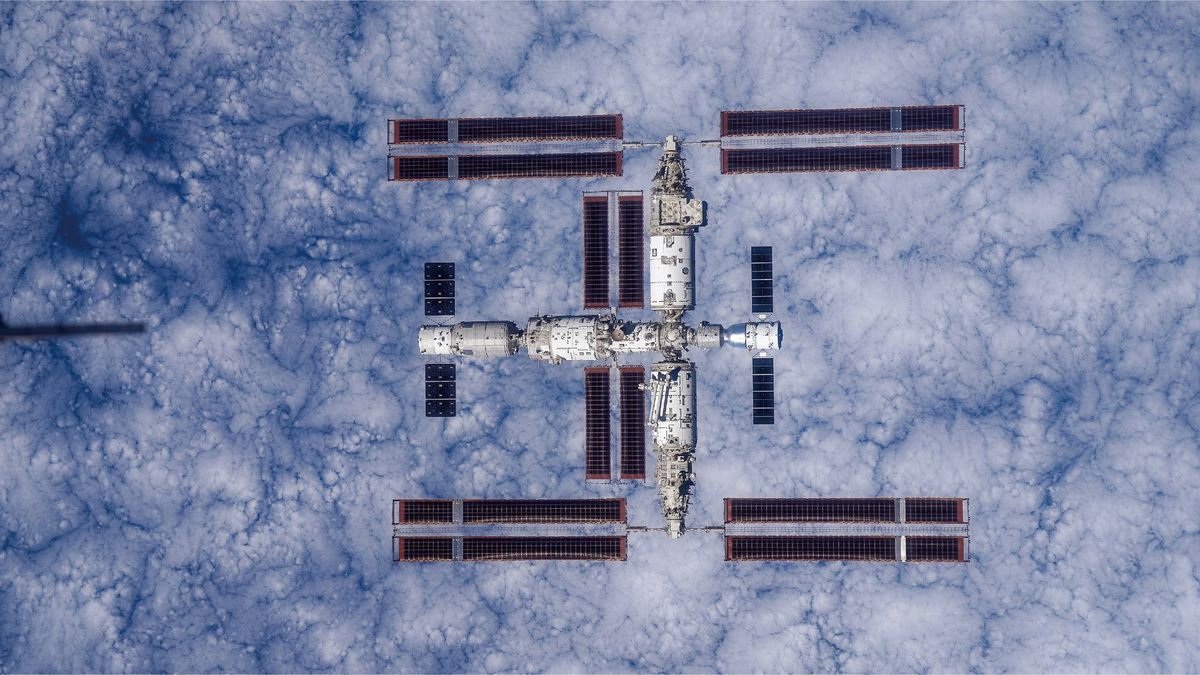
An unprecedented astronomical event took place in the northern skies, marked by the intersection of the paths of the International Space Station and the Chinese Space Station, which has sparked interest among scientists and space enthusiasts. This intersection represents a rare opportunity to study astronomical phenomena and the interaction between the two stations, reflecting significant advancements in the field of space exploration.
The International Space Station is one of the largest international scientific projects, involving multiple countries, while the Chinese Space Station represents a crucial step in China's efforts to expand its space exploration capabilities. The intersection of the two paths allows scientists to study the effects of gravity and the space environment on various spacecraft.
Details of the Event
The intersection occurred at a specific time when both stations were in closely aligned orbits. This event was not merely a coincidence, but rather the result of meticulous planning by the relevant space agencies. Scientists documented this event using advanced technology to monitor the movements of the two stations, enabling them to analyze the data accurately.
Ground-based telescopes were also utilized to observe this event, allowing enthusiasts to track the movements of the two stations in the sky. Although the intersection lasted for a brief period, its scientific impact will have long-term consequences for astronomical research.
Background & Context
The International Space Station, which began operations in 1998, represents international collaboration among several countries, including the United States, Russia, Japan, Europe, and Canada. In contrast, the Chinese Space Station, launched in recent years, reflects China's growing ambitions in the field of space.
The technologies used in the construction and operation of both stations highlight significant technological advancements in this field. Furthermore, the collaboration among countries in space reflects the importance of teamwork in addressing scientific and technological challenges.
Impact & Consequences
This astronomical event may open new avenues for cooperation among countries in the field of space exploration. It also emphasizes the importance of joint scientific research that could lead to new discoveries in various fields, such as astronomy and physics.
The intersection of the two paths may also encourage the development of new technologies to enhance the performance of spacecraft, contributing to achieving new goals in space exploration. Scientists hope that this event will enhance scientific understanding of space and its effects on Earth.
Regional Significance
As Arab countries strive to enhance their capabilities in space, this event highlights the importance of international cooperation in this field. Many Arab nations have begun to develop their own space programs, reflecting significant ambitions in space exploration.
This event may encourage Arab countries to strengthen their partnerships with advanced nations in the field of space, contributing to the development of technology and scientific research in the region. It also opens the door for Arab scientists to participate in global astronomical research.
The intersection of the paths of the International Space Station and the Chinese Space Station is not merely an astronomical event, but rather an opportunity to enhance scientific and technological cooperation among nations, contributing to significant progress in the field of space exploration.