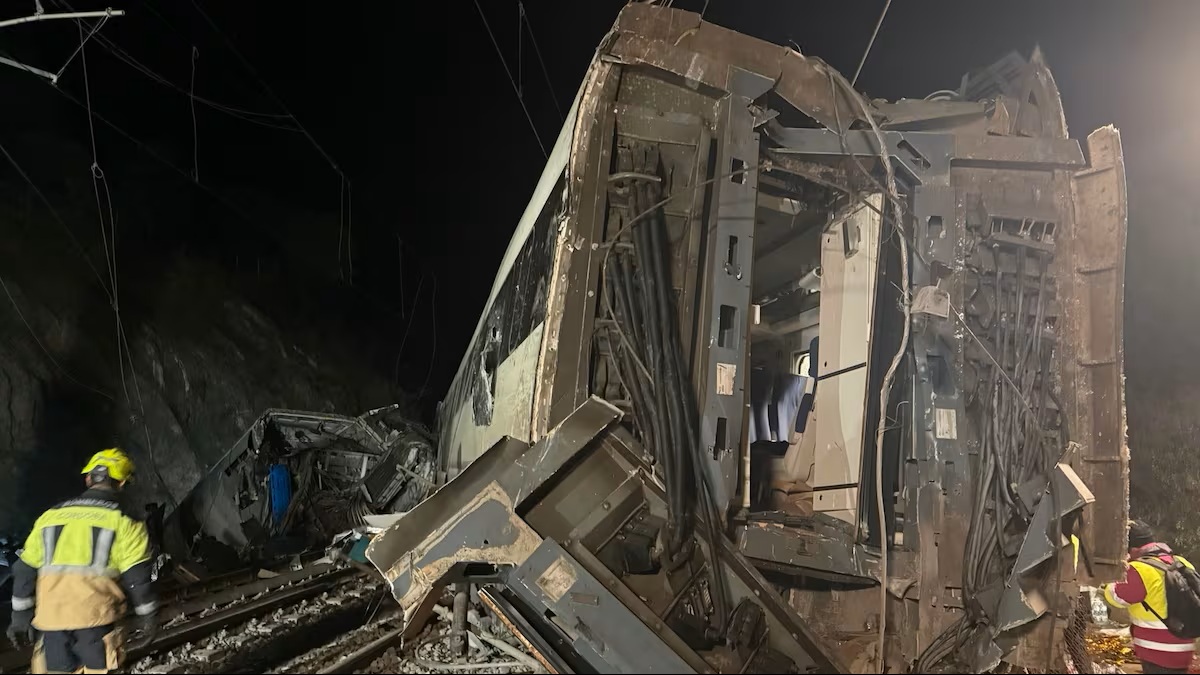
The railway accident investigation committee (CIAF) has announced new findings related to the train accident that occurred in the Adamuz area of Spain. The committee confirmed that the primary cause of the accident was a "break in the railway track," which led to the incident resulting in injuries and loss of life. The new report has been submitted to the court in the city of Montoro, Córdoba, where investigations into the circumstances of the accident are ongoing.
The accident, which took place earlier this month, raised widespread concerns about the safety of the railway system in Spain. Initial images revealed from inside the affected trains showed significant damage to the internal structure, highlighting the importance of the ongoing investigations.
Details of the Incident
The accident occurred during peak hours, with the train carrying a large number of passengers. Initial reports indicated that the train was traveling at high speed when the sudden break in the track occurred, causing the train to derail. Emergency teams rushed to the scene to assist the injured passengers.
This incident is considered one of the worst in the history of Spanish railways, prompting discussions about the urgent need to improve safety and maintenance standards within the railway network. Some experts have pointed out that the accident could be a result of negligence in railway maintenance, necessitating a comprehensive investigation to determine accountability.
Background & Context
The history of railways in Spain is fraught with accidents, but major incidents like the Adamuz accident raise particular concerns. In recent years, Spain has seen significant improvements in its railway system, yet accidents continue to occur, raising questions about the effectiveness of these improvements.
In 2013, Spain experienced another tragic train accident in Santiago de Compostela, which resulted in the deaths of 79 people. Following that incident, stringent measures were implemented to enhance safety, but the recent accident underscores the need for further efforts to ensure passenger safety.
Impact & Consequences
The recent accident may lead to significant repercussions regarding policies related to railway safety in Spain. Officials responsible for railway management are expected to be summoned to answer questions about maintenance and oversight of the network. Additionally, the accident could impact public confidence in the public transportation system.
Moreover, the incident may increase pressure on the Spanish government to allocate more resources to improve railway infrastructure. Given the current economic challenges, achieving this may be difficult, complicating the situation further.
Regional Significance
While the accident may seem distant from the Arab region, there are lessons to be learned. Public transport systems are a crucial part of economic and social development, and any neglect in their maintenance can lead to dire consequences. Therefore, Arab countries should consider the importance of investing in transport infrastructure.
Ultimately, passenger safety remains the top priority, and all countries must learn from past accidents to ensure they are not repeated.