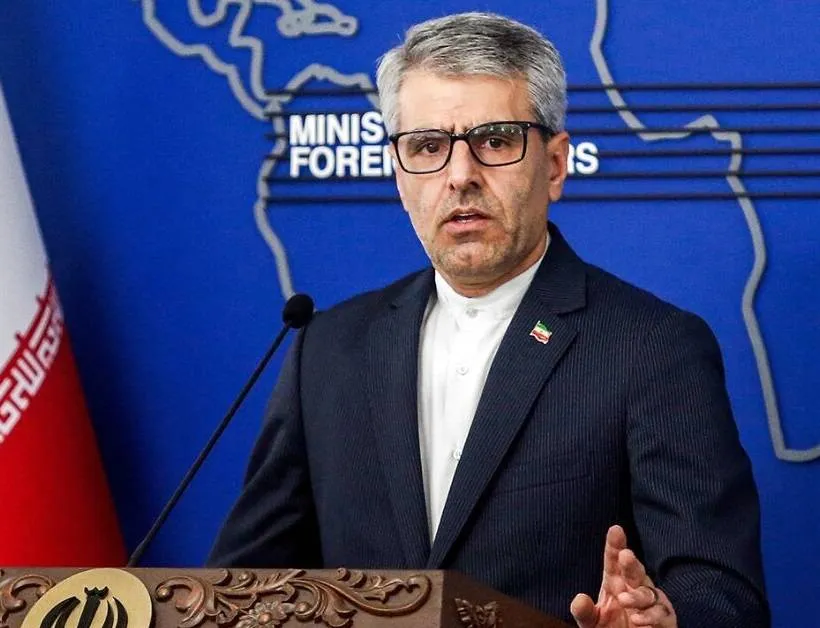
On Thursday, Iran stated that the demands put forth by the United States to end the war in the Middle East are 'extreme and unreasonable', highlighting the absence of any direct negotiations regarding a ceasefire. This assertion came from Iranian Foreign Ministry spokesperson, Ismail Baghaei, who confirmed that Tehran has received messages through intermediaries, including Pakistan, but no agreement has been reached.
At the same time, U.S. President Donald Trump affirmed that Tehran is calling for a ceasefire, noting that any decision in this regard is linked to the reopening of the Strait of Hormuz. Trump clarified through his platform, Truth Social, that the United States will continue to pressure Iran until its objectives are achieved, including preventing Iran from acquiring nuclear weapons.
Details of the Event
Reports indicate that Iran does not intend to engage in direct negotiations with the United States, with Baghaei asserting that 'talks of direct negotiations are false and baseless'. He also mentioned that Iran is prepared to confront any attack, including a ground assault. In contrast, Trump stated that 'the new president of the Iranian regime' requested a ceasefire, but tied it to the opening of the Strait of Hormuz.
These statements come at a time when the United States is enhancing its military presence in the region, having dispatched the aircraft carrier USS George H.W. Bush along with three destroyers. Military reports have confirmed that pressure on Iran will continue, focusing on dismantling its military capabilities.
Background & Context
These developments coincide with escalating tensions between Iran and the United States since the onset of the war in the region. The relationship between the two countries has significantly deteriorated, especially following the U.S. withdrawal from the Iranian nuclear deal in 2018. Since then, Washington has imposed stringent sanctions on Tehran, exacerbating the economic and political situation in Iran.
The ongoing war in the Middle East has also affected many neighboring countries, with the region witnessing an increase in armed conflicts and military operations, complicating the security situation further.
Impact & Consequences
Analyses suggest that the continuation of this escalation could worsen the humanitarian situation in Iran and neighboring countries, where civilians are suffering from the repercussions of the war. Any military escalation could threaten regional stability and increase the likelihood of new conflicts erupting.
Moreover, the ongoing U.S. pressure on Iran may drive Tehran to take escalatory steps, complicating peace efforts in the region. Many observers fear that this situation could lead to a full-scale war in the Middle East, which would have negative implications for both regional and international security.
Regional Significance
The current events in Iran are part of a larger conflict involving several Arab countries. Neighboring Arab nations are closely monitoring the rising tensions, especially since any escalation could impact their security and stability. Additionally, the situation in Iran may affect the relationships between Arab states and Iran, further complicating the political landscape in the region.
In conclusion, the situation in Iran remains a focal point of international interest, as major powers seek diplomatic solutions to avoid escalating the conflict. However, the political and military complexities may hinder the achievement of peace and stability in the region.