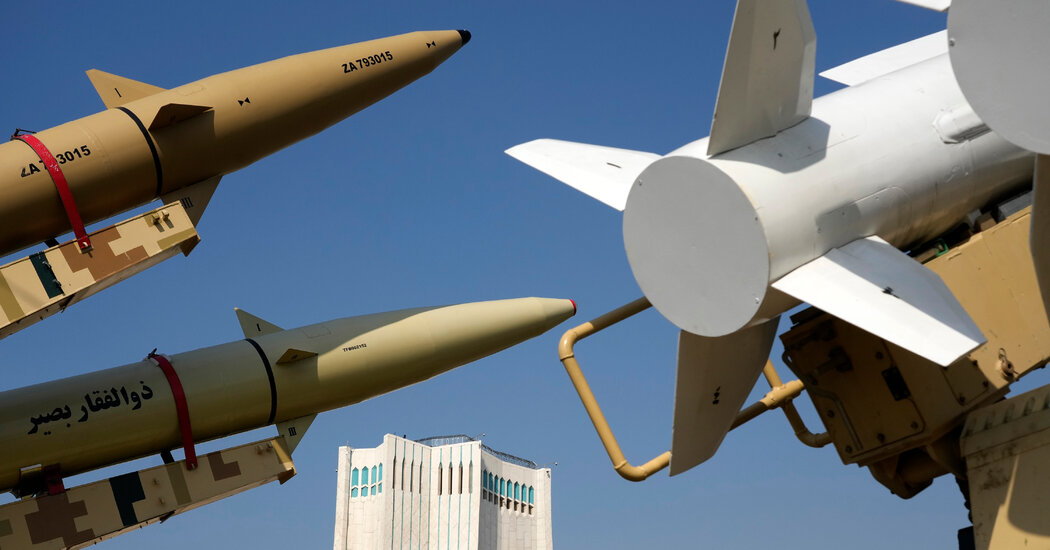
The Iranian Revolutionary Guard has revealed its discovery of unexploded American missiles and thousands of small bombs in Hormozgan province, southern Iran, according to the Iranian channel "Press TV." The channel confirmed, citing the Imam Sajjad Brigade of the Revolutionary Guard, that more than 15 heavy American missiles have been neutralized, indicating that these munitions were transferred to technical and research units for the purpose of conducting "reverse engineering" on them.
The Ansar al-Mahdi Brigade, based in Zanjan in the northwest of the country, also announced that its bomb disposal teams managed to collect over 9,500 small bombs across the province. Reports indicated that a GBU-57 bunker-busting bomb was successfully dismantled and handed over to the relevant authorities.
Details of the Event
In a related context, reports and analyses published in British and American newspapers in recent days have revealed a qualitative shift in the nature of the confrontation between the United States and Iran. The conflict is no longer confined to direct military engagement but has extended to more complex arenas involving military technology and munitions depletion, as well as the reshaping of the balance of deterrence in the region.
A report from the British site "iPaper" quoted former analysts from the Central Intelligence Agency (CIA) expressing concerns over Iran's success in recovering and examining advanced American and Israeli weapons that failed to detonate or fell in confrontation areas. The analysts noted that Tehran is currently engaged in "reverse engineering" operations on missiles such as Tomahawk, Reaper drones, JASSM missiles, and GBU-57 bunker-busting bombs, aiming to understand their structure or develop local alternatives.
Background & Context
According to the report, analysts believe that the danger lies not only in Iran's self-effort but also in the possibility of receiving technical support from Russia and China, which could open the door to uncovering secrets related to guidance, jamming, and stealth systems. In an analysis published by the Guardian, defense and security editor Dan Sabbagh wrote that the American escalation has not achieved its strategic objectives in curbing Iranian capabilities.
Sabbagh cited intelligence estimates indicating that intensive airstrikes have only destroyed a portion of Iran's arsenal, while approximately half of its stockpile of missiles and drones remains operational and capable of threatening navigation in the Strait of Hormuz.
Impact & Consequences
In another analysis published by the Guardian, Professor Fawaz Gerges considered that the war led by the Trump administration against Iran represents a "strategic mistake," as it has led to counterproductive results. Gerges pointed out that Tehran emerged from the confrontation more confident in its capabilities, benefiting from its ability to threaten energy corridors in the Strait of Hormuz and Bab el-Mandeb, which has provided it with a leverage tool that surpasses the impact of its nuclear program.
The United States and Israel began a war against Iran on February 28, resulting in over 3,000 fatalities, before Washington and Tehran announced a temporary ceasefire on April 8, mediated by Pakistan, which was extended in hopes of reaching an agreement to end the war.
Regional Significance
Concerns are growing that these developments could escalate tensions in the region, especially amid the ongoing conflict between the United States and Iran. Iran's ability to develop advanced weapons may impact regional security, prompting reactions from neighboring Arab countries.
In conclusion, it appears that Iran is seeking to enhance its military capabilities by exploiting unexploded American weapons, which could alter the balance of power in the region and complicate the security landscape.