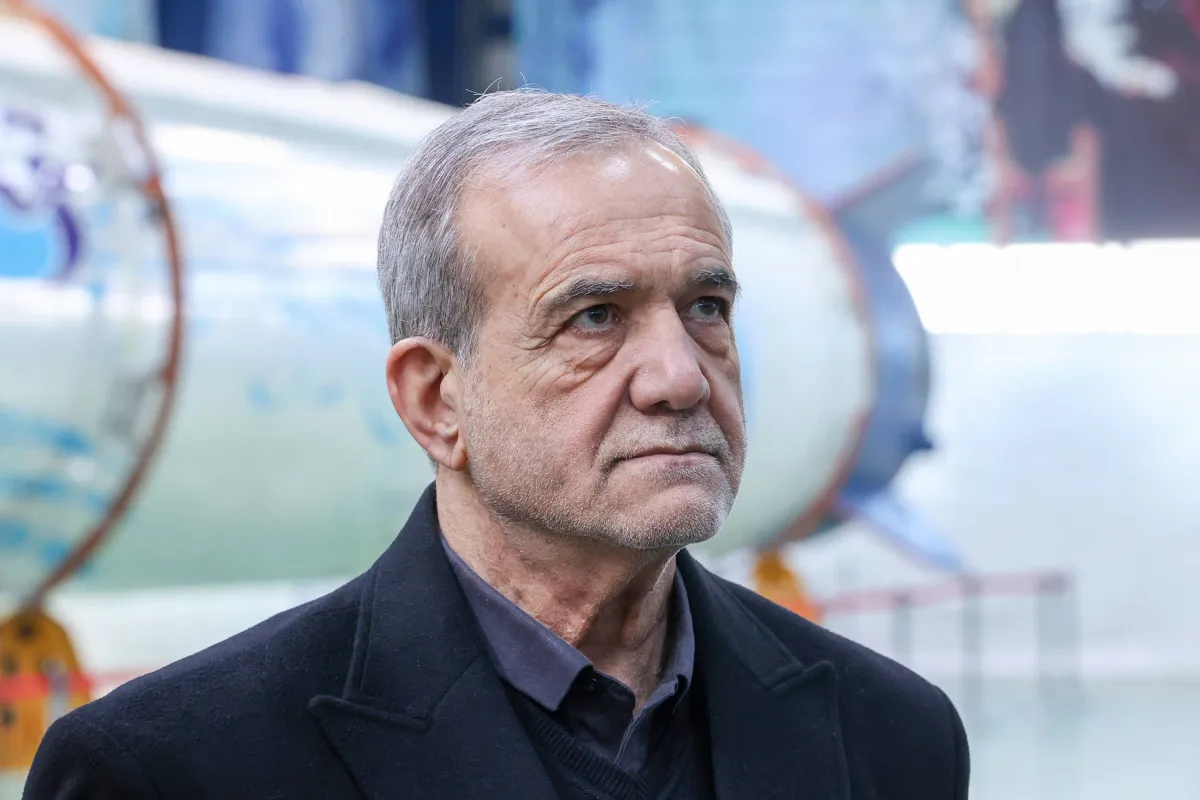
Iranian President Masoud Bezhaskian stated on Tuesday that Iran has the "will to stop the war," which has now entered its fifth week, but it conditions this on receiving "guarantees" to prevent future aggression. This declaration came during a phone call with the President of the European Council, Antonio Costa.
Bezhaskian emphasized the importance of meeting the fundamental conditions for ending the conflict, insisting on the necessity of having sufficient guarantees to protect his country from any future attacks. These statements come at a sensitive time when the region is witnessing increasing military escalation, with Iran facing pressures from multiple fronts.
Details of the Situation
As Iran seeks to achieve peace, reports have emerged about the integration of Israeli military forces with artificial intelligence agents in military operations, reflecting a technological advancement in warfare methods. Israeli officials reported that this integration enhances the army's ability to carry out precise and extensive attacks, allowing it to improve the pace of military operations.
Military officials also noted that the use of artificial intelligence during military operations, such as the operation dubbed "Lion's Roar," is unprecedented, as it contributes to the planning and synchronization of airstrikes with high accuracy. These new technologies reflect a shift in how conflicts in the region are managed, complicating the situation further.
Background & Context
Historically, Iranian-Israeli relations have been marked by ongoing tension, with Israel viewing Iran as a threat to its national security, leading to an escalation of military operations between the two sides. Since February 28, 2026, Israel has carried out a series of attacks against Iranian targets, resulting in the deaths of several prominent Iranian officials.
In this context, Bezhaskian's statement comes as a step towards attempting to ease the situation, as Iran seeks to bolster its regional and international position by affirming its desire for peace while maintaining its sovereignty and security.
Impact & Consequences
If the concerned parties respond to Iran's demands, this could lead to a de-escalation of tensions in the region, contributing to stability. However, the question remains about the seriousness of the required guarantees and the willingness of other parties to cooperate.
Recent developments indicate that the use of modern technology in conflicts may change the rules of the game, necessitating the involved countries to reassess their military and diplomatic strategies. Should military operations continue, this could lead to a greater escalation of the conflict.
Regional Significance
The developments in the Iranian-Israeli conflict have a direct impact on Arab countries, as they may lead to increased tensions in the region. Neighboring countries, such as Iraq and Syria, may find themselves drawn into the conflict, further complicating the security and political situation.
Moreover, the international community's response to Iran's demands could affect the relationships between Arab states and Iran, potentially opening the door for dialogue or widening the gap between the parties. Ultimately, hope remains pinned on diplomacy as a means to resolve conflicts and achieve lasting peace.