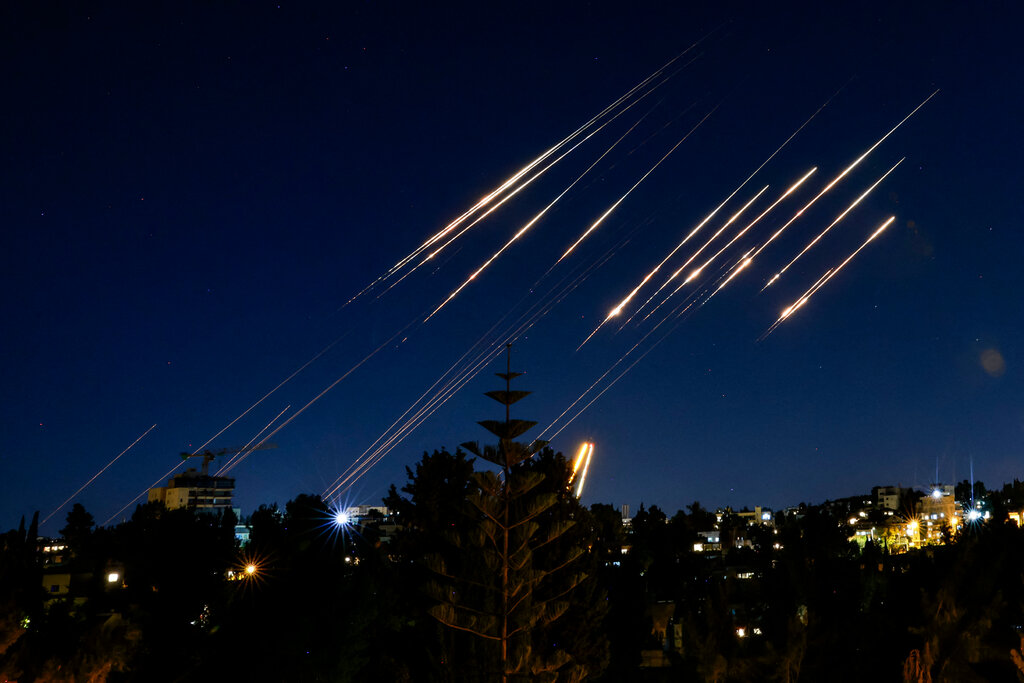
Despite the significant challenges it faces, Iran remains capable of launching painful missile attacks against its enemies, including its neighbors and Israel. This was highlighted in a report published by The New York Times, where authors Nicholas Kulish, Helene Cooper, Isabel Koshner, and Erika Solomon noted that Iran, stripped of its air and missile defenses, is still able to fire missiles and drones that cause severe damage.
In recent years, former US President Donald Trump portrayed Iran as a weak adversary, pointing to the deterioration of its military capabilities. However, the reality on the ground seems to reflect a completely different picture, as Iran continues to develop its offensive strategies.
Details of the Incident
The report highlights how Iran, despite losing some of its defensive capabilities, has managed to maintain its ability to launch attacks. Information indicates that Tehran has developed new technologies in the field of missiles and drones, enabling it to carry out complex military operations. These operations are not limited to Iranian territory but also include attacks on targets in Iraq, Syria, Lebanon, as well as Israel.
The report also sheds light on how Iran utilizes a network of militias it supports in the region, which act as its military arms. These militias, which include Hezbollah in Lebanon and Popular Mobilization Forces in Iraq, play a pivotal role in executing attacks.
Background & Context
Historically, Iranian-American relations have witnessed increasing tensions, especially following the US withdrawal from the nuclear agreement in 2018. This withdrawal led to the imposition of strict economic sanctions on Iran, affecting its ability to develop its military capabilities. However, it seems that Tehran has found ways to adapt to these circumstances, reflecting its resilience in the face of external pressures.
Iran considers itself to be in an undeclared war with the United States and its allies in the region, prompting it to bolster its military capabilities. In this context, the importance of missiles and drones emerges as effective tools in its defensive and offensive strategies.
Impact & Consequences
Recent developments suggest that Iran may be able to expand the scope of its attacks, increasing tensions in the region. This situation could lead to an escalation of conflicts, especially with regional powers like Israel and Saudi Arabia, which view Iran as a direct threat to their security.
Furthermore, these developments could impact regional stability, as neighboring countries may feel compelled to enhance their defensive capabilities in response to increasing Iranian threats. This could lead to a new arms race in the region, complicating security situations further.
Regional Significance
For Arab countries, Iran's continued missile attacks may raise significant concerns. Countries like Saudi Arabia and the UAE may find themselves compelled to strengthen their air defenses to counter Iranian threats. This situation could lead to heightened tensions between Iran and Arab nations, negatively impacting security and stability in the region.
In conclusion, these developments indicate that Iran remains capable of influencing events in the region, despite the pressures it faces. It is crucial for Arab nations to closely monitor these developments and take proactive steps to enhance their security.