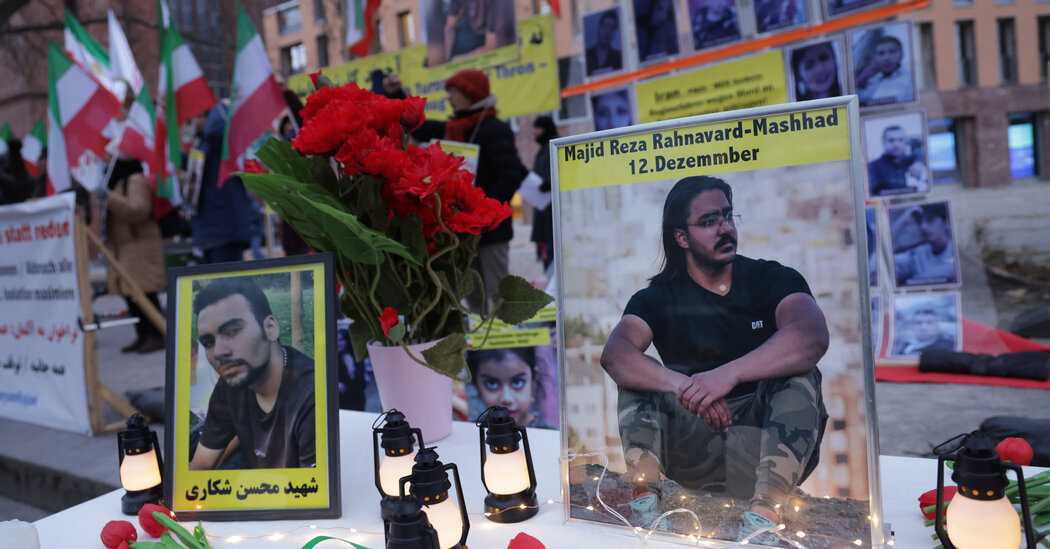
In a controversial step, Gholam Hossein Mohseni Ejei, the head of Iran's judiciary, has called on courts to accelerate the implementation of the death penalty against political opponents and prisoners. These statements come at a time when the country is experiencing heightened internal tensions, as the Iranian regime faces increasing pressure from the international community over human rights violations.
This call is seen as part of the Iranian regime's repressive policy towards dissenters, as it seeks to consolidate its power through strict measures against any form of opposition. These remarks have sparked strong reactions from human rights organizations, which consider this move a blatant violation of fundamental rights.
Details of the Event
In his recent statements, Mohseni Ejei emphasized the need to expedite legal procedures related to the death penalty, indicating that these punishments should be carried out more swiftly. This request comes in the context of the Iranian regime's attempts to suppress popular protests that have erupted in recent years, demanding political and economic reforms.
It is noteworthy that Iran has witnessed a significant increase in the number of executions in recent years, leading the list of countries with the highest execution rates. The regime is believed to use these punishments as a means to intimidate opponents and silence critical voices.
Background & Context
Historically, Iran has suffered from severe repression of dissenters, with many executions carried out under suspicious circumstances. These executions have particularly surged following the protests that erupted in 2019 in response to rising fuel prices. Since then, the Iranian government has taken strict actions against demonstrators, leading to a rise in human rights violations in the country.
These statements coincide with increasing international pressure on Iran, as the country faces economic and political sanctions due to its nuclear program and human rights record. This pressure has exacerbated the economic and social conditions in the country, intensifying internal tensions.
Impact & Consequences
Mohseni Ejei's call to expedite the death penalty could worsen the situation in Iran, potentially escalating popular protests and provoking violent reactions from opponents. Additionally, this step may negatively impact Iran's image in the international community, as it will be seen as another violation of human rights.
Furthermore, these repressive policies could lead to greater isolation for Iran on the international stage, with increasing calls for additional sanctions against the Iranian regime. At the same time, these policies may encourage further protests and resistance from the Iranian people.
Regional Significance
The events in Iran have significant implications for the Arab region, as Iran is considered one of the influential regional powers. The tense situation in Iran could heighten tensions in neighboring countries, especially given the complex regional issues such as the conflicts in Syria and Iraq.
Moreover, the escalation of violations in Iran may encourage opposition groups in other Arab countries to take bolder stances against their regimes. Concurrently, these events could strengthen cooperation among Arab regimes to counter any potential threats from Iran.
In conclusion, the call by the head of the judiciary in Iran to expedite the execution of opponents reflects the ongoing repressive policies of the regime, raising new concerns about human rights in the country.