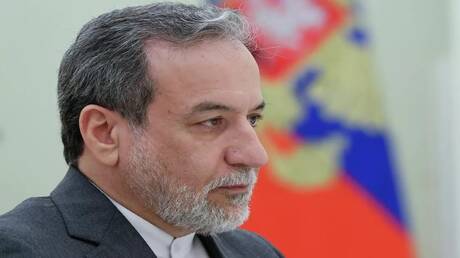
Iranian Foreign Minister Abbas Araghchi asserted in his statements on Tuesday that Iran does not accept a ceasefire as a solution to the ongoing crises in the region, but rather calls for a comprehensive end to wars. Araghchi clarified that Iran's conditions are known, reflecting Tehran's steadfast position in its foreign policy.
These statements come at a time when the region is experiencing increasing tensions, with armed conflicts escalating in several countries, raising concerns about worsening humanitarian and political situations. Araghchi, speaking at a press conference, pointed out that superficial solutions like a ceasefire are insufficient; rather, the root causes of conflicts must be addressed.
Details of the Statement
Araghchi, representing the Iranian government's viewpoint, confirmed that Tehran seeks to achieve lasting stability in the region, which requires all concerned parties to take serious steps towards dialogue and negotiation. He indicated that Iran is ready to participate in any efforts aimed at achieving peace, but it will not accept temporary solutions.
He also addressed the situation in countries like Syria and Yemen, where armed conflicts continue. Araghchi emphasized that Iran considers itself part of the solution and will continue to support its allies in the region, reflecting its commitment to its strategic positions.
Background & Context
Historically, Iran has always been a key player in regional politics, seeking to enhance its influence in the Middle East. Recent years have seen heightened tensions between Iran and Western countries, particularly the United States, complicating the situation in the region.
The interests of major powers in the region intertwine with local conflicts, making it difficult to reach lasting solutions. In this context, Araghchi's statements express Iran's steadfast position in the face of international pressures.
Impact & Consequences
Araghchi's statements indicate that Iran will not back down from its positions, which could lead to further tensions in the region. These stances may affect relations between Iran and Arab countries, especially those adopting policies opposing Tehran.
Moreover, the continuation of conflicts in the region could exacerbate humanitarian situations, as civilians suffer from the consequences of ongoing wars. This raises questions about how to achieve peace and stability under these complex circumstances.
Regional Significance
Araghchi's statements are significant for Arab countries, reflecting the challenges they face in dealing with Iran. These remarks may influence the foreign policies of Arab nations, particularly those experiencing internal conflicts.
In light of these situations, Arab countries must seek effective strategies to engage with Iran, ensuring security and stability in the region. Dialogue and cooperation between Arab states and Iran may be essential to avoid further escalation.
In conclusion, Iran's positions remain under scrutiny as challenges in the region increase. Araghchi's call for an end to wars reflects the urgent need for peace, but it requires joint efforts from all concerned parties.