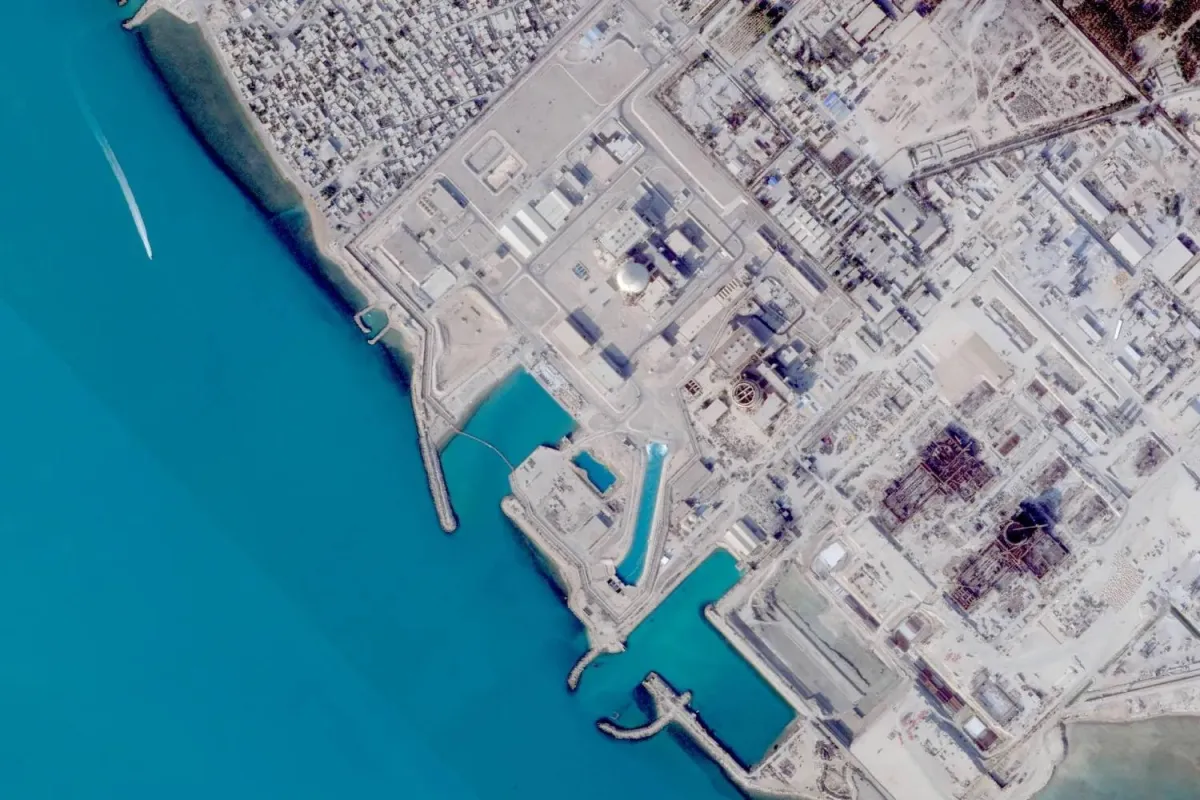
Today (Saturday), the International Atomic Energy Agency (IAEA) announced that Iran reported a new attack on the Bushehr nuclear facility located in the south of the country, marking the third attack on the facility within ten days. The agency confirmed via its platform on "X" that the situation at the facility is normal and that no damage to the operational reactor or radiation emissions have been recorded.
Earlier, the Iranian Atomic Energy Organization accused the United States and Israel of being behind the attacks on the Bushehr plant, noting that a projectile fell in the vicinity of the facility without causing any damage. The agency also reported two weeks ago that the Bushehr facility was targeted by another projectile, but no damage to infrastructure or injuries were recorded.
Details of the Incident
The attacks on the Bushehr nuclear facility are escalating, occurring amidst rising tensions in the region. Russia, which has experts working at the facility, condemned the strikes, describing them as "irresponsible." In a related context, Israel has expanded its target bank within Iran, focusing attacks on nuclear facilities and missile production sites, including the heavy water facility in Arak.
The Israeli army also indicated that it has carried out a wave of airstrikes in the heart of Tehran, targeting facilities used for manufacturing ballistic missiles. The strikes have also hit steel factories and industrial structures, further escalating tensions in the region.
Background & Context
The roots of the current tensions stem from the ongoing conflict between Iran and Israel, with the latter accusing Iran of seeking to develop a nuclear program that could be used for military purposes. These concerns have led to an escalation of Israeli attacks on Iranian facilities, increasing tensions in the region.
On the other hand, Iran continues to develop its nuclear program, with the Bushehr facility being one of the most important nuclear sites in the country. These activities have raised concerns within the international community, leading to sanctions imposed on Iran in the past.
Impact & Consequences
Analyses predict that these attacks may lead to a greater escalation in the conflict between Iran and Israel, which could negatively impact stability in the region. The continuation of the attacks may provoke reactions from Iran, increasing the likelihood of a large-scale military conflict.
These events also indicate a deterioration in relations between Iran and Western countries, especially amid ongoing sanctions imposed on Tehran. Such developments could affect regional security, raising concerns among neighboring countries.
Regional Significance
Arab countries are directly affected by the escalating tensions between Iran and Israel, as any military escalation could have negative repercussions on security and stability in the region. Additionally, these events may impact maritime navigation in vital waterways, such as the Strait of Hormuz, which is a crucial artery for global oil trade.
In conclusion, the situation in the region remains tense, with increasing fears of military escalation that could adversely affect regional and international security. The international community must closely monitor these developments and work towards diplomatic solutions to avoid further escalation.