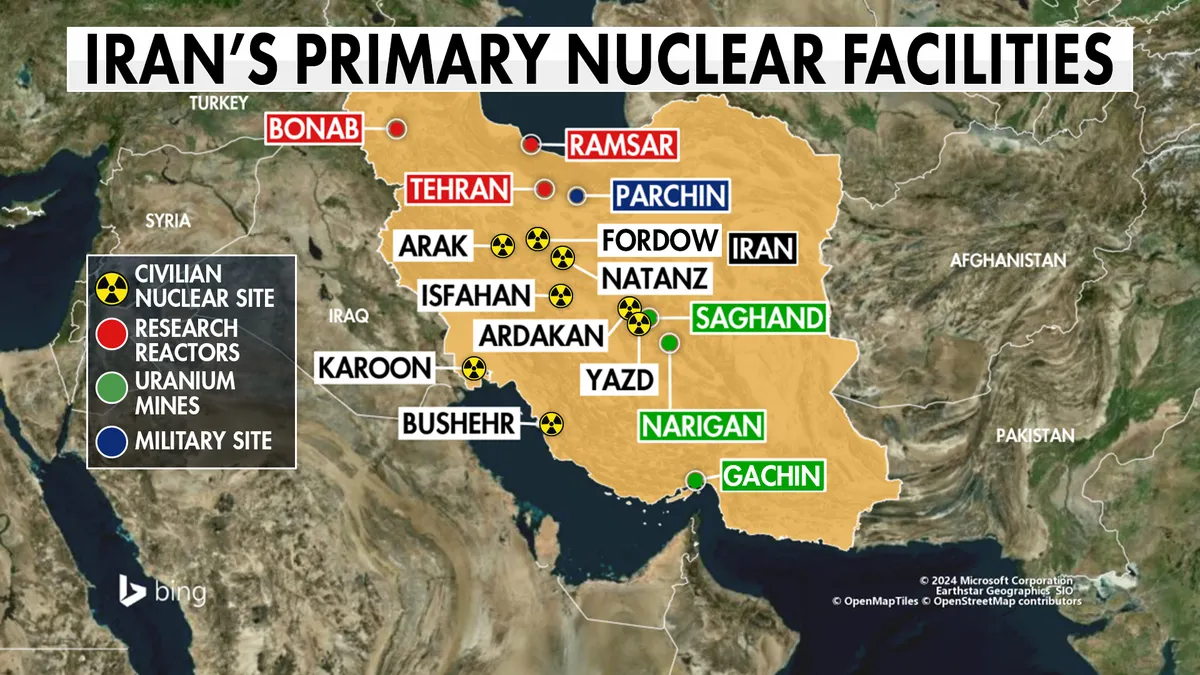
Experts indicate that the warnings from the Doomsday Clock have lost their effectiveness, as the Iran War demonstrates that leaders are driving the world towards disaster. This assessment comes after the clock was set at 85 seconds to midnight, reflecting increasing global risks.
Days before the outbreak of the full-scale war in Iran, the operators of the Doomsday Clock decided to move it to 85 seconds to midnight, based on their evaluation of global risks. However, this adjustment, described as the closest to the danger threshold, was not deterrent, as experts believe that everything warned by this symbolic measure has already occurred during that war.
Details of the Event
The Doomsday Clock was established in 1947 by a group of scientists and experts at the Bulletin of the Atomic Scientists, a non-profit organization aimed at monitoring risks threatening humanity's survival. Annually, scientists assess global risks such as nuclear weapons and climate change, then decide how close the hands are to midnight, which symbolically represents the highest level of danger to humanity.
Although moving the clock to 85 seconds to midnight was a significant event that received extensive media coverage, the outbreak of war in Iran just days after this event, along with nuclear threats and climate repercussions, stripped that symbolic tool of its declared purpose.
Context and Background
Dr. Abdel Nasser Tawfiq, head of the Egyptian Center for Theoretical Physics, states that the declared purpose of this tool is to urge leaders to take radical actions to confront existential risks. However, the leaders themselves are the ones driving the world at full speed towards this level of danger. Tawfiq points to the nuclear risks in that war, where fears of resorting to nuclear weapons have increased.
If this weapon was not used in that war, the threat of erasing Iran may increase public pressure to accelerate Iran's development of a nuclear weapon, which is considered a step not far off, according to some reports. All of this does not align with the declared goal of the Doomsday Clock.
Consequences and Impact
Studies indicate that the greatest immediate losses in the event of slipping towards this slope would result from fires caused by nuclear explosions. Additionally, the long-term climate changes resulting from them, such as global cooling and widespread drought, would lead to agricultural collapse and prolonged famine for decades.
A study published in the journal Medicine, Conflict and Survival showed that detonating just 2% of the world's available nuclear arsenal is sufficient to lower temperatures to levels similar to the ice age, threatening over two billion people with famine within just two years. In the event of a nuclear war involving a significant portion of the global arsenal, it could lead to the annihilation of the vast majority of the human population.
Impact on the Arab Region
Dr. Khaled Idabi, a chemistry professor at the Faculty of Science at University of Benghazi, asserts that he is no longer interested in following the annual Doomsday Clock report, as existential risks increase every year without any response to its warnings. The current war in Iran is a prime example of this, as environmental and health risks resulting from the conflict have escalated.
Reports indicate massive environmental impacts including air and water pollution, and disruption of water treatment networks, which exacerbates the impact on the global climate. These effects will persist even after the conflict ends, placing the Arab region in a precarious position.
In conclusion, experts agree that it may be more accurate to acknowledge that we are indeed living on the edge of disaster, and we no longer need the warnings of the Doomsday Clock.