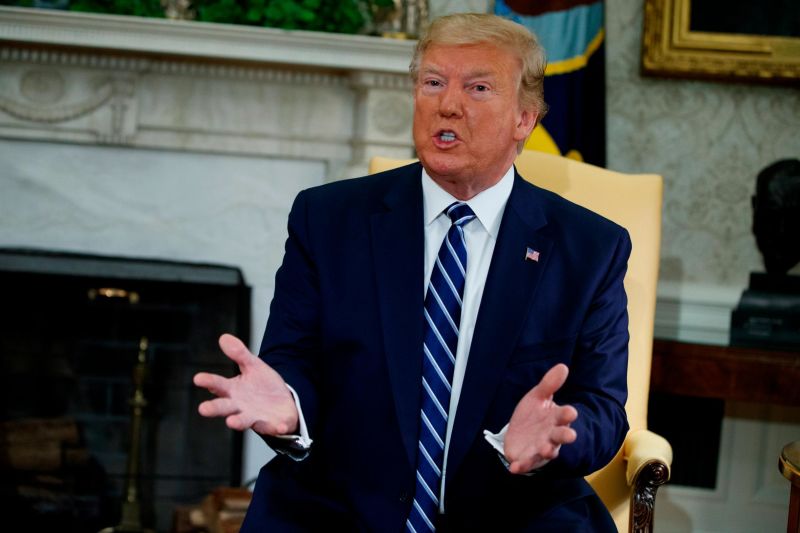
The Iranian army has issued a powerful warning to former U.S. President Donald Trump, cautioning that "Hell's gates" will open if he continues to adopt hostile positions towards Iran. This warning comes at a time when tensions between Tehran and Washington are escalating, with both sides exchanging accusations regarding military and political activities in the region.
These statements are part of Iran's strategy to defend itself against increasing U.S. pressure, particularly following Trump's withdrawal from the Iranian nuclear agreement in 2018. This withdrawal triggered a series of tensions that have exacerbated crises in the Middle East.
Details of the Warning
In his recent statements, the spokesperson for the Iranian army emphasized that any escalation by the United States would be met with a strong response from Tehran. He mentioned that Iran would not hesitate to use all available means to protect its sovereignty and national security. These remarks come at a sensitive time as the United States continues to bolster its military presence in the region, further heightening tensions.
The spokesperson also pointed out that Iran has the capability to respond to any threats and will not allow any party to interfere in its internal affairs. This warning comes amid growing concerns about the potential for military conflict between the two nations, especially with the increase in U.S. military maneuvers in the Persian Gulf.
Background & Context
Historically, relations between Iran and the United States have been tense since the Islamic Revolution in 1979. These relations have witnessed numerous crises, including the hostage-taking of American diplomats in Tehran, the wars in Iraq and Syria, and tensions related to Iran's nuclear program. Trump's withdrawal from the nuclear agreement added a new dimension to these tensions, as it reinstated economic sanctions on Iran, significantly impacting its economy.
In recent years, Iran has sought to enhance its regional influence by supporting its allies in Iraq, Syria, and Lebanon, raising concerns among the United States and its allies in the region. These complex dynamics make it challenging to predict the future trajectory of relations between the two parties.
Impact & Consequences
The warnings from the Iranian army could lead to an escalation of tensions in the region, increasing the risk of military conflict. If the United States continues its aggressive policy towards Iran, it could provoke unexpected reactions from Tehran, including targeting American interests in the region.
Moreover, any military escalation could affect oil prices and global financial markets, as the Persian Gulf is a vital hub for oil trade. The escalation could also impact regional security, heightening tensions between Arab states and Iran.
Regional Significance
Arab countries neighboring Iran, such as Iraq and Saudi Arabia, find themselves in a sensitive position amid these tensions. Any military escalation between Iran and the United States could affect the stability of these nations and potentially lead to an influx of refugees and increased sectarian tensions.
Arab states may also find themselves compelled to take decisive stances amid rising tensions, which could impact their relations with both Iran and the United States. In this context, Arab nations must seek diplomatic solutions to avoid military escalation.
In conclusion, the situation in the region remains complex and requires intensive diplomatic efforts to prevent any escalation that could lead to severe consequences.