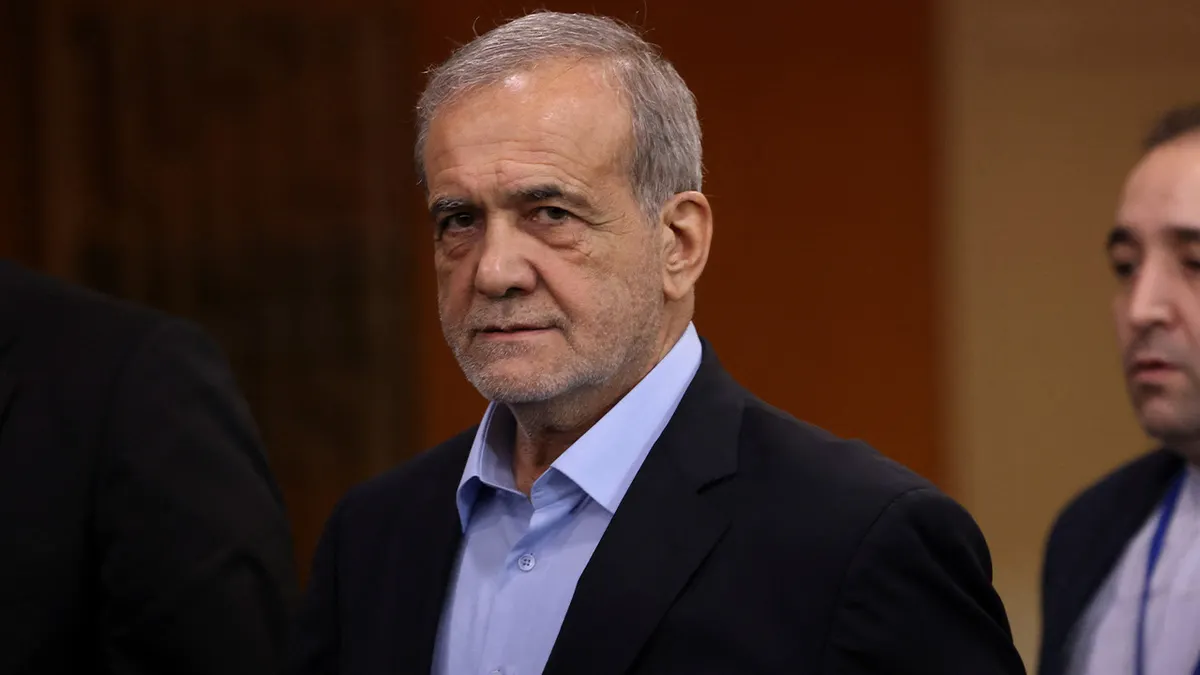
In response to the threats issued by U.S. President Donald Trump to return Iran to the Stone Age, Iranian President Masoud Bezhaskian deemed these statements to represent a comprehensive war crime. In a post shared on his account on the platform X, Bezhaskian asked, "Can threatening an entire nation with a return to the Stone Age mean anything other than a major war crime?"
Bezhaskian added that such statements reflect a lack of respect for international laws and human rights, noting that American threats do not only affect Iran but threaten the security and stability of the entire region.
Details of the Incident
Bezhaskian's remarks come at a time when tensions are escalating between Iran and the United States, as both countries seek to bolster their positions amid regional and international crises. Trump's statements have sparked widespread reactions in political and media circles, with many considering them an overstep of acceptable boundaries in political discourse.
In this context, Bezhaskian confirmed that he posed this question to his American counterpart, indicating the importance of dialogue between nations to avoid escalation. He also pointed out that American threats could exacerbate the situation in the Middle East, which is already suffering from numerous crises.
Background & Context
Historically, Iranian-American relations have seen increasing tensions since the Islamic Revolution in 1979. These tensions have led to the imposition of strict economic sanctions on Iran, adversely affecting its economy. In recent years, these tensions have intensified with the United States' withdrawal from the Iranian nuclear deal in 2018, leading to an escalation of positions between the two parties.
Trump's statements are part of the maximum pressure policy adopted by his administration towards Iran, aimed at forcing it to change its behavior in the region. However, this policy faces widespread criticism from many experts who believe it may lead to counterproductive results.
Impact & Consequences
American threats could escalate tensions in the region, negatively impacting regional security. These statements may also affect relations between Iran and other countries in the region, as some nations may feel concerned about the rising crises.
Moreover, such statements could lead to increased popular support for the Iranian regime, as they can be used as a tool to enhance national unity in the face of external threats. Additionally, the escalation in rhetoric may lead to military reactions, increasing the risk of armed conflict in the region.
Regional Significance
The tensions between Iran and the United States directly affect Arab countries, especially those sharing borders with Iran. The increase in tensions could lead to escalated conflicts in Iraq, Syria, and Lebanon, complicating security situations in these countries.
Arab nations may find themselves compelled to take clear stances regarding these tensions, potentially leading to new divisions in the region. Under these circumstances, dialogue and regional cooperation become more important than ever.
In conclusion, Bezhaskian's statements reflect Iranian concerns over American threats and highlight the importance of dialogue in alleviating tensions. As crises escalate in the region, there remains hope that wisdom and rationality will prevail to avoid further escalation.