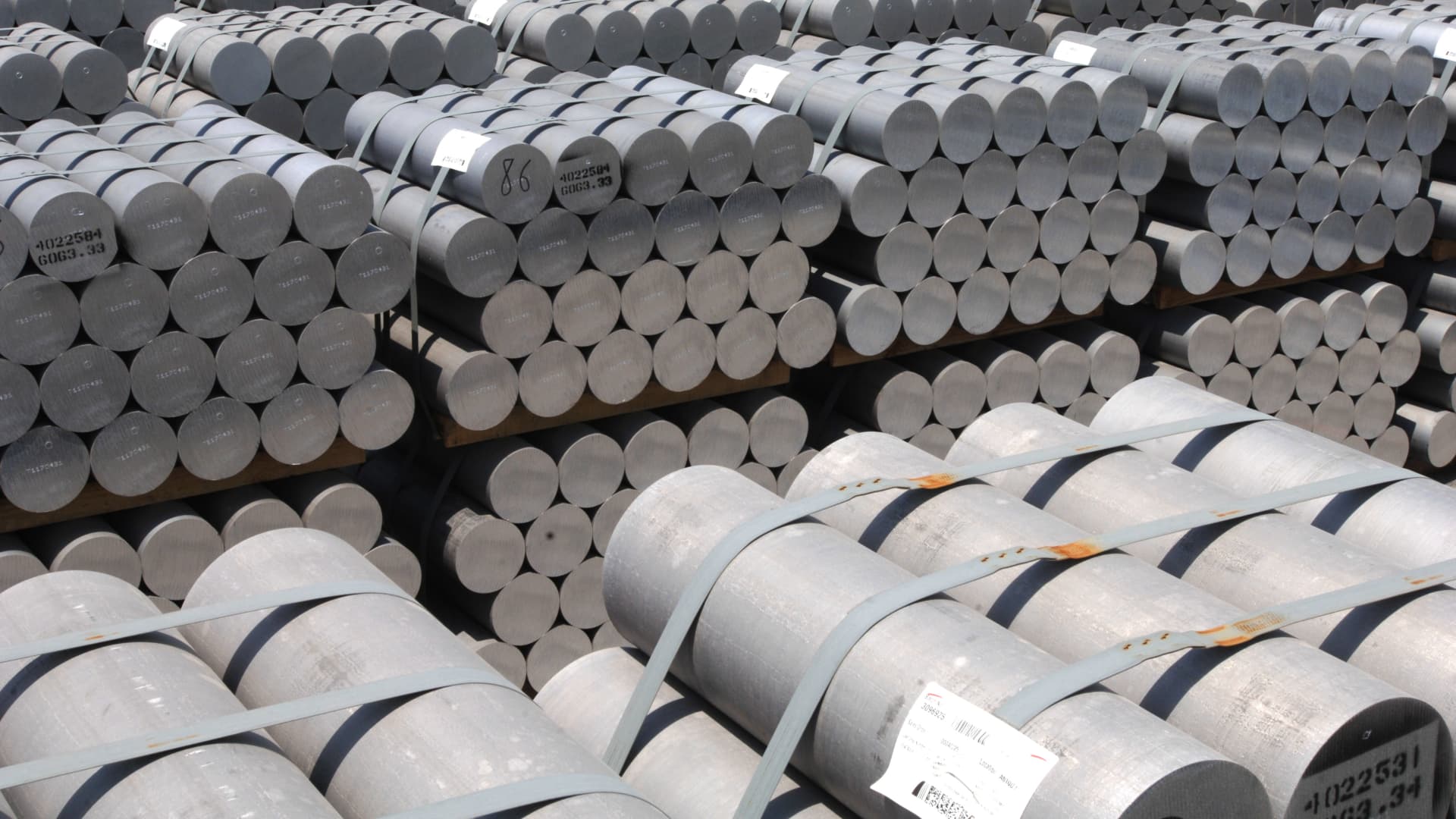
The Iranian attacks on aluminum producers in the Middle East over the past weekend have sparked global market concerns, as aluminum prices rose to levels not recorded since 2022. The strikes targeted both Emirates Global Aluminum and Aluminum Bahrain, causing substantial damage to facilities and heightening fears of a possible supply crisis in the market.
At the beginning of the week, aluminum futures prices on the London Metal Exchange surged by 5.5% to reach $3,492 per ton, the highest level since April 2022. However, prices slightly retreated by Monday afternoon, stabilizing at $3,381 per ton, reflecting a state of market instability.
Details of the Incident
The attacks that occurred last Saturday resulted in severe damage to the aluminum plant in Al Taweelah, where Emirates Global Aluminum confirmed that the incident led to injuries among several workers. The company's CEO, Abdul Nasser bin Kalban, expressed deep regret over the incident, emphasizing that the safety of the workers is the top priority. He also noted that the company is currently assessing the damage to its facilities.
The UAE and Bahrain are among the largest aluminum producers in the Gulf region, contributing approximately 9% of global supplies. With Iran closing the Strait of Hormuz, companies in the region are facing significant challenges in exporting the metal, exacerbating the crisis.
Background & Context
Historically, the Gulf region has witnessed escalating tensions due to political and military conflicts, directly impacting commodity markets. Since the onset of the conflict on February 28, aluminum prices have increased by around 10%, despite a recent decline due to global recession fears. Aluminum is a critical material in various industries such as electronics, transportation, and construction, making any disruption in its supply significantly impact the global economy.
China is the world's largest aluminum producer, maintaining a limited production of 45.5 million tons annually to curb emissions. Some analysts believe that China may play a role in reopening supplies to the global market, but its capacity to increase production remains limited.
Impact & Consequences
Analyses indicate that the recent attacks could push the market into a complete deficit over the year, with current production capacity expected to shrink by 20%, translating to a loss of between 800,000 to 900,000 tons of production by 2026. This deficit could lead to further price increases, affecting all sectors reliant on aluminum.
These conditions serve as a wake-up call for many companies in the metals sector, as they must prepare to face price volatility and potential supply disruptions. The continuation of the conflict may exacerbate conditions in other commodity markets, increasing uncertainty in the global economy.
Regional Significance
Arab countries are directly affected by these events, as the Gulf region is a major hub for aluminum production. Any disruption in supplies could impact local economies and raise production costs across various sectors. Additionally, these events may heighten political tensions in the region, prompting Arab nations to take proactive steps to protect their economic interests.
In conclusion, the Iranian attacks on aluminum producers in the Gulf illustrate how regional conflicts can affect global markets. Companies and Arab nations must be prepared to face the challenges that may arise from these crises and work towards stabilizing local and international markets.