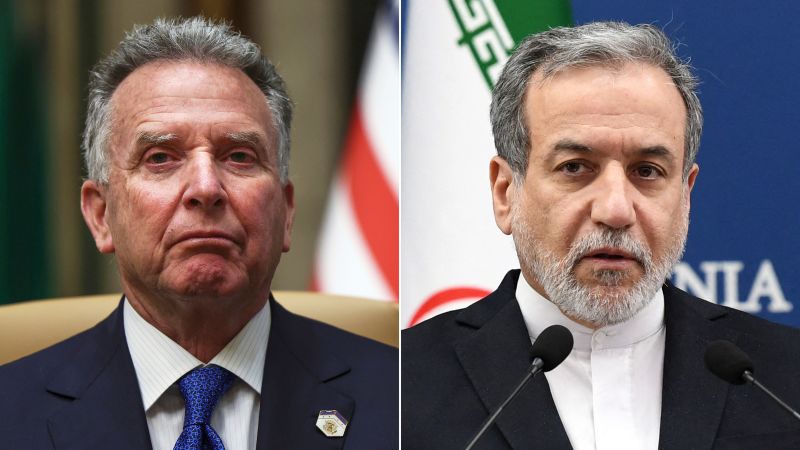
Iran's Foreign Minister, Hussein Amir Abdollahian, has confirmed that he is receiving direct messages from the U.S. Special Envoy to Iran, Robert Witkoff. These statements come at a sensitive time for relations between Tehran and Washington, highlighting the need for dialogue and communication between the two sides.
These remarks raise questions about the future of nuclear negotiations between Iran and the United States, especially amid ongoing tensions in the region. This direct communication is considered an important step that could lead to a de-escalation of existing tensions.
Details of the Event
During a press conference, Abdollahian explained that the messages he receives from Witkoff pertain to multiple issues, including the Iranian nuclear file. He noted that these messages reflect the United States' desire to resume dialogue, despite the significant challenges it faces.
He also added that Tehran is ready to discuss all outstanding issues, but it conditions that negotiations be based on mutual respect and non-interference in internal affairs. These conditions reflect Iran's firm stance in dealing with major powers, particularly the United States.
Background & Context
Historically, Iranian-American relations have experienced significant fluctuations, deteriorating after the Islamic Revolution in 1979. Since then, the United States has imposed strict economic sanctions on Iran, which have profoundly affected the Iranian economy.
In recent years, international parties, including European nations, have attempted to mediate between Iran and the United States with the aim of reviving the nuclear agreement reached in 2015. However, the U.S. withdrawal from the agreement in 2018 complicated matters further.
Impact & Consequences
These direct messages between Iran and the United States could lead to the reopening of dialogue channels, potentially contributing to a reduction in regional tensions. If negotiations are resumed seriously, this could result in the easing of sanctions imposed on Iran, which would positively reflect on the Iranian economy.
However, the question remains about the seriousness of the United States in negotiating, especially amid internal and external political pressures. Additionally, reactions from other regional countries, such as Saudi Arabia and Israel, will be crucial in determining the course of these negotiations.
Regional Significance
The Iranian-American relations are pivotal in determining stability in the Middle East. Any progress in these relations could directly impact Arab countries, especially those that have tense dealings with Iran.
If negotiations succeed, this could lead to improved security conditions in the region, fostering cooperation between Arab states and Iran. However, this must be approached with caution, as any agreement may raise concerns among some Arab nations regarding Iran's growing influence in the region.
In conclusion, upcoming developments in Iranian-American relations remain under scrutiny, as any positive steps could contribute to achieving stability in the region, while failure to do so may lead to a new escalation of tensions.