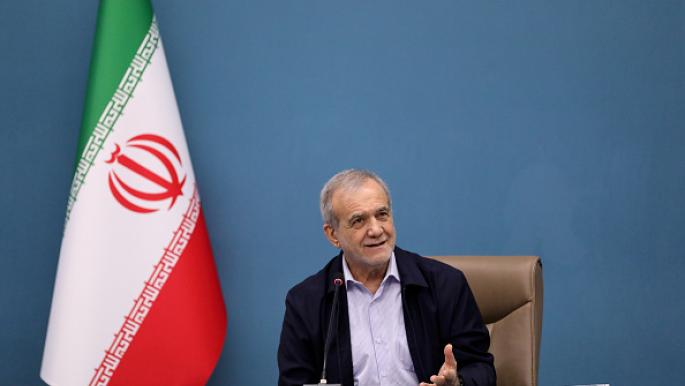
Iranian President Masoud Bezhakian affirmed that the ongoing hostile actions by the United States represent a significant barrier to rebuilding trust between Tehran and Washington. Bezhakian pointed out that these pressures negatively impact any negotiations that may take place in the future, further complicating the political situation in the region.
In his statements, Bezhakian clarified that the US sanctions imposed on Iran for many years have not achieved their intended goals; instead, they have exacerbated the economic and social crises in the country. He stressed that these hostile policies not only reflect the stance of the United States but also affect international relations as a whole.
Details of the Statement
Bezhakian's remarks come at a sensitive time as Iran seeks to improve its relations with Western nations, especially following the tensions that have plagued the region in recent years. The Iranian president noted that dialogue is the only path to achieving peace and stability, but this requires removing the obstacles posed by US policies.
Bezhakian also called for a political will from all concerned parties to sit at the negotiating table, indicating that the continuation of military and economic pressures will only worsen the situation.
Background & Context
Historically, Iranian-American relations have seen increasing tensions since the Islamic Revolution in 1979. Economic sanctions have led to a deterioration of the Iranian economic situation, impacting the lives of citizens. In recent years, these tensions have escalated with the US withdrawal from the nuclear agreement in 2018, leading to heightened hostilities between the two sides.
Iran is striving to rebuild its relationships with the international community, but it faces significant challenges due to US policies. On the other hand, the United States continues to exert pressure on Iran by imposing new sanctions, complicating the situation further.
Impact & Consequences
Bezhakian's recent statements affect the regional situation, reflecting the instability in relations between Iran and the United States. This could lead to an escalation of tensions in the region, especially with other regional powers seeking to exploit these circumstances to their advantage.
Moreover, the continuation of these pressures may further impact the Iranian economy, making it difficult for the Iranian government to achieve the necessary stability. Conversely, any improvement in relations could open new avenues for regional and international cooperation.
Regional Significance
The Iranian-American relations are a sensitive issue that affects security and stability in the Arab region. Tensions between the two countries could escalate conflicts in nations such as Iraq, Syria, and Lebanon, where Iran plays a significant role.
Any improvement in relations between Iran and the United States could positively reflect on the situation in the region, potentially contributing to peace and stability. Meanwhile, the continuation of tensions may intensify conflicts and negatively impact neighboring countries.
In conclusion, dialogue remains the optimal choice for resolving crises, but this requires genuine political will from all parties involved. The ongoing US pressures will only exacerbate the situation, necessitating the search for effective diplomatic solutions.