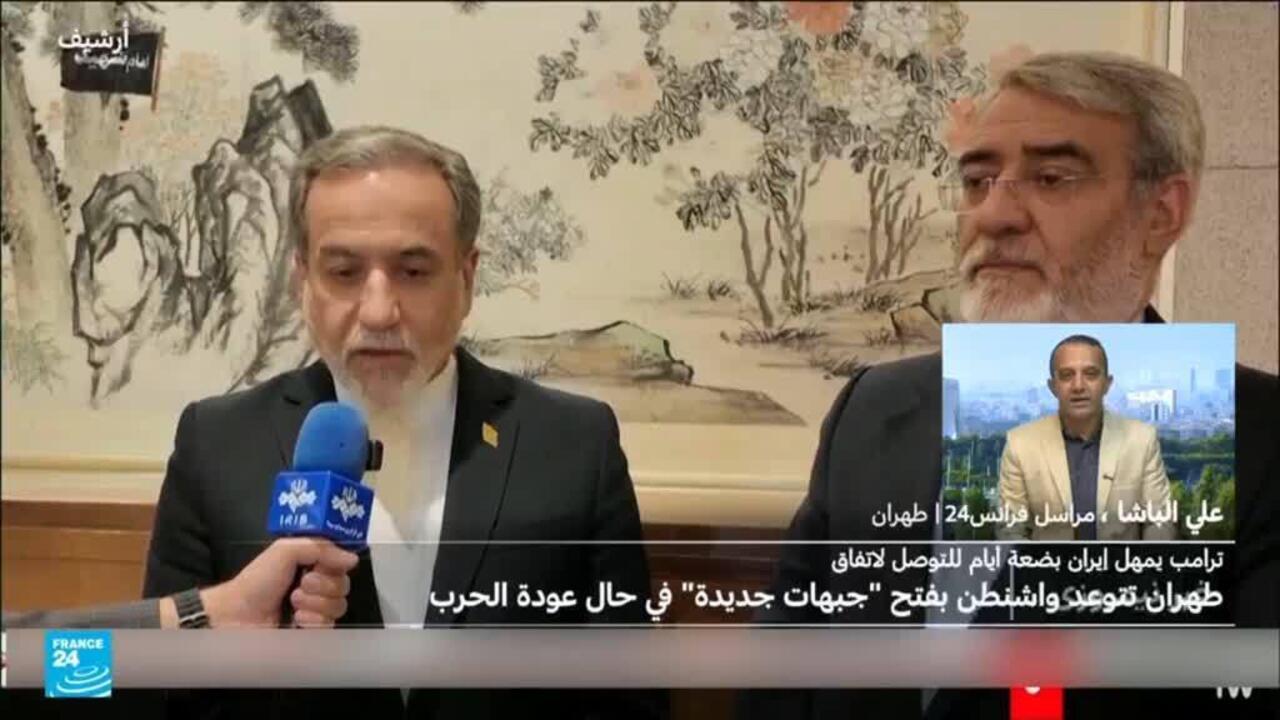
On Wednesday, Iran's Revolutionary Guard threatened that the war in the Middle East would extend beyond the region if the United States and Israel resumed their attacks on the Islamic Republic. These remarks come at a sensitive time as tensions between Iran and the West are escalating, causing concern among the international community.
The Revolutionary Guard's statements followed previous threats from U.S. President Donald Trump, who warned that any hostile actions from Iran would face strong retaliation. These remarks reflect the increasing intensity of rhetoric between the two sides, heightening the likelihood of military clashes in the near future.
Details of the Event
In an official statement, the Revolutionary Guard confirmed that any new attack by the United States or Israel would lead to an unexpected response, indicating that the war would not be confined to Iranian territory. These statements come at a time when pressures on Iran from Western powers are increasing, particularly regarding its nuclear program and regional policies.
The Revolutionary Guard also pointed out that Iran has the capability to expand military operations to include other areas in the Middle East, threatening the overall stability of the region. These remarks reflect Iran's readiness to confront any potential threats and emphasize the importance of strengthening national defenses.
Background & Context
Historically, relations between Iran and the United States have seen increasing tensions since the Iranian Revolution in 1979. These tensions have led to several military conflicts and proxy wars in the region, with Iran accusing the United States of supporting its adversaries in Iraq, Syria, and Lebanon.
In recent years, the United States has increased its military presence in the region, leading to heightened tensions. Additionally, the economic sanctions imposed on Iran have significantly impacted its economy, pushing it to adopt more hardline stances in its foreign policy.
Impact & Consequences
If the United States and Israel continue to escalate their attacks, it could lead to an all-out conflict in the region. This scenario may threaten regional security and impact the global economy, especially given the heavy reliance on oil and gas from the Middle East.
Moreover, any military escalation could result in a flow of refugees and increased sectarian tensions in neighboring countries, exacerbating already existing humanitarian crises in the region. These dynamics could affect political stability in countries like Iraq, Syria, and Lebanon.
Regional Significance
Arab countries neighboring Iran find themselves in a sensitive position, as they may be forced to deal with the repercussions of any potential conflict. Many of these countries rely on regional stability for economic and social development.
Furthermore, any escalation in the conflict could affect relations between Arab states and Iran, complicating the political landscape in the region. It is crucial for Arab nations to remain vigilant against such threats and work to enhance regional cooperation to avoid any potential escalation.
In conclusion, the recent statements from Iran's Revolutionary Guard reflect a state of increasing tension in relations between Iran and the West. Under these circumstances, hope remains pinned on diplomacy as a means to avoid military confrontation and achieve stability in the region.