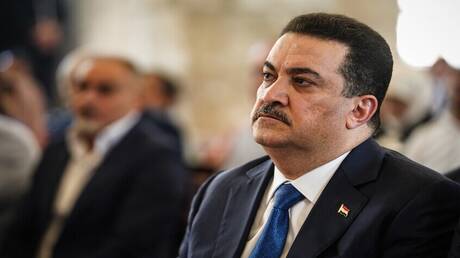
The Iraqi National Security Council held an emergency meeting led by Prime Minister Mohammed Shia' al-Sudani, where a decisive decision was made regarding the right to respond to military attacks targeting the country. This decision comes at a sensitive time as the region witnesses a rise in military tensions, placing Iraq in a delicate position that requires clear steps to protect its sovereignty.
During the meeting, the American chargé d'affaires in Baghdad and the Iranian ambassador were summoned, reflecting the importance of diplomatic dialogue in addressing escalating crises. These steps are part of the Iraqi government's efforts to strengthen its position amid external and internal pressures.
Details of the Meeting
The meeting, held last night, resulted in three main decisions, the most significant being the affirmation of the right to respond to any attacks that Iraqi forces or the Popular Mobilization Forces (PMF) may face. This decision reflects the Iraqi government's desire to protect its forces from potential threats and strengthens the position of the PMF, which is considered part of the Iraqi security system.
Furthermore, the importance of coordination with international and regional powers was emphasized, as the American chargé d'affaires and the Iranian ambassador were summoned to clarify the Iraqi stance on the attacks the country is facing. The Iraqi government hopes that through these steps, it can achieve greater stability in the region.
Background & Context
Historically, Iraq has witnessed numerous military attacks, whether from terrorist organizations or regional powers seeking to influence the internal situation. The PMF, formed after the emergence of ISIS, has become an essential part of the Iraqi armed forces and faces significant challenges amid regional tensions.
In recent years, attacks on the PMF have escalated, prompting the government to take firmer steps to protect these forces. This situation reflects the security challenges facing Iraq, which require a swift and effective response from the government.
Impact & Consequences
The decision made by the Iraqi government could lead to an escalation of tensions in the region, especially if any military responses are carried out. This could negatively impact Iraq's relations with its neighbors and exacerbate existing conflicts.
Moreover, reinforcing the right to respond may contribute to strengthening the PMF's position in the political arena, potentially leading to changes in internal balances. The Iraqi government needs to manage these tensions carefully to avoid any escalation that could affect security and stability in the country.
Regional Significance
The steps taken by the Iraqi government could impact regional relations, particularly with the United States and Iran. These strained relations may lead to further complications in the security and political landscape of the region.
Additionally, any military escalation in Iraq could have repercussions for neighboring countries, as Iraq's stability is a crucial element for the overall stability of the region. Therefore, the Iraqi government faces significant challenges in managing these complex situations.
In light of these circumstances, the question remains about how the Iraqi government will deal with these challenges and whether it will be able to achieve the stability that the country needs amid increasing pressures.