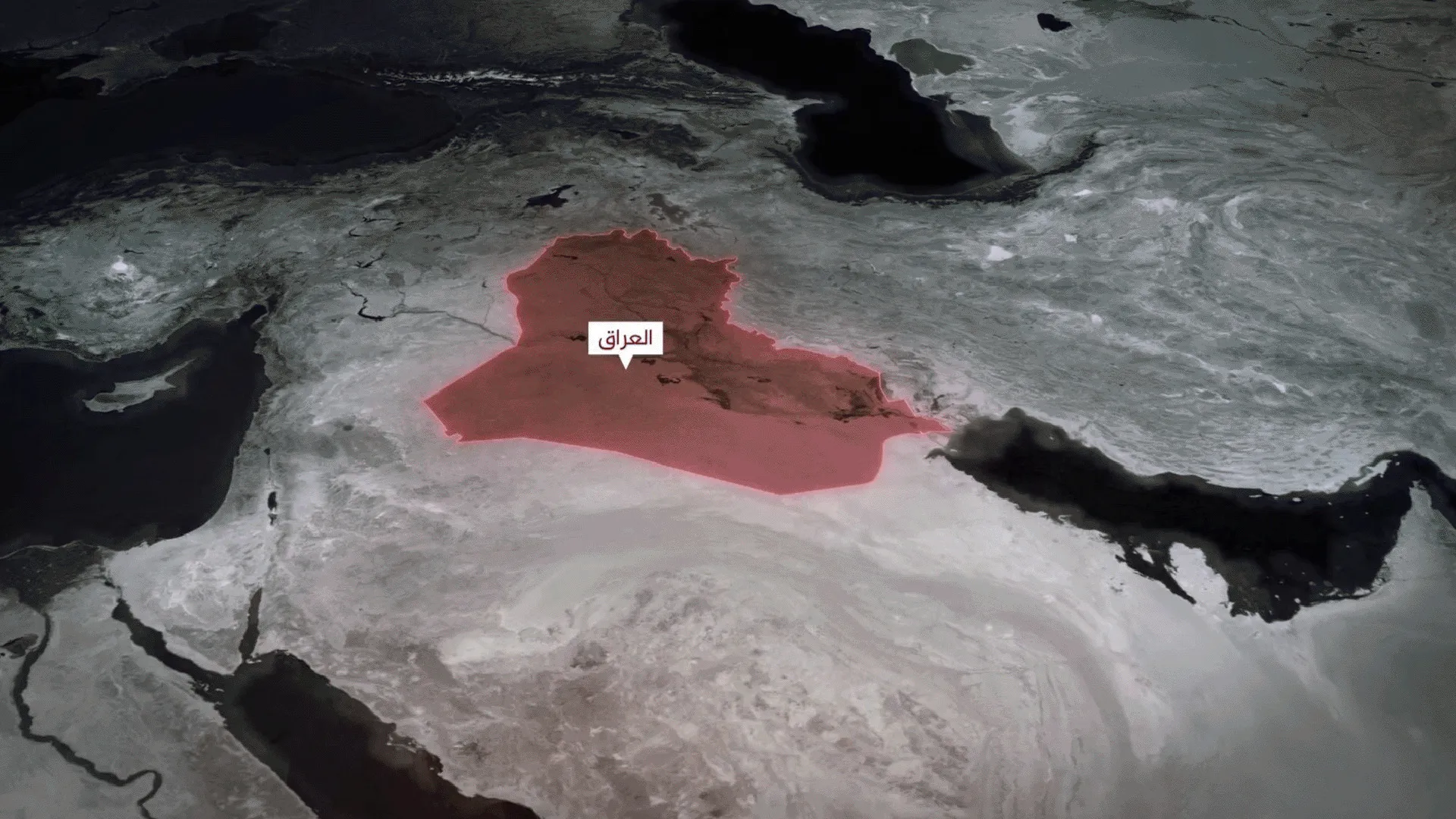
In an unprecedented move, the Iraqi National Security Council has granted the Popular Mobilization Forces the right to respond and defend themselves against American attacks, underscoring the depth of the complexities engulfing Iraq. The Iraqi state finds itself today an open battleground where the fires of all parties intersect, without the ability to stop any of them.
A report prepared by Mustafa Azreed for Al Jazeera showcased this scene, relying on a statement from Khaled Al-Yaqoub, an advisor to the Iraqi Prime Minister for security policies, who confirmed that the Popular Mobilization Forces are an essential part of the Iraqi security system. He clarified that the government has granted the right to self-defense to all forces subjected to assaults, calling on friendly and neighboring countries to respect Iraqi sovereignty.
Details of the Incident
Iraq is facing simultaneous pressures from multiple directions. Iran is targeting its territory with strikes concentrated in the Kurdistan region and oil sites in the south, while Israeli fighter jets are breaching its airspace to strike targets in Iran, despite repeated Iraqi protests. At the same time, the Popular Mobilization Forces are launching attacks on American interests within Iraq, including the American embassy in Baghdad and the logistical base at Victoria.
On the other hand, the American military has bombed Popular Mobilization Forces sites in Baghdad, Salah al-Din, Kirkuk, Diyala, and Anbar more than 100 times. This paradox raises questions about the relationship between the Popular Mobilization Forces, which is considered an official Iraqi security institution, and the American military, which has been linked to Iraq through a strategic framework agreement since 2009.
Context and Background
The Iraqi government is striving to contain the repercussions. Baghdad summoned the American chargé d'affaires to deliver a protest note regarding the targeting of the Popular Mobilization Forces, as well as summoned the Iranian ambassador to hand over a similar note concerning the strikes on Erbil. These steps come in an attempt to maintain a balance between two opposing parties that have strategic relations with Iraq.
The situation is further complicated by the legal dimensions of the crisis. The Popular Mobilization Forces, established in 2014, are considered a legal Iraqi entity, while the American military presence is covered by the strategic agreement, meaning both parties hold a legal status in their relations with the Iraqi state. The decision to grant the Popular Mobilization Forces the right to respond to the U.S. is considered exceptional, putting the American-Iraqi security partnership to an existential test.
Impact and Consequences
The political tensions between Washington and Baghdad are not new. Former President Donald Trump previously blocked Nouri al-Maliki's nomination for Prime Minister after he was nominated by the Shiite Coordination Framework. This American intervention in Iraqi affairs transcends the military aspect to include political life.
The spokesperson for the Commander of the Iraqi Armed Forces, Sabah Al-Nauman, announced that the National Security Council decided to confront what he described as assaults targeting the headquarters and formations of the Popular Mobilization Forces. In a statement broadcast on Iraqi television, Al-Nauman confirmed that the council made "decisive decisions" in response to serious violations of Iraqi sovereignty.
Impact on the Arab Region
The situation in Iraq reflects a state of instability in the region, where American and Iranian interests intertwine in a complex manner. This situation may affect neighboring countries and escalate tensions in the Middle East. Moreover, the escalation of military actions could lead to humanitarian and security repercussions for civilians in Iraq.
In conclusion, Iraq remains caught between the fires of war, attempting to maintain its security balance in the face of multiple internal and external challenges. The near future holds much uncertainty, requiring the Iraqi government to take decisive steps to preserve its sovereignty and stability.