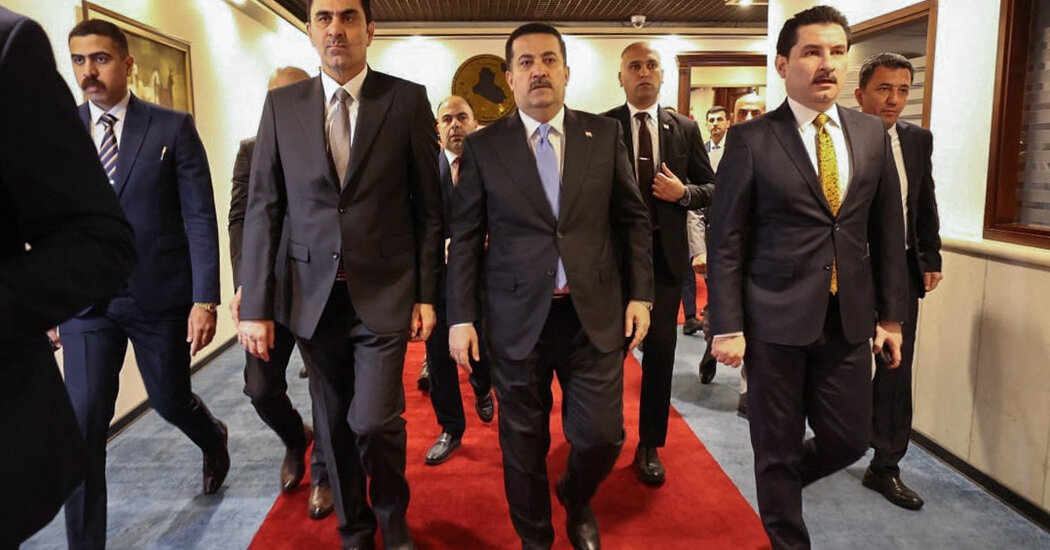
The political crisis in Iraq continues to affect the formation of the government, with the road to the government palace in Baghdad remaining closed and no real signs of a solution. Five months after the legislative elections, the sixth parliamentary session has failed to resolve the presidency and appoint a new prime minister, despite successfully electing a speaker of parliament.
Complications in forming the government are increasing, especially with the escalation of the Iranian-Israeli-American conflict, making it more difficult to reach a political consensus. Additionally, there is an American veto against the nomination of Nouri al-Maliki for the premiership, along with disagreements among Kurdish parties regarding their candidate for the presidency.
Event Details
Despite the parliamentary presidency announcing April 11 as the date for the presidential election session, many observers doubt the feasibility of this plan. The Iraqi street expresses its dissatisfaction with the political blocs, which seem disconnected from reality and indifferent to the people's interests, as citizens believe that the war on Iran necessitates expediting the formation of a government to protect the country.
Ali Karim, a citizen, states that the political class is preoccupied with achieving personal gains, while Maysoon Al-Obaidi, a government employee, points out that the economic situation is worsening due to the lack of an effective government. These concerns reflect a general sense of frustration within Iraqi society.
Background & Context
Historically, Iraq has experienced numerous political crises that delayed government formation, but the current situation appears more complex due to regional dimensions. Some lawmakers expect the crisis to continue until July, depending on the outcomes of the Iranian conflict and the political agreements that may follow.
Dr. Mohannad Al-Jinabi, a political science professor, asserts that Washington's stance is the main factor determining the course of negotiations, especially with American threats of sanctions if support for al-Maliki continues. At the same time, the coordinating framework remains unable to make a decision regarding al-Maliki's exclusion.
Impact & Consequences
There are multiple potential scenarios for forming the Iraqi government, with some experts indicating that disagreements between Shiite and Kurdish blocs could hinder the process. If the Shiite parties reach a consensus, a president and prime minister could be chosen without needing the Kurdish blocs' input.
Additionally, researchers note that armed factions may play a role in government formation, as any new government will require the support of these factions. This illustrates the complexity of the political landscape in Iraq and the influence of regional and international powers on it.
Regional Significance
The repercussions of the political crisis in Iraq extend beyond its borders, affecting regional stability. Amid rising tensions in the area, Iraq becomes a battleground for power balance between the United States and Iran, complicating the internal situation further.
In conclusion, Iraq's political future hangs in the balance, contingent upon the outcomes of the Iranian conflict, as any changes in this context will directly impact the formation of the next Iraqi government.