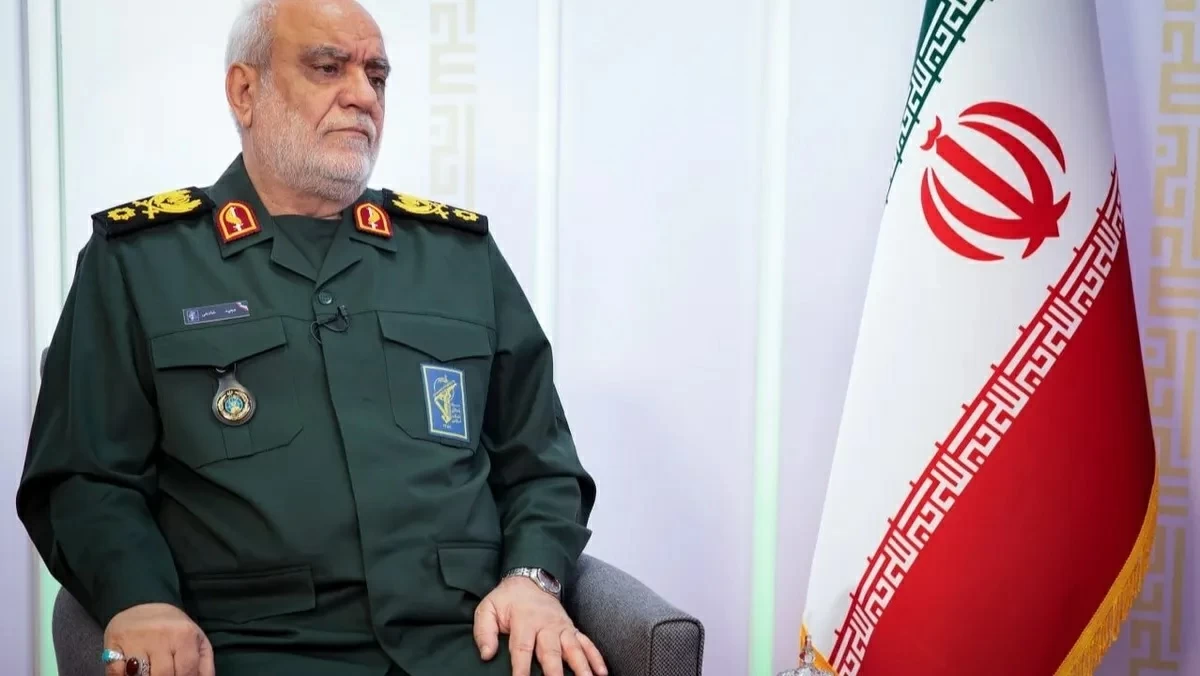
In a significant development, Iran admitted today, Monday, to the assassination of Major Majid Khadami, who served as the head of the intelligence unit of the Islamic Revolutionary Guard Corps (IRGC). Israeli Defense Minister Israel Katz described the assassination as a serious blow to the IRGC.
Majid Khadami, nicknamed 'the mysterious man', holds two PhDs in national security and strategic defense sciences. His name had been mentioned as a potential successor to Hosseini Taeb, who previously led the unit, with Khadami holding this position until at least 2014. Subsequently, he served as the head of the Information Protection Organization of the Iranian Ministry of Defense from 2018 to 2022.
Details of the Event
Khadami was appointed head of the IRGC's Information Protection Unit in June 2022, following a period of military tensions between Iran and Israel. Katz noted that his assassination represents a significant blow to the intelligence and operational capabilities of the IRGC.
In a related context, former U.S. President Donald Trump announced the assassination of several Iranian military leaders in a strike targeting the capital Tehran, indicating that this strike was a result of poor leadership by these commanders. However, Trump did not specify the timing of the strike or the names of the targets.
Background & Context
These events occur within the framework of a campaign of assassinations and targeted strikes carried out by the United States and Israel inside Iran since the onset of the war on February 28. The first day of the war witnessed the largest strike targeting Iranian leadership, resulting in the assassination of several senior military officials, including Iranian Supreme Leader Ali Khamenei.
Israeli strikes have also targeted prominent figures such as Ali Larijani, the Secretary of the Iranian National Security Council, who was killed on March 17, along with several other military leaders.
Impact & Consequences
These strikes are part of a strategy aimed at weakening Iranian military leadership and disrupting arms programs. This campaign has raised significant concerns in Tehran, as Iran seeks to bolster its defensive capabilities in the face of external threats.
The repeated assassinations of IRGC leaders raise questions about the future of security stability in Iran and may provoke retaliatory responses from Tehran, further escalating tensions in the region.
Regional Significance
These events directly impact regional security, potentially escalating conflicts between Iran and its allies on one side, and Israel and the United States on the other. Moreover, these developments could reshape alliances in the region, reflecting on the political and economic situations in Arab countries.
In conclusion, the assassination of Khadami marks a significant shift in the Iranian-Israeli conflict and reflects the increasing tensions in the region, necessitating close monitoring by concerned Arab nations.