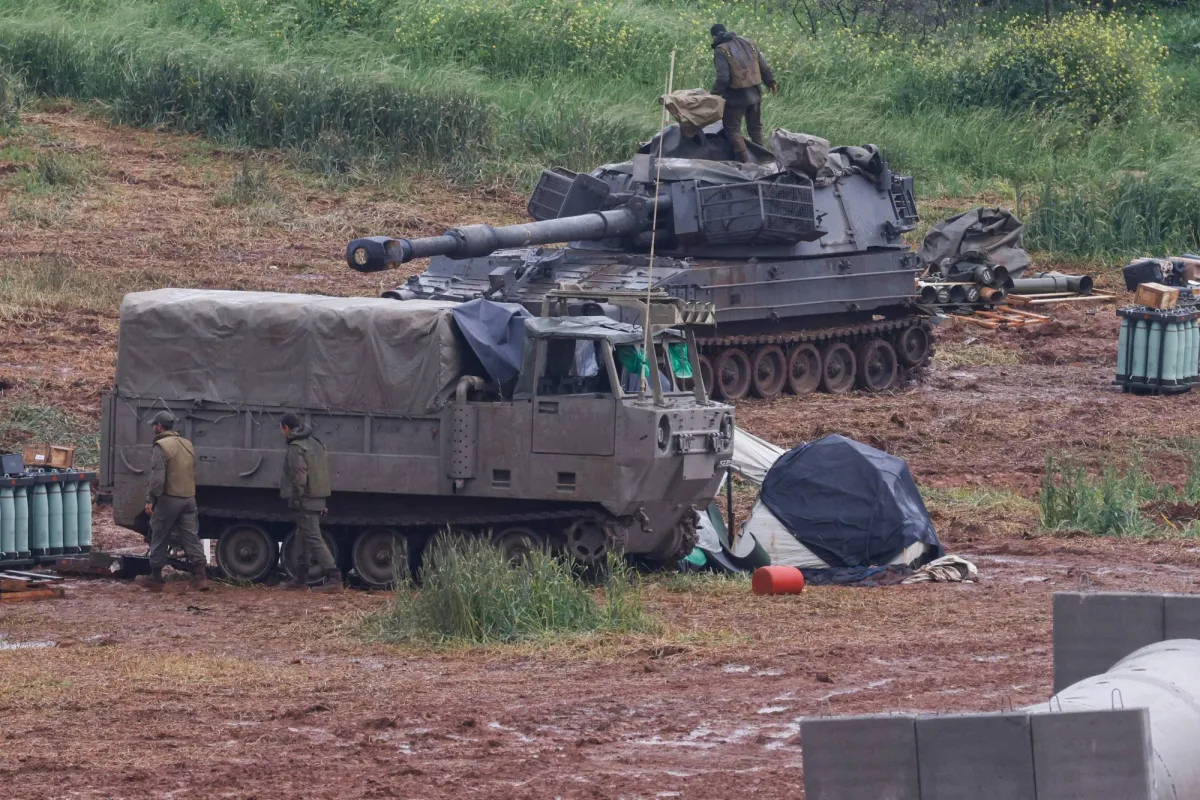
On Sunday, Israel cut off the Khyam axis in southern Lebanon from the only remaining supply line from the western Bekaa Valley through airstrikes targeting the Dbayeh - Ibl al-Saqi road. These airstrikes are part of Israel's strategy to isolate the eastern border area from the Lebanese interior, coinciding with operations along the coast through delineating boundaries for its incursions south of the city of Tyre.
Sources reported that two Israeli airstrikes targeted the Dbayeh - Ibl al-Saqi road, indicating Israeli efforts to achieve complete control over the city of Khyam. It was clarified that fighting and targeting in the city have significantly diminished in recent days, with clashes concentrated in the northern area, suggesting near-total control over the city.
Details of the Event
Sources indicated that the two airstrikes, which were accompanied by heavy artillery shelling on Sunday afternoon, appear to be a prelude to an advance from the north of Khyam towards Dbayeh and the outskirts of Ibl al-Saqi. This line is the only remaining direct fire support for Hezbollah fighters in Khyam, effectively isolating the front entirely from the support lines coming from the western Bekaa. This coincides with a military clampdown descending on the western foothills of Mount Sheikh towards the western Bekaa.
Israel aims to reach the Litani River, working to achieve this from several axes. Sources reported that an advance towards Dbayeh, if it occurs, seeks to reach the banks of the Litani in Barghoz through Dbayeh - Blat, and from there to the riverbank in Khardali. This is accompanied by attempts to reach the Litani bank in the Wadi al-Hijar through the Taybeh - Qantara axis.
Background & Context
These developments come at a time when Lebanon is witnessing increasing military escalation, as Israel continues its airstrikes and artillery shelling on towns in Tyre, Nabatiyeh, and Bint Jbeil, targeting the fire support lines for fighters in the confrontation areas. This escalation reflects the rising tensions in the region, which could lead to a larger escalation in the conflict.
In this context, concerns are growing about the implications of these operations on civilians in border areas, where residents are suffering from the effects of the ongoing conflict. Maronite Patriarch Bechara al-Rahi has pointed to the difficult humanitarian conditions facing civilians, calling for an end to violence and a search for peaceful solutions.
Impact & Consequences
These developments indicate that Israel is seeking to strengthen its military control in the region, which could lead to a larger escalation in the conflict with Hezbollah. Additionally, these operations may affect the security situation in Lebanon, as international pressures on the Lebanese government increase to neutralize the country from regional conflicts.
These operations are likely to heighten tensions among political forces in Lebanon, as some ministers express concern over the implications of this escalation on internal stability. At the same time, international pressures may lead to calls for de-escalation and avoidance of military escalation.
Regional Significance
The implications of these events extend beyond Lebanon's borders, potentially affecting regional stability as a whole. With rising tensions between Israel and Hezbollah, neighboring countries could be directly impacted, complicating the situation in the region further.
Moreover, the continuation of the conflict may exacerbate humanitarian crises in Lebanon, where many civilians are suffering from the consequences of the ongoing conflict. This situation could contribute to an increase in the number of displaced persons and refugees, posing an additional challenge to neighboring countries.
In conclusion, the situation in Lebanon remains under scrutiny, with growing fears of a larger escalation in the conflict, necessitating both international and local efforts to contain the situation and ensure civilian safety.