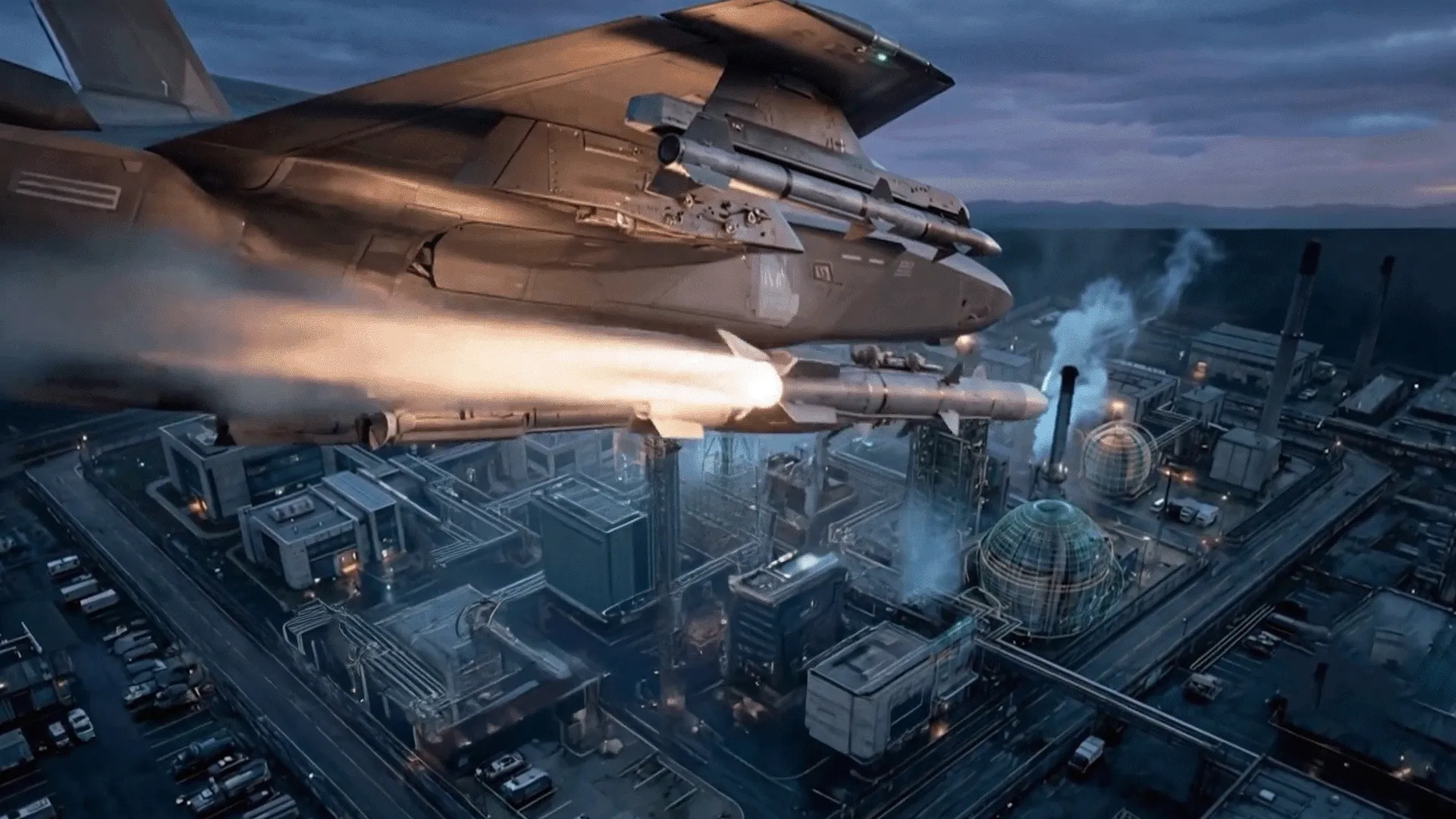
As the war enters its second month, Israel has ramped up its attacks on strategic industrial facilities in Iran, increasing economic pressures on civilians. On Thursday and Friday, Israel targeted key iron and steel production facilities in Iran, along with other industrial sites, which Tehran has deemed a serious escalation, asserting that it will shift the war into a new phase.
The targeting of dual-use intermediate industries (military and civilian) is an age-old wartime tactic, employed during World War II and in subsequent conflicts, aimed at weakening the adversary's production capacity. However, this approach casts a heavy shadow over civilian populations, who bear the brunt of these attacks.
Details of the Attacks
In August 1943, the United States bombed iron ball manufacturing plants in the German city of Schweinfurt as part of the Allies' plan to destroy choke points in German military industries. Iron balls were integral to nearly all industries: tanks, aviation, engines, and civilian manufacturing.
In a continuation of this wartime strategy, Israel bombed Iran's two largest steel factories: the Khuzestan Steel Company in Ahvaz and the Mobarakeh Steel Company in Isfahan, which is considered one of the largest steel plants in the Middle East and the largest industrial unit in Iran. This marks the third time Israel has targeted civilian sites in Iran, having previously attacked the South Pars gas field, claiming its revenues benefit the Revolutionary Guard.
Background & Context
Satellite images have shown the destruction of a carbon fiber factory in the industrial area of Lia in southern Qazvin province, which Israel had previously requested to be evacuated. Carbon fibers are a sensitive component in the manufacturing of drone structures, allowing for the construction of lightweight and relatively inexpensive frames, giving drones an economic advantage with low costs and long flight ranges. These fibers are also used in manufacturing swarms at lower costs than fighter jets and cruise missiles.
Following this strike on the industrial and economic sector, Iran has vowed to retaliate, asserting that the war has entered a new phase and that it will target economic and industrial sectors in Israel and those linked to the United States.
Impact & Consequences
Transitioning to this dangerous phase does not mean that Iran will be unable to continue fighting; Allies discovered after the destruction of the iron ball factories in Schweinfurt that the German military industry was capable of adapting, and that wars may not cease with these strikes. Targeting Iranian industries could lead to greater escalation in the conflict, intensifying tensions in the region.
These events illustrate how military attacks can impact economic infrastructure, exacerbating civilian suffering and worsening humanitarian crises. Additionally, military escalation may open the door to unexpected reactions from Iran and its allies in the region.
Regional Significance
These developments are of significant importance to the Arab region, as they could lead to changes in political and military alliances. Any escalation in the conflict between Israel and Iran could affect security and stability in neighboring countries, potentially prompting some nations to reassess their security strategies.
In conclusion, the situation in the region remains tense, with mutual attacks expected to continue between the two sides, complicating the regional landscape and impacting the lives of millions of civilians.