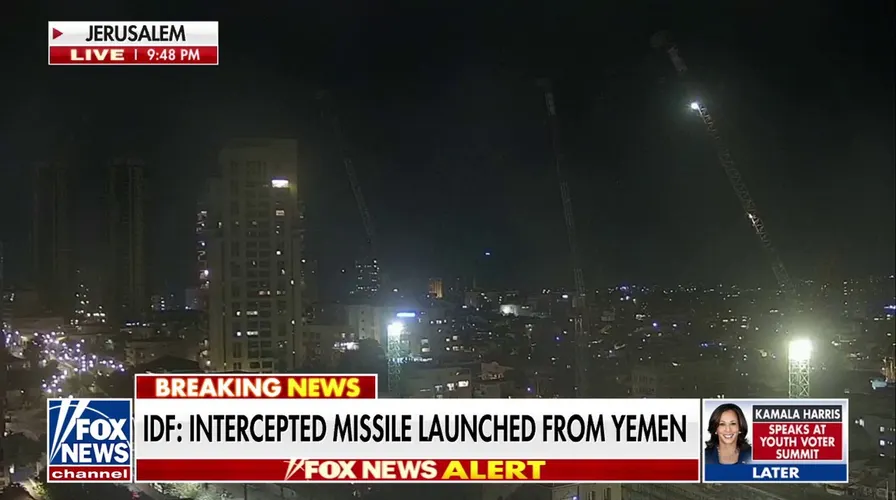
Israeli air defenses successfully intercepted a new missile launched from Yemen, marking a significant escalation in regional tensions. This attack comes at a sensitive time as crises in the area intensify, raising concerns about its potential implications for regional security.
Israeli military sources reported that the missile was launched from areas controlled by the Houthi group, which continues to target Israeli territories as part of its ongoing conflict. The Iron Dome system was activated, demonstrating its effectiveness in countering aerial threats, successfully intercepting the missile before it could reach its targets.
Details of the Incident
This incident is part of a series of missile attacks that have targeted Israel in recent months, with an increase in assaults by the Houthis, who have repeatedly declared their intention to strike Israeli territories. This attack followed sharp statements from Houthi officials, highlighting the rising tensions in the region.
Earlier, Israel had announced the enhancement of its defensive capabilities in response to the increasing threats from Yemen, deploying additional defensive batteries in both northern and southern regions. This is part of a comprehensive strategy to address threats from various fronts, including those from Lebanon and Syria.
Background & Context
The roots of the conflict in Yemen date back to 2014, when the Houthi group seized control of the capital, Sanaa, leading to the intervention of the Arab coalition led by Saudi Arabia. Since then, the region has witnessed an escalation in conflicts, with the Houthis exploiting Iranian support to enhance their military capabilities, including developing missile launch capabilities.
Israel views the Houthis as part of a resistance axis that includes Iran and Hezbollah, complicating the security landscape in the region. These dynamics have heightened concerns about the potential for broader conflicts involving other countries in the area.
Impact & Consequences
These attacks raise questions about Israel's ability to protect its territories from increasing threats, which could affect its future defensive strategies. Additionally, the escalation in attacks may provoke military responses from Israel, increasing the likelihood of further conflict in the region.
Furthermore, the continued Houthi attacks could impact relations between Israel and other Arab countries, particularly those seeking to improve ties with Tel Aviv. This could complicate peace efforts in the region, as fears of escalating violence grow.
Regional Significance
These events signal a rise in tensions in the Middle East, where security challenges are mounting. These developments could lead to increased divisions among Arab states, especially given complex issues such as the Israeli-Palestinian conflict and crises in Syria and Libya.
Moreover, the escalation in Yemen could affect regional security overall, potentially leading to an influx of more weapons and fighters into other conflict zones, further complicating the security landscape.
In conclusion, the situation in the region remains tense, requiring all parties to exercise caution to avoid further escalation that could have dire consequences for regional security.