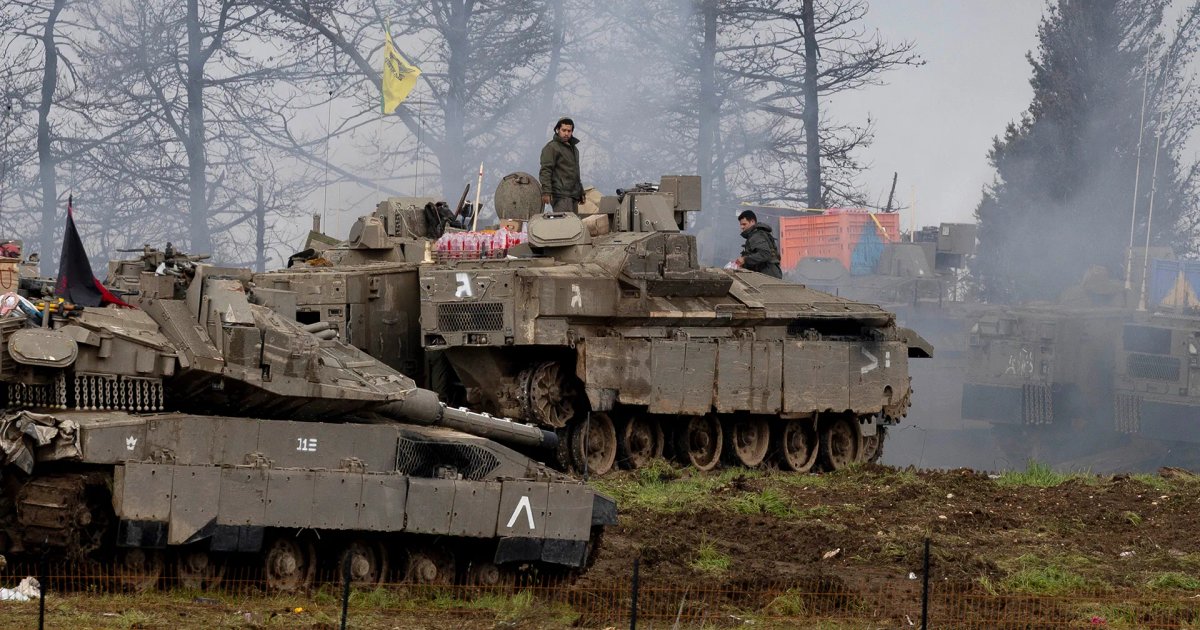
Israel is aiming to establish a buffer zone in southern Lebanon, with a depth ranging from two to three kilometers, inspired by the "Blue Line" model in the Gaza Strip. This initiative comes at a time when Israeli forces are facing operational challenges, leading to a reduction in military objectives.
According to Israeli media, the new military plan aims to prevent residents of border villages from returning as part of any future settlement. Colleague Mohammed Rammal noted that this Friday morning witnessed the launch of over 60 rockets from southern Lebanon towards northern Israel, targeting areas near the settlement of Kiryat Shmona.
Details of the Event
The city of Haifa is considered a significant strategic target, housing vital facilities such as the "Rafael" military industries complex and the "Bazan" oil industries complex, in addition to the Haifa port, which serves as a major maritime and commercial base. Despite the declared military objectives, the Israeli army is facing significant challenges in penetrating border villages, with military goals having notably diminished.
Reports from Haaretz and Israeli military sources indicate that the army does not intend to occupy Lebanon entirely or disarm Hezbollah, given the extensive troop deployment that would require. Instead, the current plan focuses on maintaining a military presence along the border line at a depth of two to three kilometers, preventing Hezbollah fighters from overseeing Israeli settlements and military bases.
Context and Background
These developments come at a sensitive time, as the region has witnessed a notable escalation since early March, when Hezbollah began targeting Israeli military bases and settlements in response to ongoing assaults on Lebanon. The Israeli air campaign has resulted in thousands of casualties, while Israeli forces continue their ground incursions in southern Lebanon, leading to violent clashes with Hezbollah fighters.
Military and strategic expert Colonel Nidal Abu Zaid pointed out that the ceiling of Israeli objectives has lowered, as discussions previously revolved around a broad invasion of southern Lebanon, while current goals are limited to areas close to the border. This regression reflects the significant challenges facing Israeli forces, including a shortage of personnel.
Implications and Effects
The Israeli plan includes two main objectives: the first is geographical, aiming to control the border strip at a depth of two kilometers, and the second is demographic, intending to displace southern residents to the north of the Litani River. This represents a blatant violation of international law and could lead to demographic and social issues within Lebanon.
Abu Zaid also noted that Hezbollah is no longer relying on previous tactics but is adopting a "retrogressive combat" style, which means a phased withdrawal while exhausting Israeli forces. This tactic could lead to casualties among Israeli troops, especially in armored units.
Impact on the Arab Region
Concerns are growing over escalating tensions in the region, as the continuation of Israeli military operations could exacerbate humanitarian conditions in Lebanon and increase the suffering of its population. Furthermore, this escalation may affect relations between Arab countries and Israel, heightening tensions in the region.
In conclusion, the current developments in southern Lebanon reflect the complexities of the security situation in the region and highlight the challenges faced by various parties. It is crucial to closely monitor these events to understand their impact on regional security.