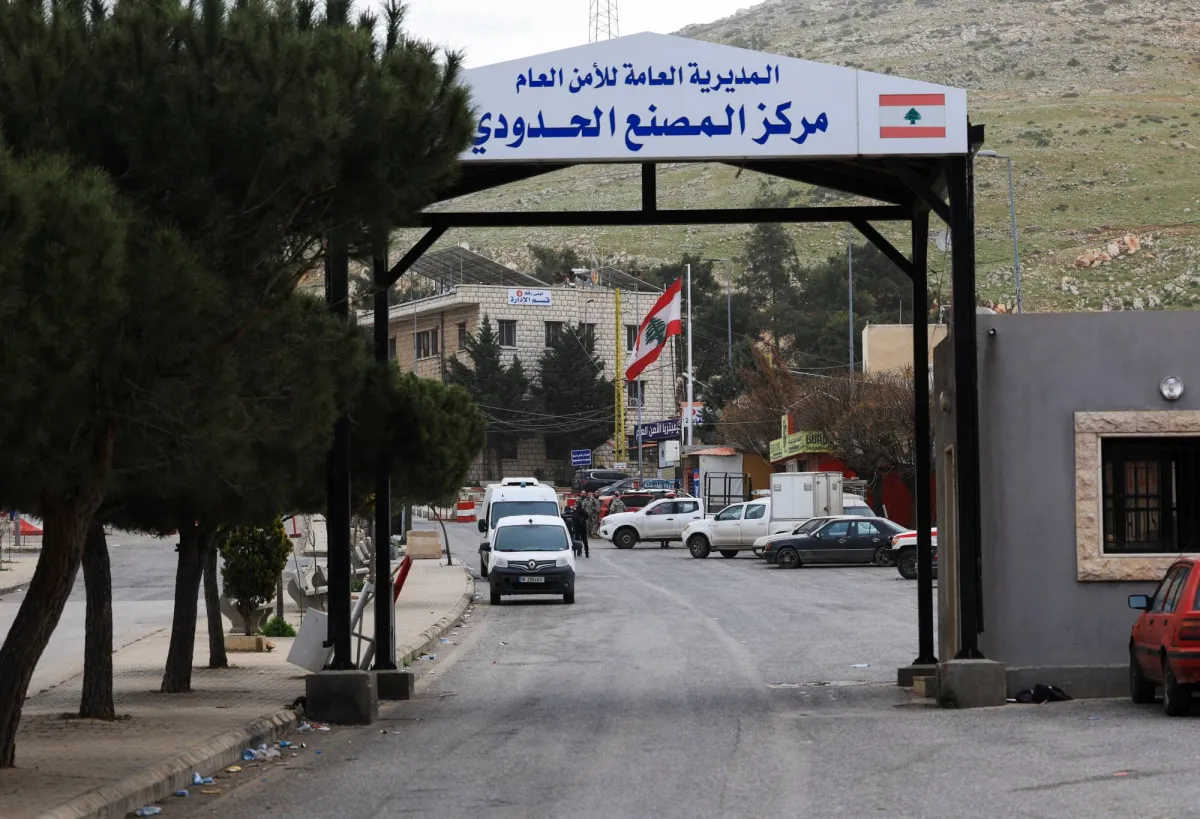
A knowledgeable Lebanese source reported today, Tuesday, that the Israeli army has refrained from bombing the Masnaa crossing, which is the main border crossing between Lebanon and Syria, following American pressure to ensure its safety. This decision comes at a sensitive time when the region is witnessing an escalation in military operations.
On April 4, the Israeli army issued a warning regarding the crossing, indicating that it would strike it in the near future due to the use of the crossing by the Lebanese group Hezbollah for smuggling weapons. The crossing is a lifeline for many Lebanese and Syrians fleeing the escalating conflict in Lebanon, where nearly 1,500 people have been killed due to Israeli airstrikes and military operations since March 2.
Details of the Event
Following the Israeli warning, the General Authority for Ports and Customs in Lebanon announced that the Masnaa crossing would not be used for military purposes, but it would be temporarily closed to avoid any casualties resulting from potential airstrikes. Lebanese officials confirmed that discussions are ongoing to prevent the crossing from being targeted, with Lebanese Prime Minister Nawaf Salam working with his Syrian counterparts to obtain American guarantees that the crossing will not be targeted.
The Lebanese source noted that the crossing remains closed at this time, and the Israeli army has not responded to inquiries about whether it will continue to refrain from striking the crossing due to the ongoing efforts. For its part, the Israeli Broadcasting Authority reported that the United States requested Israel to suspend its attacks on the crossing for political reasons, but the Israeli army did not comment on this report.
Background & Context
Lebanon has a complex organizational structure managed by Iran through the Revolutionary Guard, distributed among Lebanese and Palestinian arms, operating within an intertwined network of security and military functions. This network raises local concerns about dragging Lebanon into a new phase of regional positioning, where it becomes a center for managing engagement and influence.
In this context, Israeli military radio reported that an assassination attempt that took place in Beirut targeted a member of the Palestinian Brigade affiliated with the Iranian Quds Force. Israel has also announced previous assassinations of Iranian figures in Lebanon, reflecting the overlap between Lebanese and Iranian roles.
Impact & Consequences
This shift in Israeli strategy reflects a decline in Iran's ability to use the Syrian theater, prompting it to shift its operational weight to Lebanon. Lebanon has become a forward platform for managing engagement, not just a support front, complicating the security situation in the region.
Regarding regional transformations, Lebanon is considered a key arena for the Iranian Revolutionary Guard, explaining Tehran's insistence on its influence there. Losing Lebanon would represent a strategic blow to Iran, compelling it to seek to solidify its influence and prevent its erosion.
Regional Significance
This tense situation in Lebanon directly affects security and stability in the Arab region. The escalation of military operations and Israeli threats could lead to greater escalation, impacting neighboring countries and complicating political situations.
In conclusion, the situation in Lebanon remains under the world's gaze, where regional and international interests intertwine, making it difficult to predict the developments of events in the near future.