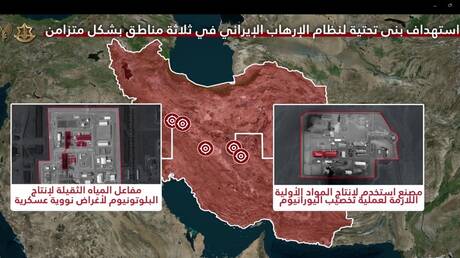
The Israeli military has announced the execution of a large-scale military operation targeting sites of the Iranian nuclear weapons program, with participation from over 50 warplanes. The operation targeted three main areas in Iran, indicating a notable escalation in tensions between Israel and Iran.
This operation comes at a sensitive time, as fears grow regarding Iran's advancements in its nuclear program, which many countries view as a threat to regional and international security. The Israeli military indicated that these strikes aim to disrupt Iran's capabilities in manufacturing military means.
Details of the Operation
According to reports, the attack was carried out in three key areas, targeting facilities deemed vital in the development of nuclear weapons. The operation was conducted with high coordination among various units of the Israeli military, demonstrating its readiness to face security challenges.
While the Israeli military did not specify the exact locations, it confirmed that the attack was well-planned and aimed at undermining Iran's ability to develop nuclear weapons. This move is part of a long-term Israeli strategy to prevent Iran from acquiring nuclear weapons, which Tel Aviv considers an existential threat.
Background & Context
Historically, relations between Israel and Iran have been highly strained, especially following the Islamic Revolution in Iran in 1979. Since then, Israel has viewed Iran as a major adversary in the region, focusing on preventing its nuclear program development. In recent years, these tensions have escalated significantly, particularly with the signing of the Iranian nuclear deal in 2015, which Israel deemed insufficient to halt the Iranian threat.
In recent years, Israel has intensified its military operations against Iranian targets in Syria, viewing it as a frontline in its conflict with Tehran. These operations aim to prevent Iran from bolstering its military presence in the region, further complicating the security situation in the Middle East.
Impact & Consequences
The recent attack could have significant implications for regional security. Iran is expected to respond to these strikes, potentially leading to greater escalation in the conflict. Additionally, this attack may affect ongoing nuclear negotiations between Iran and major powers, as Tehran might perceive these operations as an attempt to undermine any progress in those talks.
Moreover, these operations could increase tensions between Israel and its allies in the region, particularly Arab countries seeking to improve relations with Iran. This escalation could reshape the dynamics in the region, complicating the security and political landscape.
Regional Significance
Considering the potential impact on the Arab region, the escalation of tensions between Israel and Iran could directly affect neighboring countries. Many Arab nations are concerned about the Iranian nuclear program, viewing it as a threat to regional security.
These events may also lead to increased divisions among Arab states, as positions toward Iran and Israel may vary. Some countries may support the Israeli operations, while others might oppose them, further complicating regional relations.
In conclusion, the recent Israeli attack on Iranian nuclear sites represents a serious escalation in the regional conflict and reflects the ongoing tensions between Iran and Israel. These tensions are expected to continue influencing security and stability in the region.