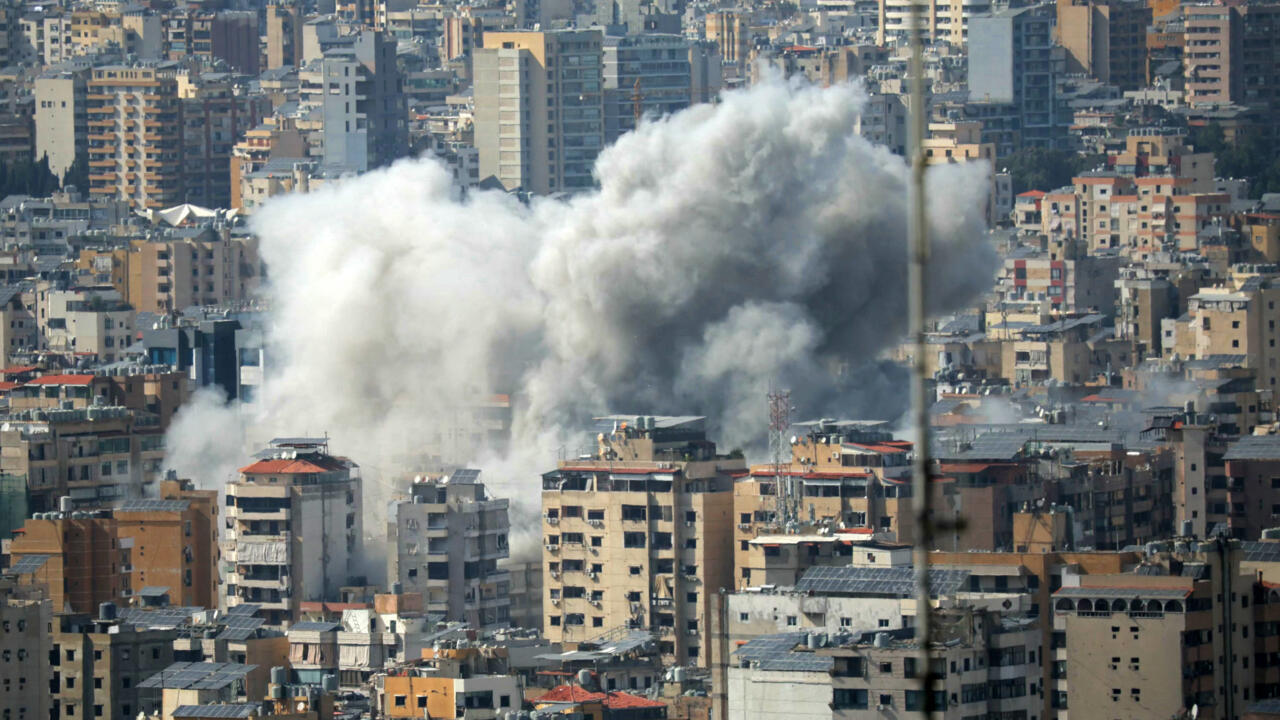
The Israeli army carried out airstrikes on several areas in Lebanon on Sunday, leading to fatalities and injuries. These operations occurred at a sensitive time, as Lebanese President Joseph Aoun called for negotiations with Israel to prevent worsening conditions, warning that "Southern Lebanon could become like Gaza."
The war in the Middle East has been ongoing for over a month, with tensions escalating after Iran-backed Hezbollah launched rockets at Israel in response to the assassination of Iranian Supreme Leader Ali Khamenei. This conflict has resulted in the deaths of more than 1,400 people and the displacement of over 1 million Lebanese from their homes.
Details of the Airstrikes
In the latest airstrikes, Israeli planes targeted the Ain Saadeh area east of Beirut, resulting in the deaths of three individuals, including a member of the Lebanese Forces party. The strikes also hit neighborhoods in southern Beirut, Hezbollah's stronghold, leading to the deaths of five people, including a child, and injuring 52 others.
At the entrance of Rafik Hariri Hospital, many people gathered in panic following the airstrikes. Nancy Hassan, a local resident, reported witnessing repeated tragedies due to the bombardment, having lost her daughter in a previous strike.
Background & Context
These airstrikes are part of an ongoing escalation in the conflict between Israel and Hezbollah, which seeks to retaliate against Israeli attacks. The Israeli army stated that it targets "facilities belonging to the terrorist organization Hezbollah," confirming that over 1,000 members of the group have been eliminated since the war began.
Meanwhile, Israeli authorities issued warnings to residents in certain areas to evacuate, reflecting an escalation in military operations. Lebanese security forces evacuated their positions at the Masnaa crossing following Israeli threats, indicating a rising tension in the region.
Impact & Consequences
Concerns are growing that these airstrikes will exacerbate the humanitarian situation in Lebanon, where residents are suffering from the ongoing effects of war. President Aoun has called for negotiations as a means to end the conflict, pointing out that the war has only led to destruction and human losses.
The military escalation may also impact regional stability, as its repercussions could affect neighboring countries, complicating the situation in the area.
Regional Significance
The events in Lebanon are part of a broader conflict in the Middle East, where regional and international interests intersect. These airstrikes may provoke reactions from other Arab nations, potentially leading to further escalation of tensions.
In conclusion, hope remains pinned on diplomacy as a means to end the conflict, as the continuation of fighting will only lead to more suffering and destruction.