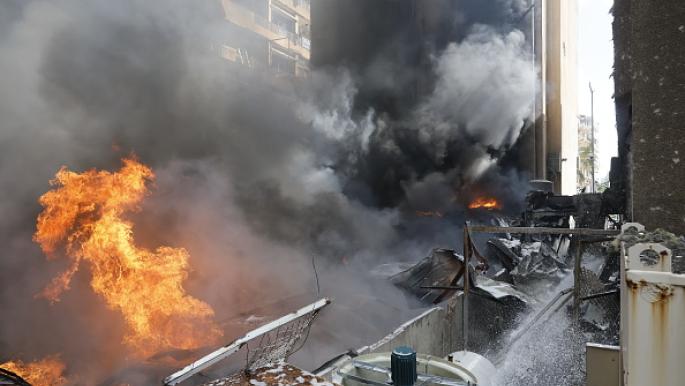
Four Israeli airstrikes using heavy missiles struck the Corniche al-Mazraa in Beirut, causing panic among residents. These attacks occur at a time when Lebanon and its citizens, along with thousands of displaced individuals, are anticipating a potential ceasefire, further complicating the humanitarian situation in the country.
These airstrikes coincide with rising tensions in the region, as the international community seeks to mediate a ceasefire agreement. With the increasing number of displaced individuals, there is an urgent need for humanitarian assistance, placing additional pressure on the Lebanese government.
Details of the Incident
In recent hours, the Israeli airstrikes targeted densely populated areas, leading to the destruction of several buildings and injuries to a number of civilians. Reports from the area indicate that residents were in a state of panic, as they did not expect their neighborhoods to be subjected to such attacks at a time when they were hoping for an end to the fighting.
Reports suggest that the strikes targeted sites believed to be associated with Hezbollah, reflecting an escalation in Israeli military operations against the group. This escalation comes amid increasing tensions between Israel and Hezbollah, with both sides exchanging accusations of inciting violence.
Background & Context
Historically, Lebanon has witnessed numerous armed conflicts, with the Corniche al-Mazraa playing a significant role in many political and social events. In recent years, Lebanon has suffered from multiple crises, ranging from economic downturns to armed conflicts, complicating the humanitarian situation further.
The crises in Lebanon have persisted for a long time, with the Lebanese people facing the repercussions of corruption and mismanagement. As the number of displaced individuals continues to rise due to the conflict, the situation has become more critical, necessitating international intervention to provide necessary aid.
Impact & Consequences
These airstrikes underscore the escalating tensions in the region, potentially leading to reactions from Hezbollah or even from other countries in the area. Additionally, these events may reopen discussions about the role of the international community in addressing crises in Lebanon.
Under these circumstances, relations between Lebanon and Western countries may be affected, as the Lebanese government could be viewed as unable to protect its citizens. This situation could lead to further economic and political pressures on the government.
Regional Significance
The events in Lebanon are part of the larger picture of conflict in the Middle East, where regional and international interests intersect. These airstrikes may exacerbate conditions in the region, threatening stability in neighboring countries such as Syria and Palestine.
Moreover, the situation in Lebanon could impact the movement of displaced individuals to neighboring countries, increasing the burdens on these nations. Ultimately, the conditions in Lebanon remain a focal point for the international community, as everyone seeks to find lasting solutions to recurring crises.