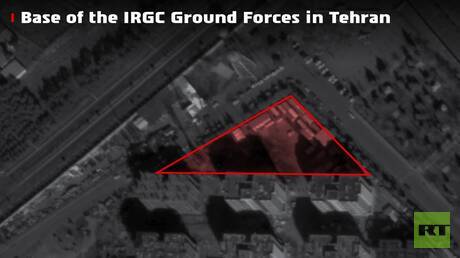
The Israeli military announced on Thursday that it carried out a wave of extensive airstrikes targeting military infrastructure belonging to the Iranian regime in the capital, Tehran. These strikes are part of Israel's ongoing efforts to undermine Iran's military and missile capabilities, which it considers a direct threat to its national security.
The strikes, which occurred on Wednesday, specifically targeted a base of the Quds Force, the external wing of the Iranian Revolutionary Guard, as well as a mobile command center believed to be used for coordinating military operations. This move reflects an escalation in tensions between Israel and Iran, as Tel Aviv seeks to prevent Tehran from enhancing its military presence in the region.
Details of the Event
According to reports, the Israeli Air Force utilized fighter jets and precision-guided missiles to strike the designated targets. Images circulated on social media showed the devastation left by the strikes, raising questions about Iran's ability to protect its military infrastructure.
These strikes come at a sensitive time, as the region is witnessing an escalation in military tensions, particularly following Iran's announcement of advancements in its nuclear program and increased military activities in Iraq and Syria. Tel Aviv has repeatedly warned that any progress in Iran's nuclear program would lead to a military response.
Background & Context
Historically, relations between Israel and Iran have been extremely tense, with Israel viewing Iran as a primary enemy. Recent years have seen an escalation in mutual attacks, including Israeli strikes on Iranian nuclear facilities, aimed at preventing Tehran from acquiring nuclear weapons.
Regional tensions have significantly increased following the United States' withdrawal from the Iranian nuclear deal in 2018, leading to the reimposition of sanctions on Iran and a rise in its military activities in the region. These strikes are part of an Israeli strategy aimed at undermining Iran's influence in the Middle East.
Impact & Consequences
These strikes raise questions about potential reactions from Iran, which may seek to respond to these attacks by escalating its military activities or conducting retaliatory operations against Israeli or American targets in the region. Additionally, these events could heighten tensions among major powers in the region, especially with American forces present in Iraq and Syria.
Moreover, these strikes may affect relations between Iran and European countries that are attempting to revive the nuclear deal, as they may view them as an unwarranted escalation in the conflict. These events could also increase fears of a comprehensive military conflict in the region.
Regional Significance
These Israeli strikes are seen as an indicator of escalating tensions in the Middle East, which is already suffering from multiple conflicts. Neighboring Arab countries, such as Iraq and Syria, may experience direct repercussions from these events, as their stability and security could be affected.
Furthermore, these strikes may influence the stance of Arab countries towards Iran, potentially prompting some nations to reassess their relations with Tehran, especially in light of the increasing threats. At the same time, they could bolster support for certain armed factions in the region aligned with Iran, further complicating the security landscape.
In conclusion, the recent Israeli strikes reflect an escalation in the ongoing conflict between Iran and Israel, raising concerns about broader implications for regional security. The international community must closely monitor these developments, as any further escalation could lead to a comprehensive military conflict in the region.