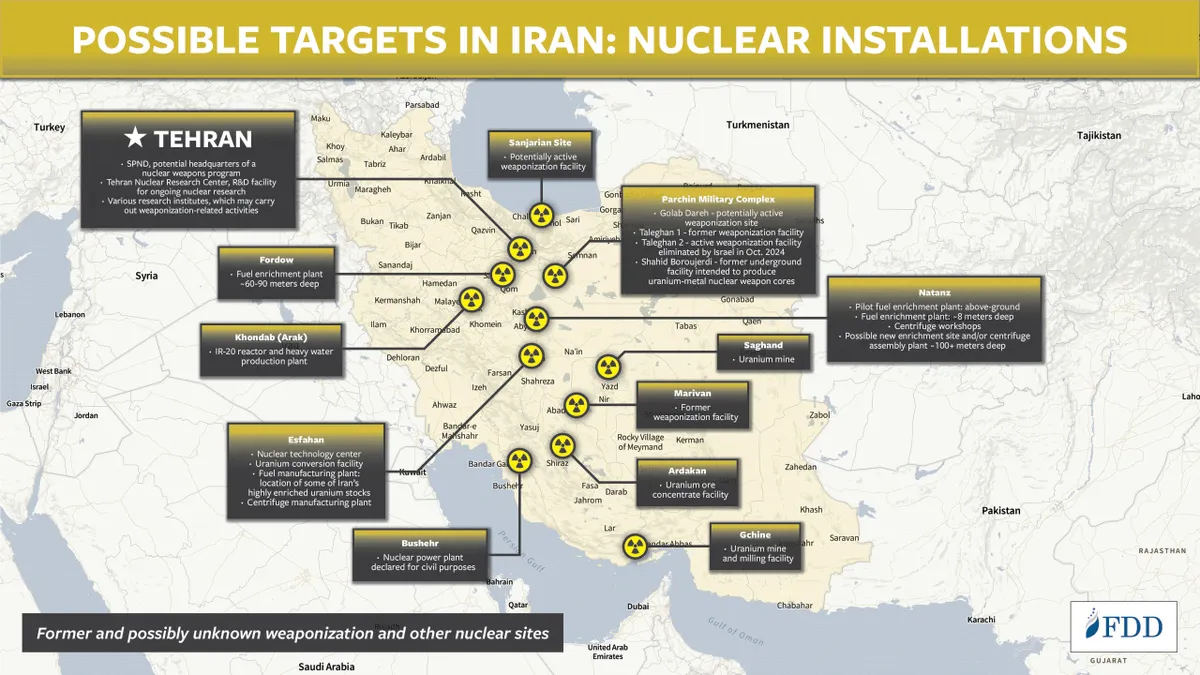
The Israeli military announced on Tuesday that it has completed a series of airstrikes targeting weapon production sites in Tehran. These airstrikes are part of Israel's increasing response to the security challenges posed by Iran, which it views as a direct threat to its national security.
These military operations coincide with rising tensions between Israel and Iran, with Tel Aviv accusing Tehran of developing weapon programs that threaten regional stability. The Israeli military indicated that these airstrikes are part of a comprehensive strategy aimed at undermining Iran's military capabilities.
Details of the Airstrikes
In detailing the airstrikes, the Israeli military confirmed that it targeted several sites in Tehran believed to be used for weapon production. These operations were executed with high precision, reflecting Israel's capability to carry out complex operations deep within Iranian territory.
These airstrikes follow a series of mutual threats between the two sides, with Iran threatening to retaliate against any Israeli aggression, further intensifying regional tensions. Reports have indicated that the airstrikes caused significant damage to the targeted sites, raising questions about potential Iranian responses.
Background & Context
Historically, relations between Israel and Iran have been tense, with Israel considering Iran its primary enemy in the region. In recent years, there has been an increase in Israeli military activities against Iranian targets, especially in Syria, where Israel seeks to prevent Iran from bolstering its military presence near its borders.
The Iranian nuclear program has also heightened Israeli concerns, as Tel Aviv views any progress in this program as an existential threat. These fears have led to preemptive military operations aimed at disrupting Iranian capabilities.
Impact & Consequences
These airstrikes represent a serious escalation in the conflict between Israel and Iran, and may provoke military responses from the Iranian side. Tehran may seek to enhance its military capabilities or carry out retaliatory operations against Israeli targets, increasing the risk of a broader conflict in the region.
Moreover, these developments could impact international relations, as there is growing pressure on the international community to intervene and contain the tensions. These events may lead to a reassessment of security strategies in the region, particularly by neighboring Arab states.
Regional Significance
These airstrikes directly affect regional security, as neighboring Arab states express concern over the escalating tensions between Iran and Israel. Such events may lead to enhanced security cooperation between Arab states and Israel, particularly in facing Iranian threats.
Additionally, these airstrikes could escalate conflicts in the region, complicating security situations. Under these circumstances, Arab states must take proactive steps to ensure their security and stability in the face of growing challenges.
In conclusion, the situation in the region remains tense, with Israel continuing its military operations against Iran, amid increasing fears of escalating conflict. The question remains how Iran will respond to these airstrikes and whether they will lead to further escalation in the region.