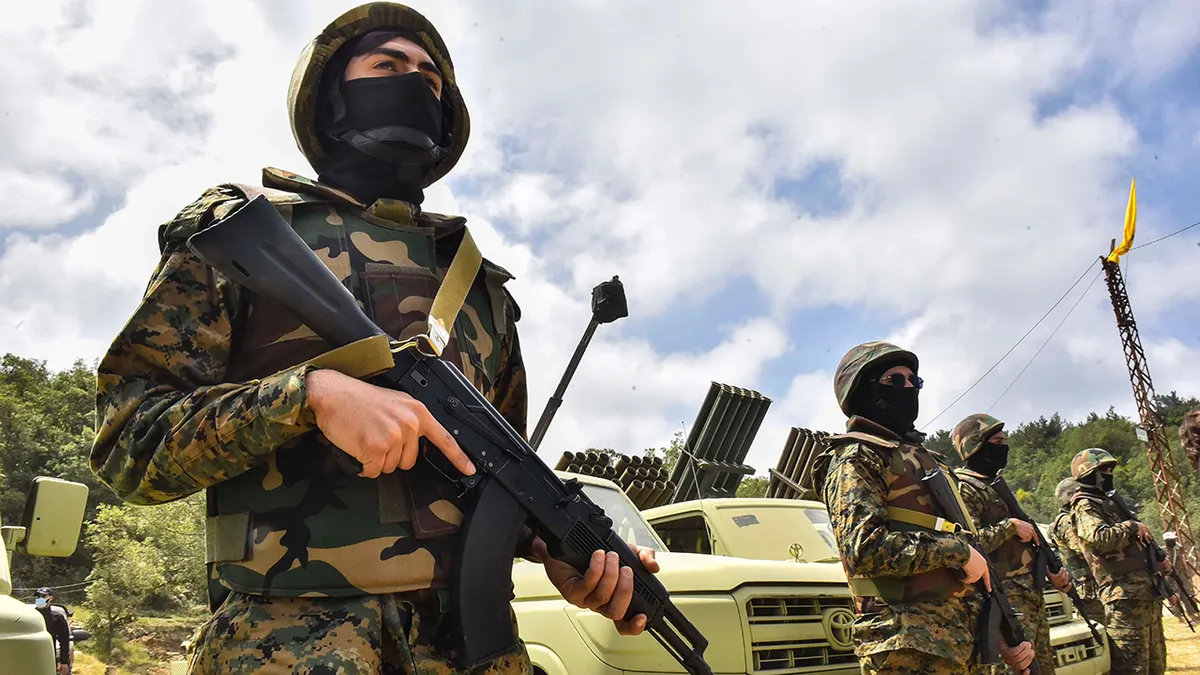
In a new escalation, the Israeli army has announced the execution of a wide-ranging attack on military infrastructure belonging to Hezbollah in Beirut. This attack comes at a sensitive time as tensions between the two sides are increasing, raising concerns about the stability of the region.
The operation, carried out using drones and missiles, targeted sites believed to contain advanced weapons and military equipment. Israeli military sources confirmed that this attack aims to undermine Hezbollah's military capabilities, especially in light of the growing threats posed by the organization.
Details of the Attack
According to data released by the Israeli army, the attack was executed during the early hours of dawn, targeting several locations in the southern suburbs of Beirut, which is considered a stronghold of Hezbollah. The attack resulted in significant damage to the targeted facilities, but no human casualties have been reported so far.
This assault follows a series of mutual threats exchanged between Israel and Hezbollah, with the latter warning against any aggression on its territory, increasing the likelihood of escalating conflict in the region.
Background & Context
Historically, relations between Israel and Hezbollah have seen increasing tensions since the 2006 war, with both sides continuing to exchange attacks and threats. Hezbollah, supported by Iran, is one of the prominent military forces in Lebanon and poses a significant challenge to Israel in any potential conflict.
In recent years, Israel has intensified its military operations against targets linked to Hezbollah, particularly in Syria, where the group is believed to be enhancing its military capabilities. This latest attack reflects an Israeli strategy aimed at preventing Hezbollah from acquiring advanced weapons that could threaten its national security.
Impact & Consequences
The attack on Beirut could lead to a significant escalation in the conflict, as Hezbollah is likely to respond to these aggressions with retaliatory operations. Such escalation could drag the region into a full-scale war, threatening security and stability in Lebanon and neighboring countries.
Moreover, this attack may affect international relations, as the global community might intervene to curb the escalation, especially amid the humanitarian and economic crises facing Lebanon.
Regional Significance
This military escalation between Israel and Hezbollah could have wide-ranging implications for the Arab region, potentially increasing tensions between Arab states and Israel. Additionally, any escalation in Lebanon may impact the situation in Syria, where many armed factions supported by Iran are present.
Ultimately, the situation in the region remains fragile, with growing fears of a new conflict that could draw many countries into a cycle of violence, necessitating urgent international efforts for de-escalation.